







ODESSA — The Texas Railroad Commission has spent the last two years working to gain the authority needed to issue permits for the underground injection and storage of carbon dioxide, a responsibility that was previously under the jurisdiction of the federal government.
In November, the Environmental Protection Agency approved the commission’s request, a move that experts believe will streamline the application process for energy companies seeking these permits, known as Class VI.
Both Democratic and Republican administrations have provided substantial tax incentives to encourage energy companies to adopt carbon capture technologies. While the efficacy and environmental advantages of carbon capture have been subjects of ongoing debate, the oil and gas sector has positioned it as a viable solution to mitigate pollution associated with large-scale fossil fuel production.
Advocates of carbon capture technology contend that the federal government has delayed the permitting process for too long.
However, experts suggest that the transfer of permitting authority to Texas may not lead to an influx of new projects, primarily due to the lack of significant recent expansions in government incentives for direct air capture initiatives, which involve capturing carbon emissions, treating them, and storing them deep underground.
Understanding Class VI Permits in Texas
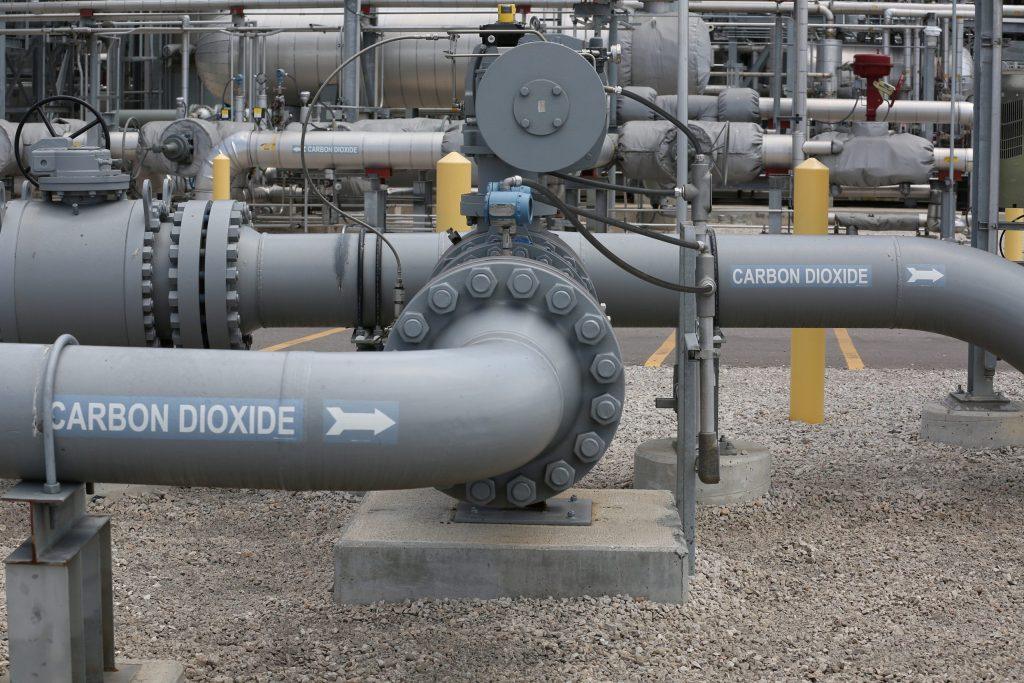
Class VI permits authorize companies to capture, inject, and permanently store carbon dioxide (CO2) underground.
This carbon capture technology was conceived decades ago to mitigate carbon dioxide emissions from major industrial sources, such as power plants, steel manufacturing, and cement production. Its primary goal is to prevent carbon dioxide from entering the atmosphere and exacerbating climate change.
Through direct air capture, which is a costly and specialized procedure, CO2 is extracted from other gases using chemical processes. The captured CO2 is then compressed and transported, often via pipelines, to designated storage sites where it is injected into deep geological formations for long-term storage.
Issuance of Class VI Permits
Only federal regulators from the Environmental Protection Agency can issue Class VI permits unless a state opts to assume this responsibility. The Railroad Commission submitted its application in December 2022, and the EPA granted approval in October, making Texas the sixth state to obtain this authority, known as primacy.
A spokesperson for the commission stated, “To be granted primacy, a state program must fulfill federal requirements for protecting underground sources of drinking water. The RRC has a longstanding history of regulating various types of injection wells and is dedicated to maintaining rigorous oversight while safeguarding drinking water sources.”
Structure of the Texas Railroad Commission’s Office
To receive permitting authority, states must demonstrate their capability to enforce the federal Safe Drinking Water Act while streamlining the application process for companies. It is expected that Texas companies will find the commission’s processes more accessible.
The Railroad Commission has established its Class VI office with a team comprising four technical reviewers, three engineering specialists, and a geoscientist. Funding for this newly formed office comes from a five-year, $1.9 million federal grant alongside state resources. The state imposes a $50,000 application fee on companies, which contributes to the commission’s budget, while amending an existing permit costs $25,000. Additionally, operators are required to pay an annual fee of $50,000 for each year they do not inject CO2 until the facility is decommissioned.
Companies must also prove their financial capability to manage the costs associated with their injection wells throughout their operational lifespan.
Current Applications for Class VI Permits
The commission has received 18 applications, the earliest of which was submitted in 2022 by Oxy Low Carbon Ventures, LLC. This application was approved in conjunction with the EPA in October. Oxy plans to construct a facility approximately 20 miles southwest of Odessa, designed to store up to 8.5 million metric tons of carbon over a 12-year period.