






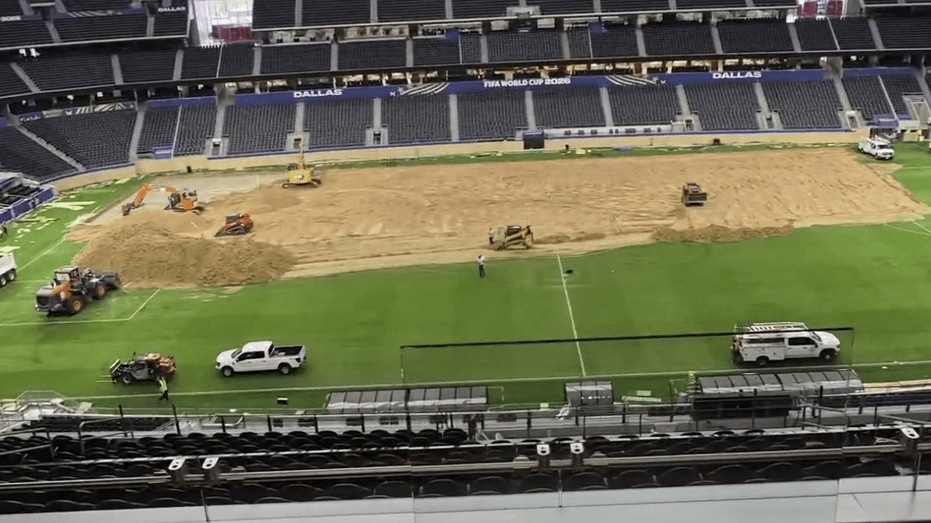
Crews have commenced the removal of the grass field at AT&T Stadium, a temporary installation for the recently concluded FIFA World Cup. The deconstruction took place on Thursday, just two days following the final match held in North Texas.
While the ultimate fate of the grass remains uncertain, fans will have the opportunity to purchase fragments of the pitch from the World Cup final held at New York-New Jersey Stadium. The removal of the grass comes shortly after workers unveiled the stadium’s original AT&T branding, which had been obscured during the tournament to comply with FIFA’s sponsorship regulations.
In the aftermath of the World Cup, the grass pitch that hosted nine matches in North Texas has been entirely cleared. It is anticipated that a synthetic turf will be reinstalled in preparation for the upcoming Dallas Cowboys season.
The removal process follows weeks of diligent maintenance to ensure the pitch met World Cup standards, including regular mowing and irrigation during matches. Crews meticulously tended to the grass, which underwent cutting two to three times on game days and was regularly watered before and after games, as well as during hydration breaks.
As for the grass removed from AT&T Stadium, its future is still unclear. Speculation suggests it might be donated to a local organization; however, FIFA has confirmed plans to sell sections of the grass from the New York-New Jersey Stadium, priced at $450 each.
In addition to the grass removal, the return to the AT&T Stadium name reflects a broader shift back to normalcy after the World Cup. The rebranding marks a significant change from the temporary designation of Dallas Stadium, which was adopted for the duration of the tournament.
Meanwhile, NFL players have voiced their concerns regarding the quality of playing surfaces in their own stadiums. Many have noted the disparity between the high-quality grass fields provided for the World Cup matches and the turf fields typically used for NFL games. JC Tretter, head of the NFL Players Association, articulated frustration over the situation, emphasizing that players are seeking better playing conditions, not only for injury prevention but for overall performance.