







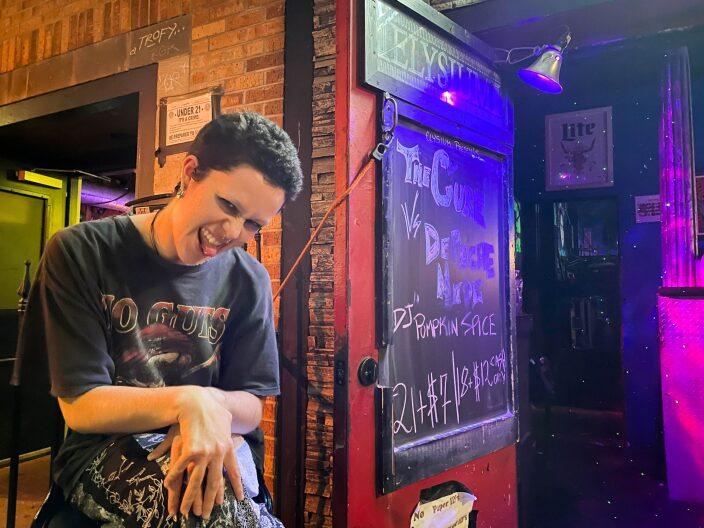
As the sun sets and temperatures linger at 100 degrees, the vibrant scene outside Elysium, Austin’s oldest goth bar, begins to come alive. This year marks a significant milestone for Elysium, celebrating 25 years as a cornerstone of the goth community.
By 10 p.m. on a recent Sunday, the dance floor was buzzing with energy. Attendees sported a mix of styles, from traditional goth attire to sundresses, battle jackets, and casual wear, showcasing the subculture’s evolution over the decades.
Texas has long been a breeding ground for various music genres, including conjunto, honky-tonk, and Texas blues. In recent years, the goth scene has emerged as a notable player, fostering a network of independent businesses and venues.
The goth scene in Texas is anything but new, with clubs like Numbers in Houston boasting a 47-year history. Its enduring presence can be attributed to its adaptability.
“There’s a running joke that to truly be goth, you must deny being goth,” shared John Wickham, owner of Elysium, who has been immersed in the Texas goth scene since the 1980s. He reminisced about iconic bands like Bauhaus and The Cure, who often shunned the goth label, inadvertently solidifying their place within the subculture.
The term “goth” encompasses a range of musical styles, including darkwave, alternative, and post-punk, making it challenging to pin down its essence. While some individuals embrace the label, others prefer to distance themselves from it.
“For me, goth is fundamentally about the music,” asserted Cassandra Davis, owner of Secret Oktober, a boutique catering to goth and alternative lifestyles. She also hosts a dance party called Dark Ritual Goth Night and maintains a website dedicated to local goth events. “Some people come into it through literature, film, or fashion, but it all traces back to the music,” she emphasized.
The roots of goth can be traced back to British post-punk bands such as The Cure, Depeche Mode, and Joy Division, along with the club culture that surrounded them. The genre’s nomenclature is often attributed to Steve Abbott of UK Decay, who dubbed their sound “punk gothique.”
Wickham recounted his experiences in the ’80s Houston club scene, where teen clubs provided a safe space for young people to dance and enjoy music without the presence of alcohol. He noted that Numbers began as a gay bar before transitioning into a goth venue, hosting its first live performance by the iconic Siouxsie and the Banshees.
As the goth scene has evolved, so too have the musical tastes of its followers. “Traditional goths gravitate toward bands like Bauhaus, but the scene has expanded to include mall goths and cyber goths,” explained Sebastian Gnolfo, owner of Bloody Rose Boutique. He highlighted the diverse musical influences within the community, mentioning that some goths even enjoy listening to ABBA.
Wickham observed that many contemporary bands prefer the term “darkwave” over “goth” in a bid to carve out a new identity. “They want to be seen as fresh and innovative,” he noted, as “goth” often conjures images of the past.
Inside Elysium, a gallery showcases an array of goth and alternative artists who have graced its stage, including KMFDM, Death in June, and Gary Numan, among others. Local bands such as Evil Mothers, Curse Mackey, and Urban Heat also contribute to the rich tapestry of the Texas goth scene.
Over the past five decades, fashion styles have emerged alongside the music. Deeply rooted in DIY culture, many goth fashion choices remain unique and personalized. Independent boutiques like Secret Oktober and Bloody Rose Boutique play a crucial role in catering to these individualistic tastes.
“It’s important to express your individuality rather than looking like you simply ordered a goth outfit online,” Davis remarked, showcasing racks of sewing supplies and an array of patches at her store.
When discussing the challenges of dressing goth in a state known for its sweltering heat, laughter ensued. “There’s no such thing as being comfortable while dressing goth,” Davis quipped. “You just have to endure it.” Gnolfo echoed this sentiment, stating, “I dress for my own happiness, not the weather,” though he humorously suggested a parasol for shade.
Despite the heat, the goth community continues to thrive, drawing in new members for nearly half a century. Wickham noted a resurgence in interest, attributing it to growing online engagement and a nostalgic revival of early 2010s vampire culture.
Artist Stephanie Tsonetokoy, known as Bunny Voodoo, organizes horror events through her platform Blood Over Texas. While she doesn’t identify strictly as goth, she acknowledges the overlap between horror and goth genres. “We need a new term for those who blend horror and goth,” she suggested.
Bunny Voodoo emphasized the importance of in-person gatherings, stating that they foster a sense of community where individuals can feel accepted and free from judgment. Many in the goth community noted that the next generation, affectionately called “baby bats,” are stepping up to carry the torch.
Gnolfo remarked on the vibrant diversity within the scene, describing how families spanning generations—goth grandmothers, mothers, and kids—frequently shop together at his store.
The goth scene shows no signs of diminishing, with Texas-native bands captivating new audiences and historic venues celebrating landmark anniversaries. Wickham believes this is a testament to the goth ethos, which finds beauty in darkness and uncertainty. “Goth allows us to explore the darker aspects of life and unearth the beauty that lies within,” he stated.