







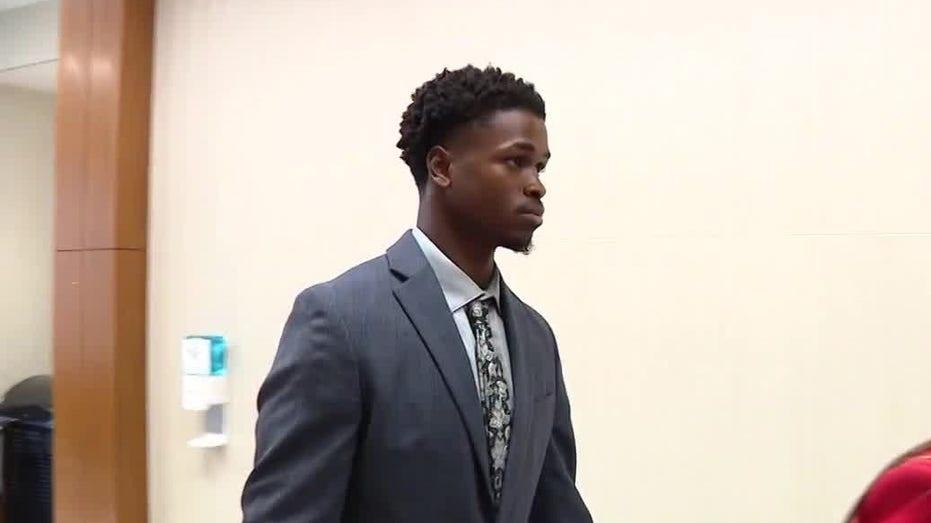
A hearing is set to take place to determine whether A.J. Armstrong will receive a new trial for the 2016 murders of his parents. This would mark the fourth trial for Armstrong in connection with the case. The Harris County District Attorney’s Office previously filed a motion to halt this hearing, but the Texas Court of Criminal Appeals has ruled against the state’s request.
In September, the 14th Texas Court of Criminal Appeals directed the trial court to hold a hearing regarding a motion for a new trial, where Armstrong’s defense team is expected to present new evidence.
Armstrong’s defense attorney, Rick DeToto, highlighted a significant issue during an interview, pointing out a complaint against a state expert witness, which alleged that she had fabricated or manipulated evidence. DeToto stated that this report came to their attention only after the trial concluded, and it could have influenced the defense’s strategies during the proceedings.
Armstrong’s legal battle has extended over several years. In August 2023, he was convicted of capital murder by a jury following his third trial, which led to a life sentence with the possibility of parole in 40 years.
This trial was Armstrong’s third attempt to establish his innocence. The initial two trials resulted in hung juries; one in 2019 where the jury could not reach a consensus after two weeks of testimony, and another in 2022 that ended with a mistrial.
The tragic events unfolded on July 29, 2016, when Dawn and Antonio Armstrong Sr. were found shot dead in their home on Palmetto Street in the Gulfton area. At just 16 years old, A.J. was the one to call 911, and a notable aspect of that call was his statement, “It’s all my fault.”
Authorities arrested Armstrong after discrepancies arose between his account of witnessing a masked intruder and the evidence collected at the scene. Investigators reported no signs of struggle or forced entry, and the home’s alarm system was still active upon their arrival. Additionally, a firearm belonging to Antonio Sr. was discovered on the kitchen counter.
During the first trial, prosecutors contended that Armstrong was responsible for placing a pillow over both of his parents’ faces before shooting them, an allegation he vehemently denied. A medical examiner revealed that Dawn suffered two gunshot wounds, with one causing instant death, while Antonio Sr. was shot once, resulting in devastating injuries that ultimately led to his death after he was able to donate his organs.
Evidence presented during the trial suggested that prior to the murders, Armstrong exhibited troubling behavior, including firing a gun in his bedroom and attempting to set fire to the house. His relationship with his parents had reportedly deteriorated in the lead-up to the tragic events, fueled by his struggles with academics, substance use, and reckless driving.
Text messages revealed during the third trial further illustrated the tension between Armstrong and his parents, with exchanges indicating frustration and concern over his behavior.
During the trial, the focus also shifted to the home alarm system, with representatives testifying about its data logs from the night of the murders. They confirmed that the alarm had been set shortly before the shootings and provided a timeline of events surrounding the alarm’s activity.
Additionally, Armstrong’s older brother, Josh, was mentioned due to his mental health struggles following the incident. Medical records indicated that he had been diagnosed with schizophrenia and exhibited alarming behaviors, including hallucinations.
The third trial ultimately concluded with a guilty verdict, primarily based on two specks of blood discovered on Armstrong’s shirt seven years after the fact. Initially, no DNA evidence was found on the shirt at the time it was collected, raising questions about the integrity of the evidence.
Armstrong has also initiated a lawsuit against the City of Houston, alleging that the blood evidence was either planted or mishandled as part of a conspiracy to secure his conviction and tarnish his reputation.