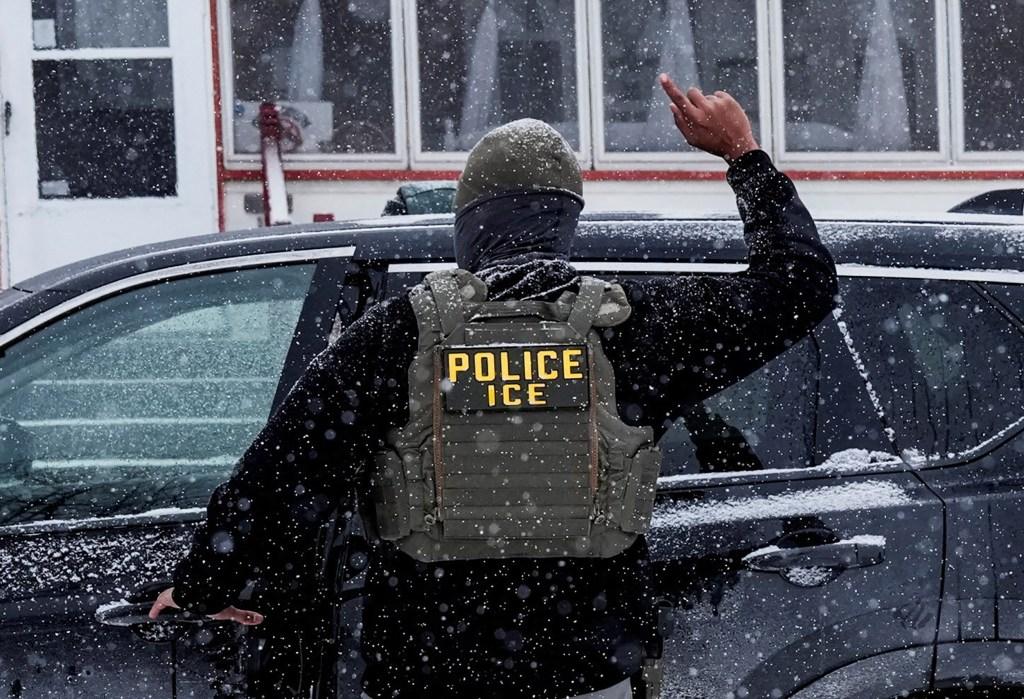








On a morning in early April, Y.R., a 37-year-old undocumented immigrant from Honduras, was approached by two U.S. Immigration and Customs Enforcement (ICE) agents as she prepared to leave her Dallas-Fort Worth apartment for her construction job. Having entered the United States in early 2022, Y.R. spent nearly a year navigating government processes to gain custody of her niece and nephew, who had been placed in a federal shelter after crossing the Texas-Mexico border in the spring of 2025.
After spending two weeks in a North Texas detention center, Y.R. was released on bond by an immigration judge and finally reunited with her niece, now 11, and her 14-year-old nephew in May—over a year after they had entered the shelter. Despite this reunion, Y.R. remains embroiled in deportation proceedings.
“I never considered giving up on them. Even when I got arrested, my thoughts were only of my niece and nephew,” Y.R. stated, requesting anonymity due to fears of potential government retaliation. “I told my lawyer, ‘I’m not leaving the U.S. without the children.’”
Since Donald Trump resumed his presidency, his administration has instituted numerous changes to the vetting process for relatives and guardians seeking to take in undocumented children. These alterations include tightening acceptable identity document requirements and enforcing mandatory DNA testing. A significant change was the reversal of a rule that prevented the Office of Refugee Resettlement (ORR) from sharing potential sponsor information with ICE.
ICE documents indicate that Y.R. was located and apprehended with assistance from the Office of Refugee Resettlement. These new policies have resulted in extended stays in shelters for unaccompanied minors and have been criticized by advocates who argue that they allow ICE to use children as leverage to arrest their potential caregivers.
During the first Trump administration, immigration officials faced backlash for separating children from their parents at the border, a practice that saw over 4,600 children taken from their families under a zero-tolerance policy. The Biden administration successfully reunited nearly 70% of those children with their parents by April 2024, prior to Trump’s return to office.
Bob Carey, a former ORR director during the Obama administration, expressed concern that the recent information-sharing practices and arrests of potential sponsors would deter families from stepping forward to care for children due to the fear of detention.
While the Trump administration did not disclose how many sponsors have been detained under these new measures, reports indicated at least 100 such incidents nationwide as of March, contrasting sharply with the 170 arrests made during Trump’s first term by late 2018.
Alexa Sendukas, a managing attorney with the Galveston-Houston Immigrant Representation Project, noted that the current policy is separating families without attracting the same level of public outrage as previous separations, as the arrests of potential sponsors are less visible.
Advocates warn that prolonged shelter stays can have detrimental effects on the mental health of children, with the ORR reporting an average of nearly 1,800 children in custody across the country as of June. This is a reduction from over 5,000 in January 2025, yet the average length of stay has surged to 117 days—double the average during Trump’s initial term and three times longer than a decade earlier.
While no specific law limits the duration for which immigration officials can hold a child in a shelter, immigration attorneys argue that these extended stays violate federal law, which mandates that children be placed in the least restrictive setting suitable for them without delay.
A spokesperson for the U.S. Department of Homeland Security defended the administration’s practices, asserting that the initiative aims to protect vulnerable children from exploitation. They attributed the surge in unaccompanied minors crossing the border to the Biden administration’s policies and provided examples of sponsors with criminal backgrounds being detained.
Sendukas, representing Y.R., is skeptical of these claims, highlighting that her clients, including Y.R. and others interviewed, are law-abiding individuals who have complied with federal requirements. Y.R. has no criminal history, according to ICE records.
“I do not believe for one second this is about protecting children,” Sendukas stated. “The families we assist are honest, hardworking people simply trying to reunite with their children.”
Another immigrant, F.S., 32, fled Guatemala in 2023 due to violence and financial instability while raising her three children. After joining a migrant caravan, she was granted asylum in the U.S. but faced a deportation order after missing a court date, which she claims she was unaware of due to an address change.
In October 2025, her eldest son crossed the border alone and was placed in a shelter. F.S. visited him regularly, but she too was arrested by ICE while attempting to gain custody, a move she believes was a direct consequence of her coming forward.
“I feel terrible; he blames himself for my arrest,” she lamented, noting her son has struggled with anxiety and was recently hospitalized due to his deteriorating mental health.
Both mother and son have agreed to deportation to reunite more quickly, as confirmed by Sendukas. Sural Shah, a pediatrician and chair of the American Academy of Pediatrics’ Council on Immigrant Child and Family Health, emphasized that prolonged stays in shelters can lead to mistrust and trauma in children.
Another mother, M.R., 41, also faced arrest after seeking to sponsor her daughter, having fled El Salvador after the murder of her husband and family members. While she complied with ORR’s procedures, she was detained and is now awaiting deportation while her daughter remains in a Texas shelter.
“I came to the U.S. seeking refuge, but now I feel trapped in a worse situation,” M.R. expressed, tears in her eyes. “I thought I was following the rules, but it has turned into a nightmare.”
Y.R. left Honduras in April 2022, fearing gang violence and insecurity, leaving her daughter with her father. After a year, her sister and brother-in-law decided to flee with their children, facing threats from gangs. After a perilous journey, the children crossed the border alone to seek asylum.
Once in the U.S., Y.R. received a call from ORR, confirming her relationship to the children and her willingness to care for them. However, the bureaucratic process took nearly a year, filled with numerous requirements that seemed intentionally burdensome.
Y.R. felt the system was trying to exhaust her resolve. When she was eventually arrested by ICE, the judge released her, acknowledging her legal entry into the country. “I like to think I’m one of God’s best soldiers, but I’ve been asking for a break,” she remarked.
As Y.R. awaited the outcome, her niece and nephew remained in the shelter, seeing friends leave and having to adjust to new arrivals. The oppressive environment led her nephew to describe it as feeling like a prison.
In May, Y.R. learned from her lawyer that her niece and nephew would be released to her. Overjoyed, she rushed to the shelter to embrace them, feeling immense relief at their reunion. After a celebratory meal, she shared the good news with her sister in Honduras, bringing tears of joy.