






Starting this month, the Blanton Museum of Art will host an exhibition that reinterprets American modernism through the lens of a notable private collection owned by Charles Butt, the chairman of H-E-B. While the Butt family is widely recognized in Texas for their grocery chain and philanthropic efforts, this exhibit will showcase the artistic vision of the family patriarch, highlighting a curated selection of works that have adorned his homes for decades.
The exhibition, titled American Modernism from the Charles Butt Collection: From Edward Hopper to Alma Thomas, opens on Sunday and will be on display until August 2. Carter Foster, the Blanton’s chief curator, emphasizes that the intent of the show is not to inundate visitors with overwhelming art history or a collection of famous pieces. Instead, it aims to provide a thoughtful and engaging pathway into 20th-century American art that reflects Butt’s individual taste and inquisitive nature.
Upon viewing the collection, Foster noted that it does not resemble a typical trophy collection dominated by renowned artists. Instead, Butt’s choices lean toward unique and insightful pieces that often capture artists in transitional phases, exploring styles and themes beyond their most recognized works.
The exhibition features approximately 80 artworks, arranged thematically to help visitors navigate the significant currents of American modernism. For instance, an early portrait by Edward Hopper, depicting a fellow art student rather than the iconic urban scenes he is famous for, exemplifies this approach. Additionally, Alice Neel’s cityscape stands out, showcasing her versatility beyond her well-known portraiture.
Butt’s collection also emphasizes specific artists, including John Marin, Marsden Hartley, and Thomas Hart Benton, allowing viewers to trace the evolution of each painter’s ideas through multiple pieces.
Foster describes the collection as a reflection of Butt’s personality and perspective. “I sense a personality,” he remarked, highlighting the sense of curiosity that permeates the collection.
The thematic organization of the exhibition invites the audience to explore various aspects of American modernism, spanning from urban experiences to regional landscapes and the gradual shift toward abstraction. One section, titled “Urban Encounters,” juxtaposes Hopper’s early portrait with artworks that convey the psychological complexities of modern city life, including depictions of New York’s elevated trains, which transformed urban interactions in the early 20th century.
An exploration of precisionism—a movement that drew inspiration from cubism and emphasized geometric shapes and industrial themes—further enriches the exhibit. Another highlight pairs an abstract work by Ellsworth Kelly with a vibrant piece by Alma Thomas, fostering a dialogue between two artists who approached color and form in both distinct and complementary manners.
Foster encourages visitors to engage with the collection intuitively, suggesting they follow their instincts rather than feeling pressured to interpret the artworks in a specific way. “I always encourage people to gravitate to what grabs their eye first,” he advised.
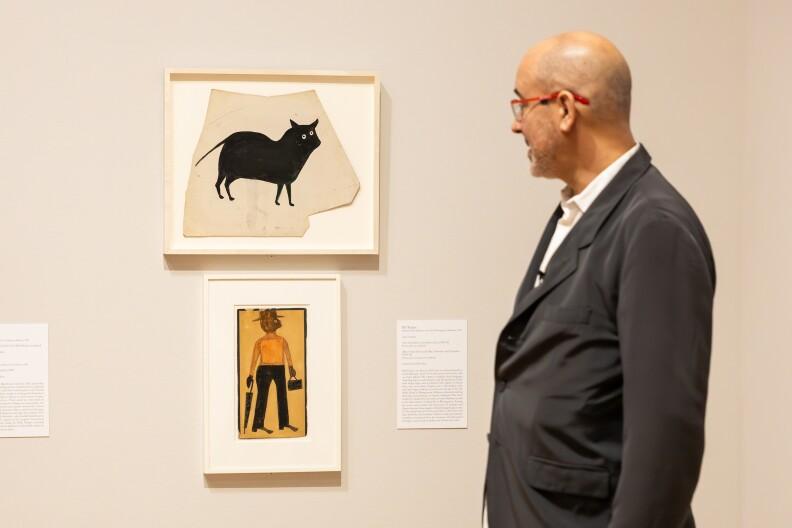
Viewing the collection in a single gallery enhances the experience, providing a cohesive vision that contrasts with its previous display across various locations in Butt’s homes. “There’s nothing like seeing objects in person,” Foster noted, observing that the unified presentation significantly alters the perception of the works.
This exhibit offers Texas audiences a rare opportunity to engage with a private collection focused exclusively on American art, having been meticulously assembled over many years and displayed solely within the state. Butt, who has a long-standing commitment to educational philanthropy, opted to highlight American modernism rather than the European movements that frequently dominate the art scene.
The result is a captivating exhibition that serves as an introduction to 20th-century American art, showcasing depictions of rural life alongside striking abstract works, all while avoiding the feel of a traditional art history lesson. Foster encourages attendees to embrace their curiosity and moment-to-moment reactions as they navigate the gallery. “I don’t think [they’ll] be overwhelmed at all,” he expressed. “It’ll be like a tasty box of candy you can sample.”