







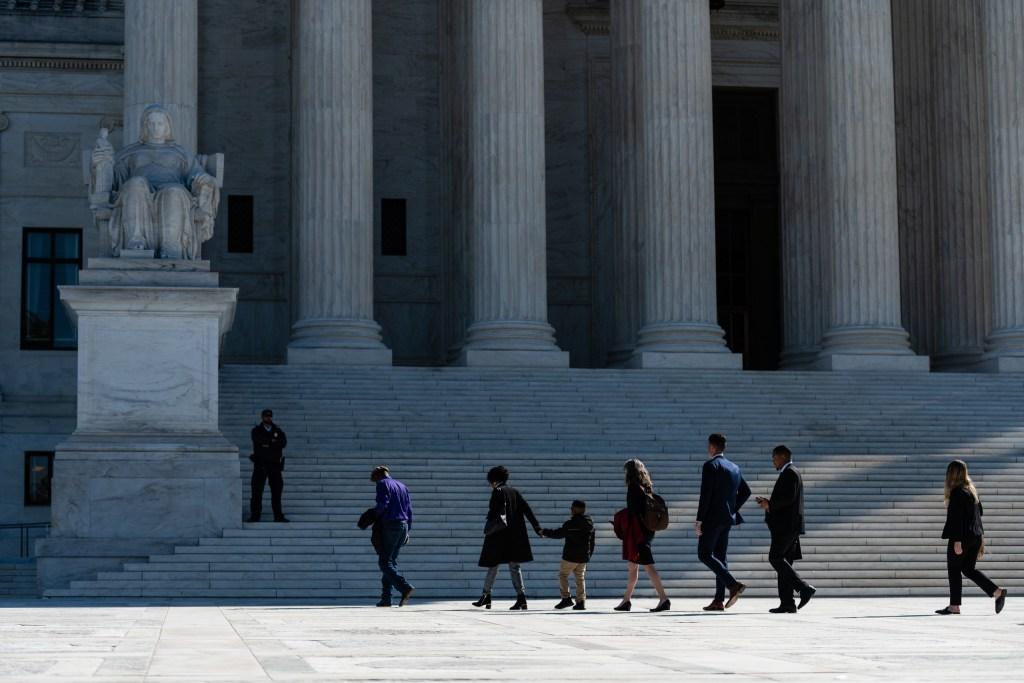
In a significant ruling, the Supreme Court has dismissed an appeal from Rodney Reed, a long-standing inmate on Texas’s death row, who has sought to analyze crime-scene evidence that he claims could prove his innocence. This decision marks the second time in under three years that the justices have upheld a previous ruling from the federal appeals court in New Orleans regarding Reed’s case.
The three justices who identified with the liberal wing of the court expressed their dissenting opinions on the matter.
Rodney Reed was convicted for the murder of 19-year-old Stacey Stites in 1996. Prosecutors have consistently denied requests for DNA testing of the belt used to strangle Stites, which could potentially clear Reed. They also allege that Reed assaulted Stites; however, he maintains that they were engaged in a consensual relationship.
Reed has long argued that the true murderer is Stites’ fiancé, Jimmy Fennell, a former police officer. Reed asserts that Fennell was enraged by their interracial relationship—Stites being white and Reed being Black. Fennell, who was imprisoned for sexual assault and released in 2018, has denied any involvement in Stites’ death.
Reed’s legal representatives have pointed out that the individual who committed the murder would have left DNA evidence on the belt, given the nature of the crime. “The killer held that belt tight against her throat for minutes and must have left his sweat and skin cells—and thus his DNA—where he gripped the belt, both on the surface and deep within the webbing,” they stated in a plea for DNA testing.
Despite these claims, lower state and federal courts have sided with prosecutors, who argue that Texas law regarding DNA testing does not apply to potentially contaminated items. Reed’s attorneys contend that contaminated evidence is frequently used in prosecutions and that the responsibility for evidence handling lies with the state, not Reed.
This year, the Supreme Court ruled 6-3 to send Reed’s case back to a lower court, allowing him to challenge the constitutionality of Texas’s DNA testing law. At the heart of the matter was whether Reed had waited too long to file his lawsuit regarding untested evidence that he believes could exonerate him. Both Texas courts and the federal appeals court in New Orleans concluded that he did not meet the filing deadline.
Reed’s attempts to prevent his execution have garnered attention and support from prominent figures, including celebrities like Beyoncé, Kim Kardashian, and Oprah Winfrey.