









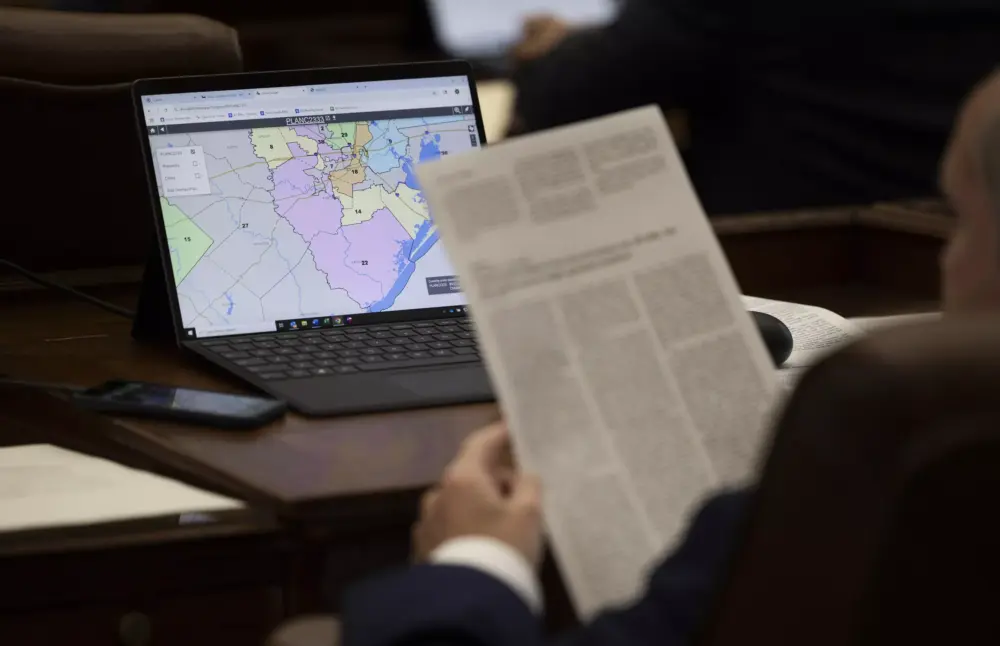
The U.S. Supreme Court has temporarily intervened in a significant ruling regarding Texas’ congressional redistricting plan, which has been criticized for potentially exhibiting racial bias. The order, issued by Justice Samuel Alito, will remain in effect for several days as the court deliberates on whether to permit the newly drawn map—designed to benefit the Republican Party—to be used in the upcoming 2026 midterm elections.
This development follows a decision by a federal court in El Paso, which found that civil rights organizations challenging the map had a strong likelihood of success in proving that it discriminates against Black and Hispanic voters. The implications of this ruling extend to several congressional districts within the Houston area.
The Supreme Court’s conservative majority has been known to block lower court decisions in similar redistricting cases, particularly when election timelines are approaching. This latest order was prompted by Texas state officials who sought to clarify the situation ahead of the March congressional primary elections.
Texas lawmakers reconfigured the congressional map during a special session in August, aligning with efforts from former President Donald Trump to maintain a narrow Republican majority in the House. The redistricting initiative is anticipated to provide the GOP with an additional five House seats. However, if the lower court’s ruling stands, Texas may be required to revert to the legislative map established in 2021, based on the 2020 census.
Texas was the first state to implement changes that echoed Trump’s redistricting strategy, leading to a wider national debate. Following Texas, states like Missouri and North Carolina also adopted new maps to gain Republican representation, while California voters approved measures to secure additional seats for Democrats.
Legal challenges to these redrawn congressional maps are currently underway in California, Missouri, and North Carolina. Meanwhile, the Supreme Court is also evaluating a case from Louisiana that could further define the limitations on race-based districts under the Voting Rights Act’s Section 2, leaving the future of this round of redistricting uncertain.