






Attorney General Ken Paxton’s office faces increasing scrutiny following revelations that agency employees reallocated taxpayer-funded hotel accommodations to private citizens and donors, some of whom failed to settle their bills until a state audit commenced earlier this year.
In the wake of this controversy, two senior officials promptly resigned after the matter was escalated to higher management.
Paxton, currently engaged in a contentious runoff for the Republican Senate nomination against incumbent Senator John Cornyn, was impeached in 2023 amid allegations of inappropriate conduct involving a donor.
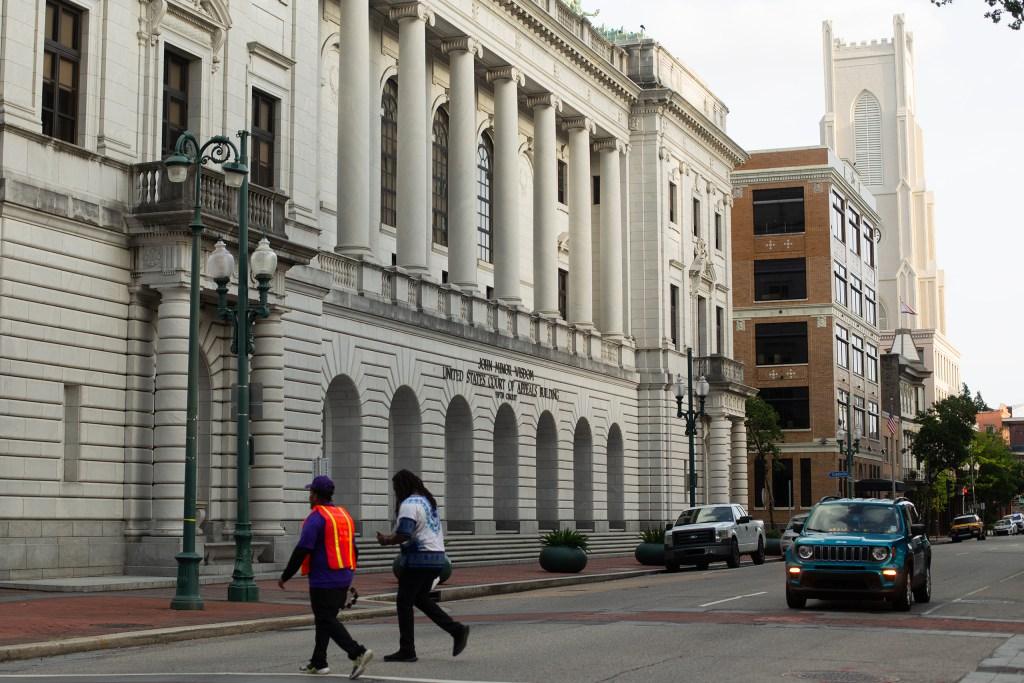
The latest investigation focuses on hotel rooms booked for agency personnel attending last year’s inauguration of President Donald Trump and Supreme Court arguments related to a state law, defended by Paxton’s office, mandating adult websites to verify users’ ages.
The agency incurred costs exceeding $20,000 for a nonrefundable block of ten hotel rooms at the Courtyard Marriott. However, a winter storm disrupted travel plans for several attendees.
As a result, the agency faced a potential loss of approximately $16,000 for unused rooms, as detailed in documents obtained through an open records request. Instead of absorbing this cost, agency employees arranged for private citizens willing to pay for the unused rooms.
“The intent was to relieve the OAG of its financial obligation for the unused rooms,” stated Ralph Molina, deputy first assistant attorney general, in an investigative report.
Among those who accepted the rooms were prominent Paxton donors Terry and Jennifer Lacore, the controversial Albanian businessman Bashkim Ulaj, and Fatmir Mediu, chair of the Albanian Republican Party. Additionally, Keith Craft, lead pastor at Elevate Life Church in Frisco, also secured a room. The initial list of room recipients was first disclosed by Texas Bullpen.
State Senator Angela Paxton, a Republican from McKinney who filed for divorce from Ken Paxton six months later, also occupied one of the rooms at her own expense. Senator Paxton was the author of the bill that was argued at the Supreme Court and ultimately upheld.
According to the agency’s internal report, the employees failed to follow the correct procedures to transfer the hotel reservations. When two private citizens who were supposed to utilize the rooms did not, the costs were charged back to the Office of the Attorney General, with the names of the individuals—one of whom had previously donated to Paxton—attached to the bill.
“The employees responsible for effectuating this apparently did not inform their superiors about this billing problem,” Molina noted. “Instead, they requested the private individuals pay the hotel for their rooms after the fact, despite their ultimate absence from the hotel, which would in turn allow the hotel to issue an offsetting refund to the OAG.”
The arrangement involving private citizens resulted in a savings of $7,296 for the agency, although it still incurred a cost of $8,339 for the nonrefundable rooms that went unused.
In June, officials from the state comptroller’s office initiated a “routine post-payment audit” to scrutinize payroll, purchasing, and travel expenditures. Shortly thereafter, Craft and another guest settled their hotel bills, leading to a reimbursement for Paxton’s office.
This audit was put on hold following the departure of Comptroller Glenn Hegar and the appointment of acting Comptroller Kelly Hancock.
In October, two of Paxton’s senior aides, chief financial officer Michele Price and chief of staff Lesley French, began discussing the discrepancies related to travel expenses. Their correspondence waned until just after the March 3 primary election, at which point Hancock resumed the audit.
French subsequently alerted senior officials about what Molina described as “errors and mistakes” in hotel bookings that “could potentially be misconstrued in an audit.” The following day, she resigned, and Price followed suit a few days later.
Neither official referred to the ongoing investigation or audit in their resignation letters. French stated she had accepted another position, while Price did not provide a reason for her departure.
The Office of the Attorney General has not responded to inquiries regarding the investigation or the resignations of French and Price.