






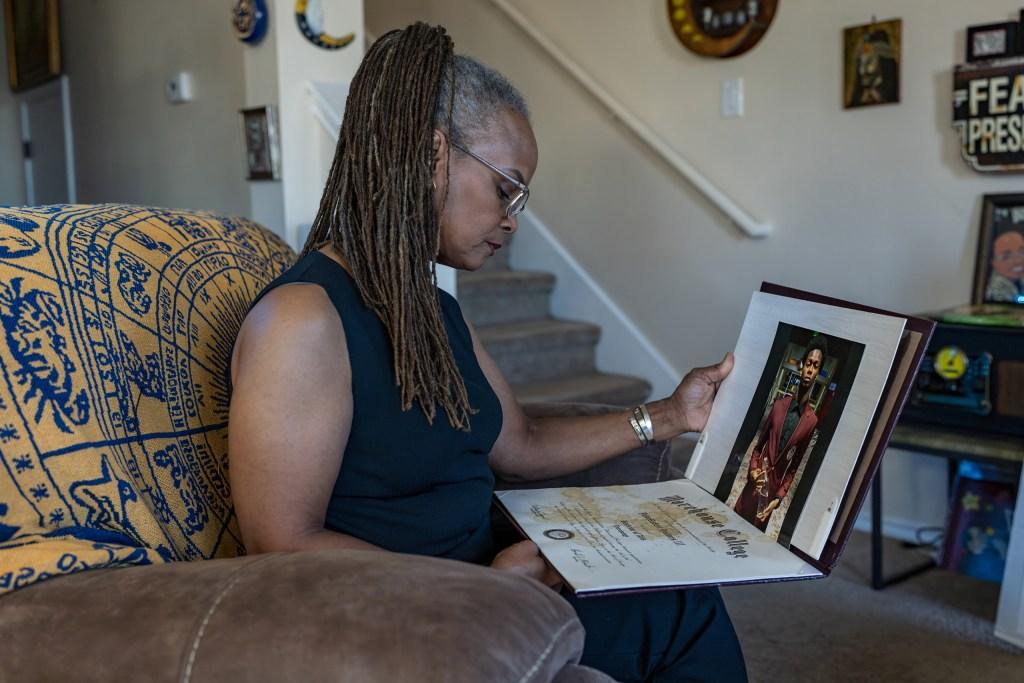
Tracy McClain vividly recalls the day she first called 911 regarding her son, JohnRobert Holmes III, who was then 21 years old. Concerned for his well-being, she reported that he was at risk of self-harm, hoping it would lead him to the necessary mental health support at a state psychiatric hospital. However, when police arrived and attempted to take him for a mental evaluation, Holmes fled. He was subsequently arrested and taken to Williamson County Jail, where he was released the same day without receiving any significant mental health care. The charge against him, which was for interfering with public duties, was dismissed four months later.
Since that initial encounter with law enforcement 11 years ago, Holmes has been arrested ten additional times and has been declared mentally incompetent to stand trial on at least three occasions, frequently for minor offenses like trespassing, as documented in county records. Despite these repeated arrests, McClain noted that he has yet to receive a psychiatric bed or adequate mental health treatment.
“I’m not asking for funding. I just want him to be admitted to a hospital and receive care for longer than three weeks so I can get my son back,” McClain expressed.
Holmes, who suffers from schizophrenia and acute psychosis, does not have a phone and is currently unhoused, making it difficult for reporters to reach him. A public defender assigned to him on four occasions declined to comment without Holmes’s consent.
McClain shared family photos of her son from when he was ages 3 and 8, highlighting the stark contrast to his current struggles. Despite the legal obligation to provide treatment to defendants deemed mentally incompetent, a persistent shortage of beds in state-run psychiatric hospitals has left many, including Holmes, waiting for up to two years for care.
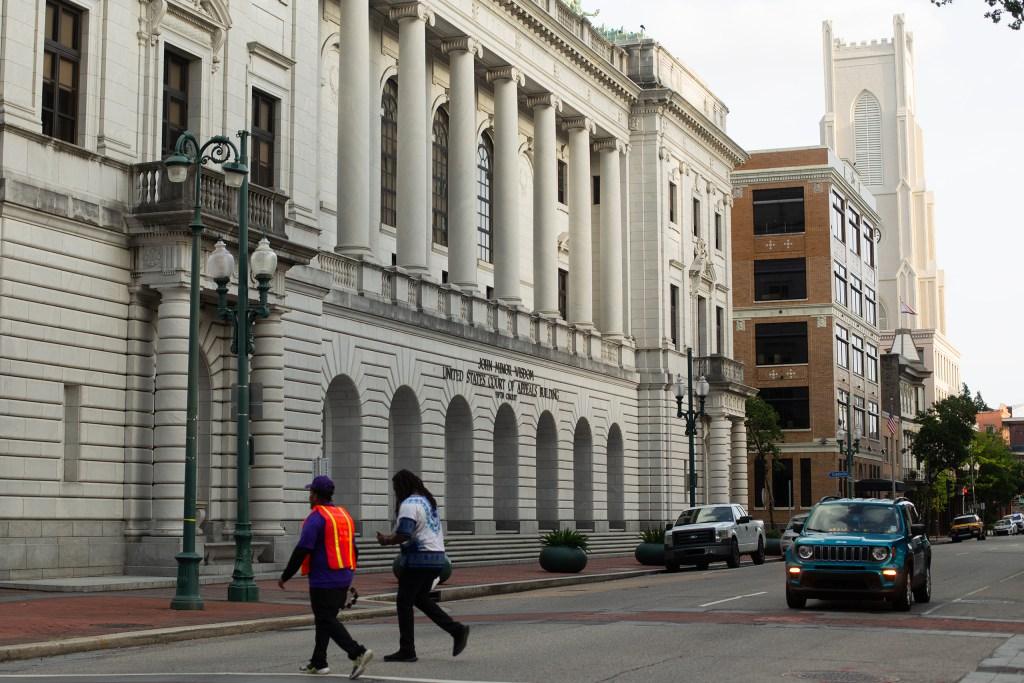
Recently, U.S. District Judge David Ezra mandated that the Texas Health and Human Services Commission must reduce these wait times to 21 days over the next four years. However, the state’s attorneys have appealed this decision, postponing much-needed relief for Holmes and the approximately 1,600 Texans currently awaiting a state hospital bed.
“It’s truly disheartening that a lawsuit was necessary, and that it takes a court order for the state to fulfill its obligations,” remarked Lisa Snead, an attorney with Disability Rights Texas. “While the state’s appeal is unsurprising, it is still disappointing.”
The lawsuit, initiated by Disability Rights Texas in 2016, led Ezra to conclude that Texas’s practice of keeping incompetent defendants in jail while awaiting treatment was unconstitutional. He noted that the Health and Human Services Commission was aware of its inability to provide adequate treatment but failed to take corrective action, leaving many individuals waiting for extended periods.
“A lack of funding cannot justify the prolonged detention of individuals who have not been convicted of any crime, are not awaiting trial, and are receiving minimal mental health services,” he stated in his ruling.
Mental health experts assert that state hospitals offer superior environments for recovery compared to jail settings. State law mandates that mentally incompetent defendants receive restorative mental care, often at no cost, unlike private facilities.
As of June, around 1,626 individuals were on the waitlist for state hospital admission, according to Thomas Vazquez, a spokesperson for the Health and Human Services Commission. Among them, 447 were awaiting placement in a maximum-security unit, with an average wait time of seven months, while another 1,179 were seeking a lesser security bed, with waits averaging over five months. At its peak in December 2022, the wait for a maximum security bed reached two years.
Ezra allowed the Health and Human Services Commission four years to meet the 21-day requirement and instructed the agency to establish compliance benchmarks within 45 days. However, state attorneys have requested the 5th U.S. Circuit Court of Appeals to delay the implementation of these benchmarks, arguing that adhering to the court’s timetable would disrupt the agency’s operations and result in financial losses for a remedy that may not be constitutionally mandated.
Vazquez did not provide comments on the recent ruling or the number of additional beds required to fulfill the court’s mandate, nor the estimated costs associated with it.
The lengthy waitlists for state psychiatric beds are a result of demand for mental health treatment consistently exceeding available capacity. Factors such as staffing shortages, deteriorating facilities, and insufficient investment in psychiatric care have hindered hospitals from increasing bed availability, while many existing beds remain occupied or out of service.
Approximately 70% of the state’s 3,600 mental hospital beds are designated for forensic patients, those who are criminally detained, while the remainder is allocated for civil commitments and youth. In June, 1,663 forensic patients received treatment.
Many individuals on the waitlist for state hospital beds never receive restorative care as they often “time out,” serving their maximum sentences for charges—typically minor offenses with short durations—before a bed becomes available.
“There were individuals charged with offenses that carried a maximum penalty of only 180 days, yet they served their entire sentence while waiting for a bed from the Health and Human Services Commission,” Snead explained.
Holmes is among those who have faced this issue. He has been arrested multiple times for trespassing and deemed incompetent to stand trial for these charges, with orders for restorative treatment. However, he ended up serving the maximum sentence of 180 days for each of those trespassing charges before being released without ever accessing a state hospital.
“I truly believed that this time he would finally be admitted to the state hospital,” McClain said. “Instead, he just timed out and ended up back on the streets.”
The current system inadvertently favors those accused of more serious crimes, providing them with a higher likelihood of receiving a state hospital bed. “I was told that because my son’s charges were misdemeanors, it was likely he would time out before a bed became available. However, if he had committed a felony and remained incarcerated longer, he would have a better chance of being placed,” McClain revealed.
McClain expressed frustration that her son never received the restorative care he needed while in Williamson County Jail, where he was only prescribed medication upon release on one occasion.
She insists that her son is constitutionally entitled to treatment in a state hospital. Furthermore, she cannot afford the private treatment option, which would require her to secure guardianship at great expense to place her adult son in a private facility. “This system is only accessible to the wealthy,” she lamented. “Every parent loves their child just as much as those who can afford to pay for a private institution.”
Local officials are supportive of the recent ruling, which marks significant progress in addressing the issue of long waitlists for state hospital beds. Although Williamson County officials chose not to comment on Holmes’s case, they expressed support for the state’s initiative to alleviate the backlog, according to spokesperson Phyllis Shaffer.
In county jails, individuals have limited access to mental health care, medication, and restorative treatment. In Travis County Jail, for instance, there is only one full-time psychiatrist available for a population where 40% to 50% of inmates require psychiatric assistance, according to Melissa Shearer, director of the mental health division at the Travis County Public Defender’s Office.
“Jails are not suitable environments for individuals with mental illness,” Snead asserted. “Jail-based competency restoration programs typically do not provide the same quality of services that detainees receive in a hospital setting.”
Health and Human Services indicates that some severely ill defendants can bypass the state hospital waitlist. However, the extreme shortage of beds means that even those who meet the criteria for expedited admission may still not gain access, even if they pose a danger to themselves or others.
Shearer recounted a troubling case of a young woman who was incompetent and extremely ill, suffering from self-harm and deteriorating in jail. Despite concerns about her well-being, she waited over a year for a bed.
McClain shared similar worries, noting that her son’s health deteriorated each time he was incarcerated.
Shearer believes that the ruling will bring relief to those who are unnecessarily suffering in jail. “They will spend less time isolated in a cell, which we know can lead to long-term deterioration of mental health,” she said. “With improved access to treatment, we can expect to see more individuals recover and maintain their well-being, as untreated serious mental illness only worsens over time.”
McClain displayed a photo board titled “Rah’s Story!” in her home, sharing her son’s journey at a state jail commission hearing. She has actively advocated for enhanced mental health care options for individuals cycling through the jail system, believing that outcomes for people like her son could be drastically different with a comprehensive care plan in place.
“They could become productive members of society instead of being overlooked and forgotten,” she said.
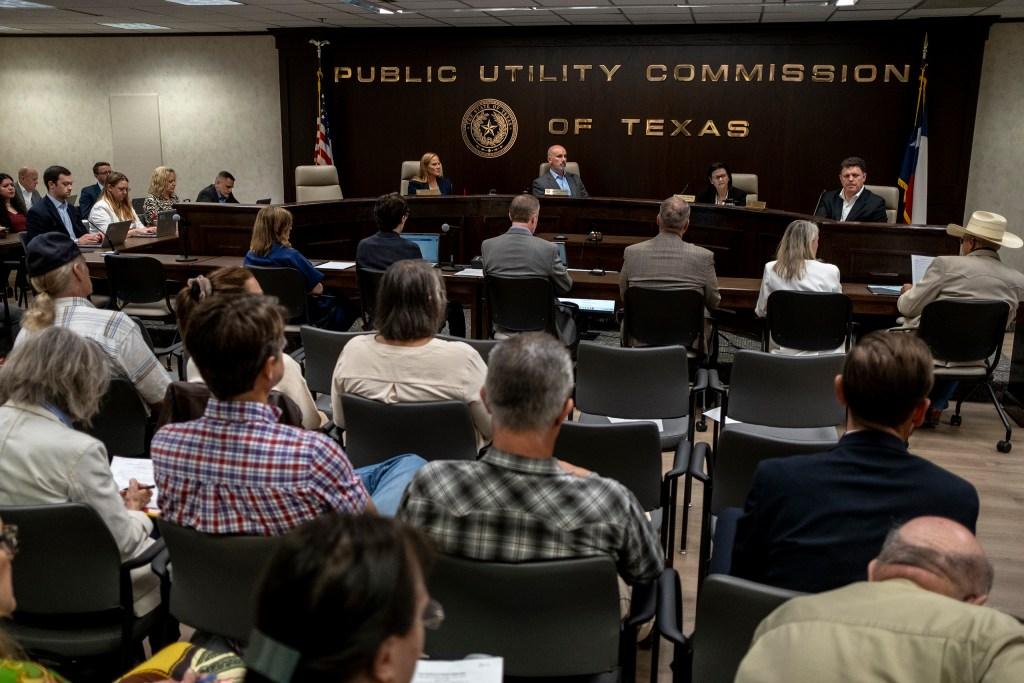
During a Texas Commission on Jail Standards meeting in Austin, McClain used her voice to