








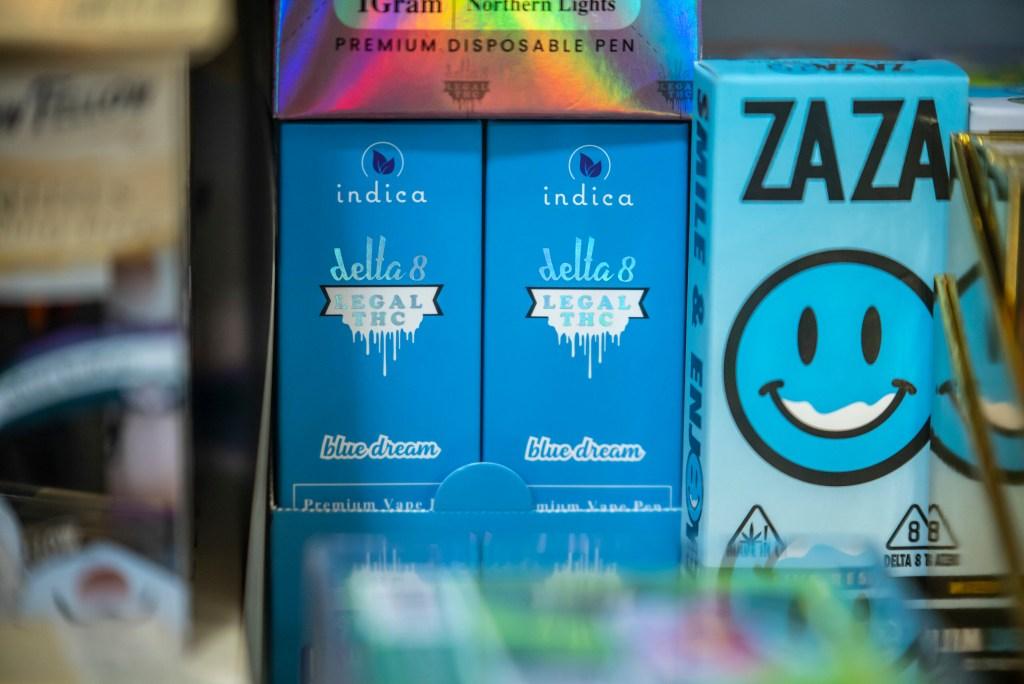
Three members of the hemp industry have initiated legal action against the state of Texas, claiming that recent regulations render nearly all hemp-derived THC products illegal, thereby infringing upon commerce protections.
On Friday, two hemp retailers and a distributor filed their lawsuit in the U.S. District Court for the Southern District of Texas. The suit names the Texas Department of State Health Services, Attorney General Ken Paxton, and the Galveston County criminal district attorney and sheriff as defendants. The plaintiffs argue that the state’s classification of hemp-derived substances as illegal contravenes the 2018 Farm Bill, which removed hemp from the federal Controlled Substances Act.
The lawsuit contends that the reinstated definitions fail to distinguish between legal hemp and illegal marijuana. It asserts that these classifications are preempted by the protections afforded to the interstate hemp market under the 2018 Farm Bill and impose an unconstitutional burden on interstate commerce.
In addition to the complaint, the plaintiffs are seeking a temporary restraining order and a preliminary injunction to halt the enforcement of the ban on THC products.
“For more than seven years, Texans have built a multibillion-dollar hemp industry under laws that define these products as legal hemp. Without any change to those laws, the State now says they’re Schedule I drugs, like heroin,” stated Andrea Steel, the lead counsel for the hemp industry in this case, in a news release.
At the end of last month, Texas officials prohibited several hemp-derived THC products, including those containing delta-8 and delta-10 THC variants, imposing jail time and fines on individuals found in possession of these substances. However, delta-9 THC, the most commonly sold THC product in Texas, remains legal.
With the new classification of THC variants as Schedule I drugs, possession of these illegal products is now classified as a state jail felony. This carries a potential sentence of 180 days to two years in prison, along with fines reaching up to $10,000, according to cannabis experts.
“Our Constitution does not allow the government to jail a person under a framework no one can make sense of – our clients are asking the federal court to protect Texans from their own confused government,” Steel remarked.
Experts in the cannabis field warn that if the ban is not rescinded, over half of the THC products currently available in retail stores could be removed from the shelves.
“It’s a pretty big blow, and it’s recriminalizing a lot of cannabis products that have been completely legal and allowable in the state for many years, so we’re taking steps backwards toward prohibition,” commented Sarah Todd, a media representative at the Texas Cannabis Policy Center.
This regulatory shift follows a Texas Supreme Court decision in May that permitted the Texas Department of State Health Services to reclassify all hemp-derived THC—except for low-dose delta-9 THC—as a Schedule I drug, thereby banning its possession and sale in the state. This ruling concluded a 2021 injunction that had temporarily halted enforcement of this new classification, allowing stores to sell various THC products for the past five years.
The ban extends to all synthetically produced THC forms, including delta-8, delta-10, THCP, and THCA flower, with the exception of delta-9 products containing less than 0.3% THC by dry weight.
Delta-9, which occurs naturally in cannabis and is not typically synthesized, will be the only THC option available to Texas consumers. This is due to the federal 2018 Farm Bill’s definition of hemp, which stipulates that it must contain no more than 0.3% delta-9 THC and does not include other cannabinoids.
This recent change represents yet another challenge for the state’s hemp industry, which began the year with assurances from lawmakers that hemp would remain a viable market. However, uncertainty has prevailed as a series of legal battles have led to products being intermittently removed and reinstated from retail shelves.
A statewide prohibition on the sale of smokable hemp, including flower buds and rolled joints, was scheduled to take effect on March 31 but has been paused due to a court ruling, allowing delta-9 smokable hemp to remain available to consumers.
Last legislative session, Texas also prohibited the sale of THC-containing vape pens.
Various lawmakers have pledged to continue their efforts against hemp in the upcoming legislative session, echoing arguments reminiscent of the “Just Say No” campaigns of the 1980s regarding the perceived dangers of THC usage and its impact on youth mental health. Some members of the committee have used analogies likening THC products to frying an egg to illustrate their concerns about mental health issues associated with THC consumption.
Senator Charles Perry, R-Lubbock, has already confirmed plans to introduce a bill aimed at banning consumable hemp products in the next legislative session.
According to the Department of State Health Services, approximately 14,000 retail stores across Texas are licensed to sell consumable hemp products.