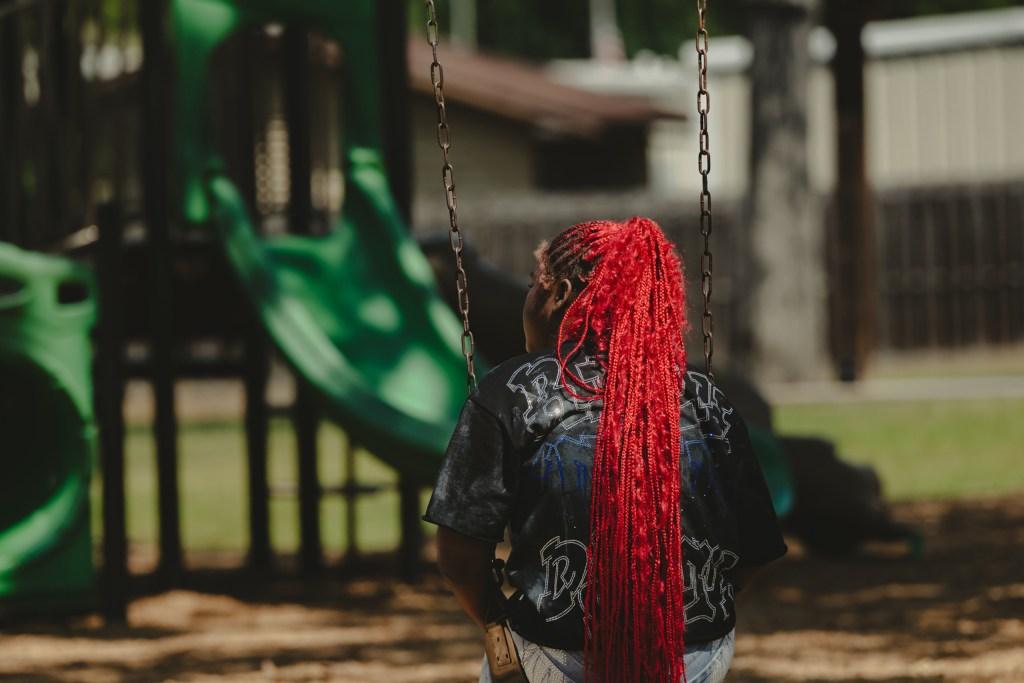









Gabrielle Jones-Radtke has spent most of her life in El Paso, a city she cherishes for its community, culture, and recent development. However, what she values most is its predictability.
“If you’re young, maybe that’s not the best thing,” Jones-Radtke remarked. “But as you grow older and start a family, predictability becomes essential.”
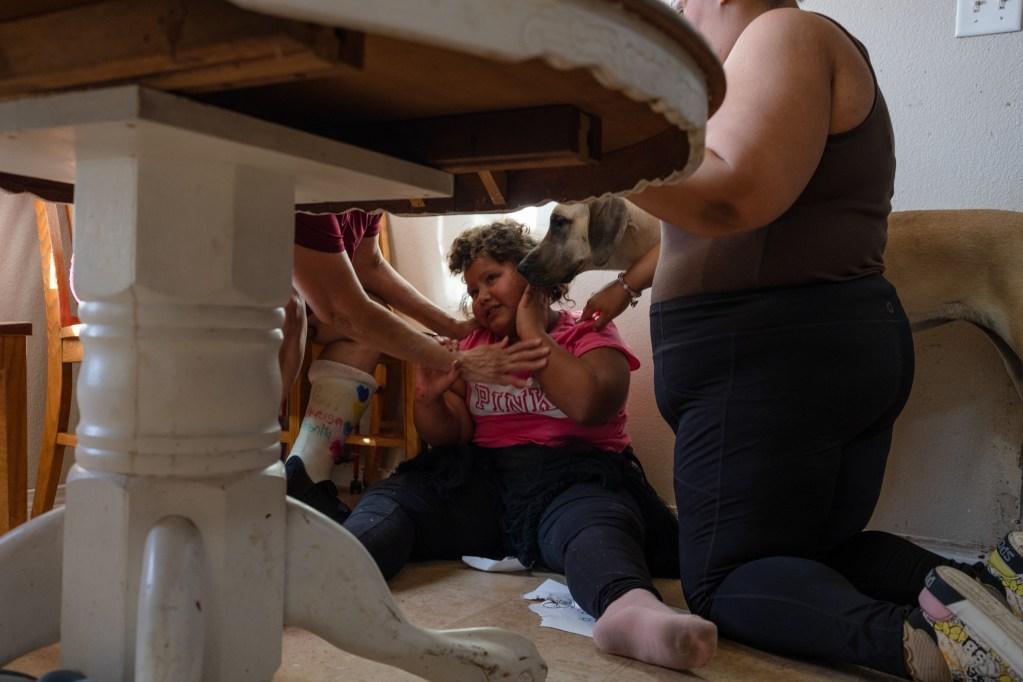
Yet, a series of unforeseen events is compelling her family to relocate about 25 miles to New Mexico. Her seven-year-old daughter, Freyja, has Bardet-Biedl syndrome (BBS) and requires puberty blockers to manage a related complication. Unfortunately, Freyja’s endocrinologist, Dr. Hector Granados, has halted the prescription of puberty blockers following allegations from Attorney General Ken Paxton regarding the provision of transgender care to minors—claims that were ultimately dismissed. With Dr. Granados’ practice being the sole pediatric endocrinology office in El Paso and appointment availability being scarce, the Jones-Radtke family is seeking to move across state lines for better access to necessary treatment options.
“I love Texas, but right now, it doesn’t feel like they love us back,” Jones-Radtke expressed.
In June 2023, Senate Bill 14 was enacted, banning doctors from providing gender-transitioning medical care, including hormone therapy and surgeries, to individuals under 18. While the bill permits hormone therapy for non-transgender medical reasons, such as early puberty, Jones-Radtke contends that her daughter is still negatively impacted due to the combination of a healthcare shortage and legislation that has discouraged doctors from delivering care.
“When policies create confusion or deter physicians from offering essential hormone therapy, families are left to face the repercussions,” stated state Senator César Blanco, a Democrat representing El Paso. “In Texas, where we already grapple with a physician shortage, any added uncertainty within the medical community complicates access to care even further.”
Supporters of SB 14 argue that the legislation is crucial for safeguarding children from potential risks associated with transgender treatment. They suggest that doctors who refuse hormone therapy for patients with medically diagnosed endocrine or genetic disorders are misinterpreting the law.
Freyja, who often pretends to play the violin with a guitar at home, needs puberty blockers to address complications from Bardet-Biedl syndrome, a rare genetic disorder affecting various bodily functions. The disorder occurs in roughly one in 140,000 to 160,000 newborns across North America and Europe.
Jones-Radtke first noticed complications with Freyja’s BBS when she was about a year old, particularly concerning her rapid weight gain.
“She couldn’t stop gaining weight and was always hungry,” Jones-Radtke recalled. “I was left wondering, ‘What is happening with my child?’”
After noticing symptoms of premature puberty in her then-six-year-old daughter, Jones-Radtke sought the expertise of Dr. Granados about a year ago. These symptoms included the development of breast tissue, leg hair, and body odor.
Securing an appointment with Granados was always challenging due to his status as the only pediatric endocrinologist in the area. However, when she did manage to see him, she found him to be compassionate, patient, and thorough in his diagnosis and treatment despite his heavy patient load.
“He’s essentially the only pediatric endocrinologist we have from here to Dallas,” Jones-Radtke noted. “I don’t know how he manages to cope with the workload without breaking down, but he somehow does.”
Jones-Radtke learned about Paxton’s lawsuit and the inability to secure puberty blockers for her daughter through another parent while dining at McDonald’s two months ago. This parent informed her about their impending move to New Mexico due to the same issue. After contacting Granados’ office, she discovered the troubling “gray area” her family was navigating.
“For families with special needs children, gray areas are not helpful because our entire lives are often gray areas,” Jones-Radtke explained. “Having something reliable is crucial for her care, and if her doctors are too fearful to do their jobs, what am I supposed to do?”
Jones-Radtke is grappling with the challenge of obtaining hormone therapy for Freyja, who suffers from BBS. Paxton sued Granados in October 2024, accusing him of providing gender-affirming care to minors.
In February 2025, Paxton imposed an injunction against Granados, preventing him from prescribing “puberty blockers and testosterone or estrogen” for the purpose of transitioning a minor’s biological sex. This injunction effectively cut off Granados’ patients from accessing crucial puberty blockers.
Karen Lowey, an attorney with Lambda Legal, highlighted that Paxton’s lawsuits are instilling fear among doctors, prompting some to overcomply with SB 14 and cease certain treatments, even for patients who do not seek gender transition.
In addition to Granados, Paxton has taken legal action against three other doctors in the Dallas region and Children’s Health System of Texas for violating SB 14; one of the doctors, May Lau, has since chosen to relocate to Oregon. Recently, Paxton also asserted that SB 14 extends to mental health providers, restricting therapists from offering or facilitating gender-transitioning treatment.
“It’s a challenging time for healthcare providers in this country, where actual medical science and research are being overshadowed by political agendas,” Lowey commented. Paxton’s office did not provide a response regarding this situation.
Although Paxton withdrew the lawsuit in September after failing to find evidence of wrongdoing, it remains uncertain whether Granados has resumed prescribing puberty blockers. Jones-Radtke ceased visits with Granados months ago due to extended wait times for appointments.
Granados, through his attorney Mark Bracken, declined to comment on Jones-Radtke’s case. However, Bracken expressed personal understanding of the family’s challenges, as he and his daughter also manage type one diabetes. He lamented the prolonged wait times at endocrinology clinics, attributing them to the shortage of specialists.
“The implementation and enforcement of SB 14 likely make it more difficult to recruit pediatric endocrinologists to the area,” Bracken remarked. “While we have made substantial progress in attracting specialists and more doctors, there is still much work to be done.”
The scarcity of pediatric endocrinologists in El Paso has also impacted Freyja’s access to Imcivree, a medication she requires for appetite control. Jones-Radtke noted that prescriptions for Imcivree now necessitate an endocrinologist’s signature rather than that of any physician. This requirement complicates scheduling with Granados for the necessary signature, resulting in further delays in Freyja receiving this vital medication.
“We can’t access the care she needs because all the endocrinologists are too frightened to fulfill their responsibilities,” Jones-Radtke stated.
Failure to administer Imcivree in a timely manner can lead to serious ramifications for Freyja. BBS can cause kidney issues, which are critical in regulating ammonia levels in the body. Without the medication, she risks overeating, which can trigger dangerously high ammonia levels, putting her life at risk.
“That has happened to her four times,” Jones-Radtke shared. “I never knew whether I would be bringing her home or not.”
With the myriad life-threatening challenges Freyja faces, Jones-Radtke is desperate to avoid having a manageable issue like premature puberty further complicate their lives.
Without access to puberty blockers, Jones-Radtke fears that Freyja will begin menstruating at an inopportune age, potentially leading to psychological distress associated with looking older than her peers. Currently, Jones-Radtke is also dealing with Freyja’s escalating mood swings.
As the Jones-Radtke family contemplates their move to New Mexico, driven by the pressing need for pediatric endocrinology care, they find the decision to relocate relatively straightforward. However, the emotional and financial implications of this transition weigh heavily on them.
The move is projected to cost the family at least $5,000, factoring in typical relocation expenses and the additional costs of safely transporting Freyja’s medical equipment. Yet, these financial burdens are insignificant compared to the memories they will leave behind in El Paso.
“The sense of community here is incredibly strong,” Jones-Radtke reflected. “Just being able to walk down the street, hearing the construction workers playing the vibrant Mexican music I grew up with, or taking my kids to the park… I will miss it dearly.”