








ODESSA — Following a significant downturn in oil prices due to COVID-19, Texas’ oil and gas sector has seen a remarkable recovery. By 2024, drilling activities reached unprecedented levels, with each barrel selling for no less than $70. This resurgence has translated into billions of dollars in tax revenue, benefitting the state, school districts, and local governments.
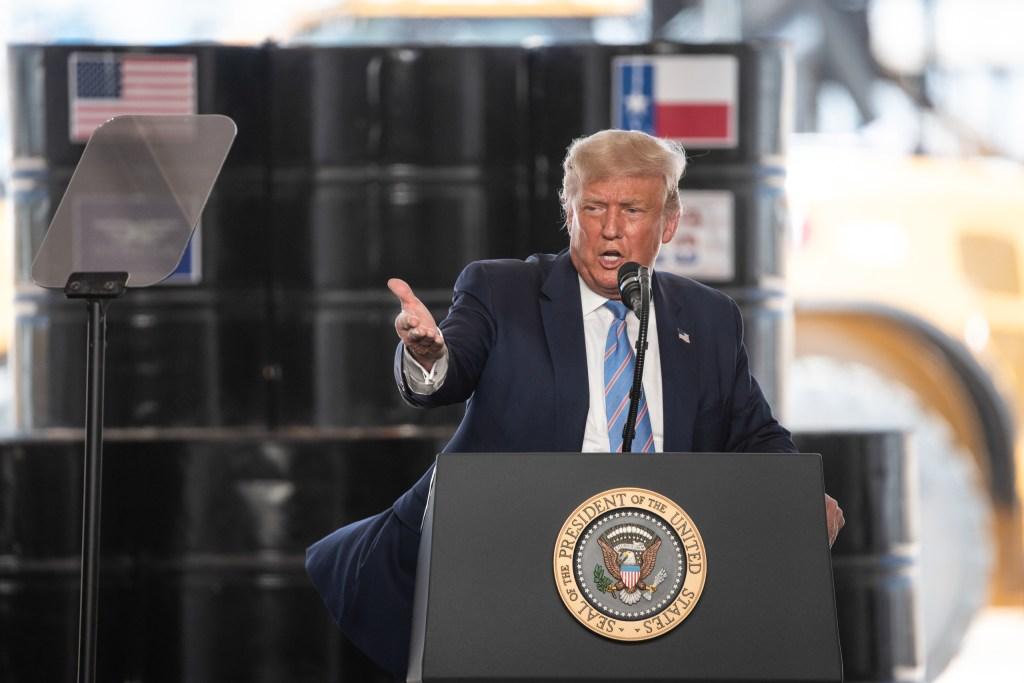
However, President Donald Trump’s commitment to reducing oil prices to $50 a barrel threatens to disrupt this momentum, presenting challenges for the Lone Star State. Trump’s proposal to take control of Venezuelan oil, following the country’s arrest of President Nicolás Maduro, could allow for an influx of South American crude, potentially lowering fuel costs for consumers.
Experts warn that such a price drop could be detrimental to Texas’ oil and gas production, a critical component of the state’s economy. Industry operators may struggle to cover their costs, leading to decreased production and impacting the livelihoods of approximately 495,000 workers in the sector. Regions like the Permian Basin, where local governments heavily depend on oil and gas revenues, could face significant financial losses.
Tom Manskey, the director of economic development in Odessa, expressed concerns that lower oil prices, while advantageous for consumers at the pump, might harm the local economy. In Odessa, a city of around 120,000 residents, the oil and gas sector is the primary employer. “I would imagine it would have a negative effect on our region with regards to jobs and everything else,” Manskey stated, highlighting the unpredictability currently permeating the economic landscape.
Ray Perryman, an economist and founder of the Perryman Group, which conducts analyses on various Texas industries, noted that a drop to $50 per barrel would lead to substantial market shifts with both short-term and long-term ramifications. He suggested that oil companies may adjust their practices and curtail new production, which would eventually drive prices back up, creating a volatile economic environment. “If oil prices were to drop to $50 per barrel, the short-term effects are likely to be somewhat positive for many segments of the U.S. economy, but there would clearly be winners and losers,” Perryman explained.
Further emphasizing the interconnectedness of the industry, Perryman remarked that reduced activity in the oil and gas sector would have significant ripple effects on housing and retail sectors. Declining economic activity would inevitably lead to lower tax revenues for local governments.
Conversely, some industry leaders maintain a more optimistic outlook. Ed Longanecker, president of the Texas Independent Producers and Royalty Owners Association, acknowledged that while production may decline, advancements in drilling technologies would enable operators to continue accessing substantial oil reserves without the need for new wells. “A slight decline in production in 2026 would modestly pressure state and local budgets, but Texas’s robust economy and drilling efficiencies would help to mitigate statewide impacts,” Longanecker stated.
Todd Staples, president of the Texas Oil and Gas Association, reassured that the current market conditions do not indicate severe trouble for the industry. “The Texas oil and natural gas industry has a long history of delivering essential products while navigating price volatility,” Staples remarked. He emphasized that companies are adapting to current and projected market conditions.
In Texas, the threshold for profitability in drilling new oil and gas wells is set at a minimum of $62 per barrel. If prices fall below this level, operators may struggle to generate any profit, cautioned Dane Gregoris, managing director of Enverus, an energy analytics firm. This scenario could lead to shareholder dissatisfaction, as investors demand greater profitability from oil companies.
Despite Trump’s assurances to ramp up oil production, figures indicate that between December 2024 and October 2025, production levels in Texas remained relatively stable at 5.8 million barrels per day. Additionally, the state has seen a decline of 20 drilling rigs since Trump’s administration began, suggesting a diminished appetite for increased extraction.
“These companies would be in survival mode rather than thriving in this environment,” Gregoris commented. “At $50 per barrel, things look pretty dire, and at $40, you’re looking at substantial cuts to capital budgets, likely significant declines in crude oil production in the U.S., and a considerable number of cash flow-negative producers, which typically spells trouble for foreign investors.”
Should production decline, the effects on regional economies reliant on the oil industry could be severe. Layoffs could ensue, impacting Odessa’s local tax base, warned Renee Earls, president and CEO of the city’s Chamber of Commerce. “We’re all in the oil business, regardless of whether we work at a restaurant, in a chamber, or in a bank,” she said. Stressing the importance of stability, Earls, who has experienced various cycles of boom and bust in West Texas, indicated that a drop to $40 a barrel would be particularly alarming.