







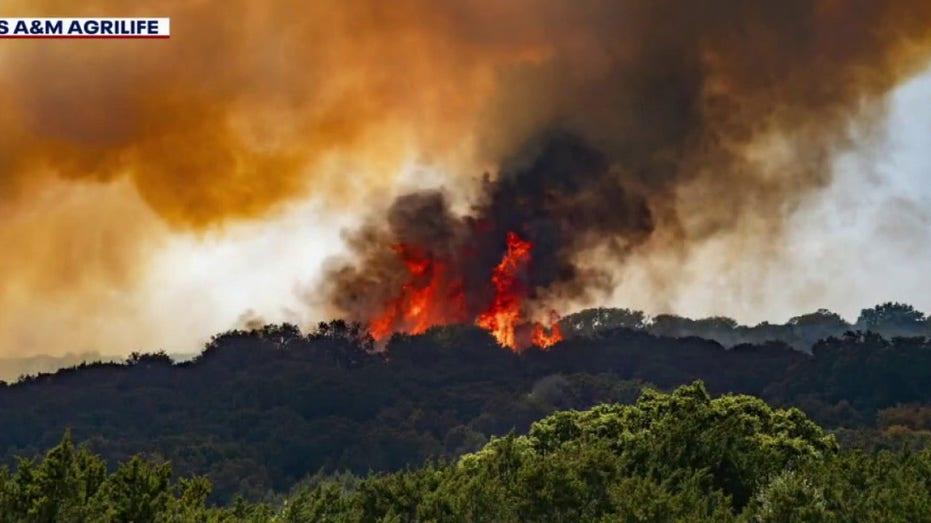
Firefighters are actively engaged in combating a series of large wildfires that have erupted across Texas, driven by a combination of hot and dry conditions that intensify fire activity.
Currently, multiple significant wildfires are burning throughout the state, with investigations ongoing into their causes. The Texas A&M Forest Service has issued a call for public cooperation in preventing further wildfires.
Hydra Fire in Bosque County
This week, the Hydra Fire ignited in Bosque County, prompting mandatory evacuations in the Meridian area as fire crews rushed to contain the blaze near the city limits. Laura Stevens from the Texas A&M Forest Service reported that the state is grappling with an extended drought, dry vegetation, and high temperatures, which are all contributing to increased wildfire incidents.
Within the last 24 hours alone, the Forest Service received nine new requests for assistance related to ongoing wildfires. As of Wednesday night, the Hydra Fire had scorched approximately 1,100 acres and was reported to be 25% contained. Although the evacuation order for Meridian has been lifted, officials caution that conditions may shift rapidly, and residents should stay alert for any new evacuation updates.
Dry River Fire in Sutton County
On Tuesday, another blaze, the Dry River Fire, broke out in Sutton County near Sonora, expanding to nearly 7,000 acres by Wednesday evening. Stevens noted that shifting winds and dropping humidity levels contributed to the fire’s rapid growth, exacerbated by the dry vegetation and challenging topography.
Other Wildfires in Texas
Firefighters are also working to control the Red Bank Fire located in Parker County, west of Fort Worth. Meanwhile, progress has been made on the Ross Fire, which has been active since August 24, with the Forest Service reporting minimal fire activity there at present.
All of these fires remain under investigation, and the specific causes have yet to be determined.
Public Awareness and Safety
Officials are emphasizing the importance of public awareness as the state enters a period characterized by prolonged drought, elevated temperatures, and low humidity. Stevens explained that these conditions result in extremely dry and brittle vegetation, contributing to the increased intensity of fire behavior observed in recent weeks.
With nine out of ten wildfires attributed to human activities, the Forest Service urges the public to be particularly cautious with outdoor activities during this dry spell, highlighting the critical role that individual actions play in wildfire prevention.