







A federal judge has temporarily halted a move by Texas Republicans to limit participation in GOP primary elections to only those voters registered with the party. This decision was made by U.S. District Judge Matthew Kacsmaryk, who is based in Amarillo.
In his ruling, Judge Kacsmaryk indicated that he anticipates the state’s Republican Party will likely succeed in enacting measures to close its primaries during the forthcoming Legislative Session. He noted, “Prominent Texas politicians support similar legislative action,” and emphasized that the lawsuit is on hold due to the possibility of legislative amendments regarding the law in question.
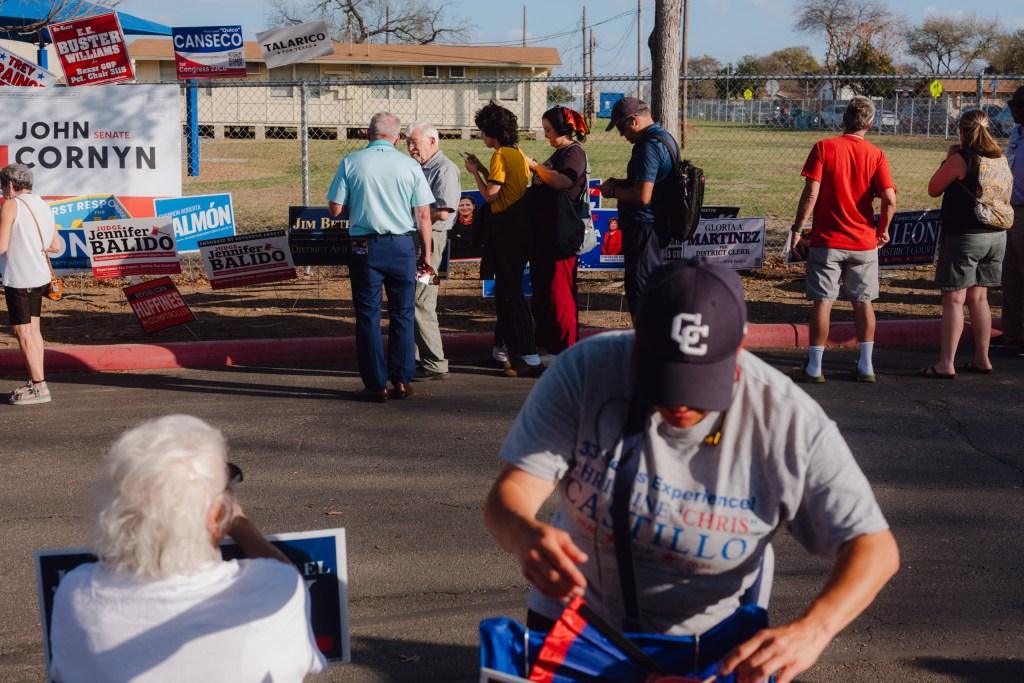
The Republican Party of Texas initiated a lawsuit against former Texas Secretary of State Jane Nelson last year, seeking to restrict eligible voters in the GOP primaries. Currently, any registered voter in Texas can participate in these primaries.
The ability to vote across party lines in primaries has been employed as a strategy by some voters aiming to influence the choice of their party’s candidates in general elections. A notable example is Houston City Council Member Joe Panzarella, who faced backlash for voting in the 2016 Republican primary despite being a registered Democrat. Panzarella later defended his choice, describing it as a “protest vote” against Donald Trump, as reported in local media.
In its legal argument, the Republican Party claimed that the state’s open primaries infringe upon their First Amendment rights to select party leaders. Although there have been ongoing attempts to close the primaries, the urgency heightened in 2024 after two moderate state representatives, former House Speaker Dade Phelan and Gary VanDeaver, narrowly secured their positions against challengers, with margins of fewer than 800 votes. Some Republican leaders contended that these representatives benefited from votes cast by Democrats and independents.
Governor Greg Abbott expressed his desire for exclusivity in GOP primary voting during the Texas Republican Convention in June, emphasizing that “only Republicans should vote in Republican primaries.”
Nelson faced criticism from within her party for asserting that changes to election laws should originate from the state Legislature. Following pressure from lawmakers, she resigned in June. Her successor, Robert Howden, stated in an August legal filing his intention to uphold the state’s open primary system.
While Judge Kacsmaryk suggested that it is probable lawmakers will pass legislation to close the primaries next year, he acknowledged uncertainty remains. He pointed out that Texas’s current primary system may not be entirely classified as a pure open primary because participating in a Texas primary requires some degree of party affiliation.
The next primary election for all parties in Texas is scheduled for 2028.