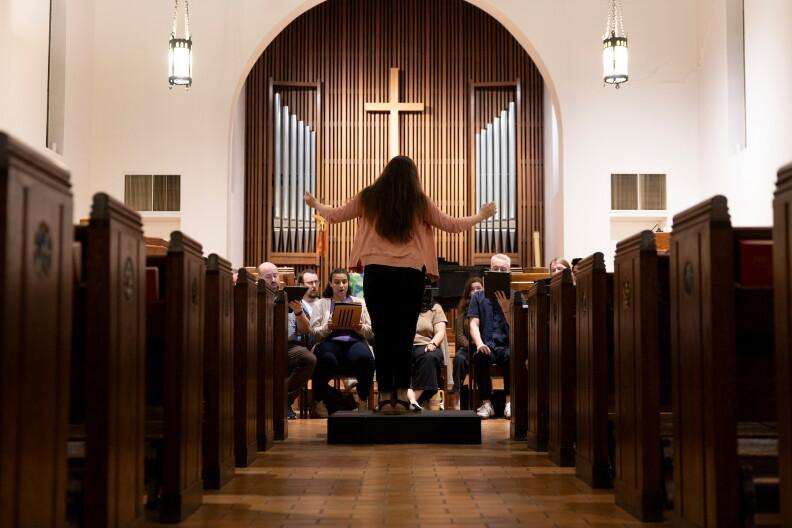






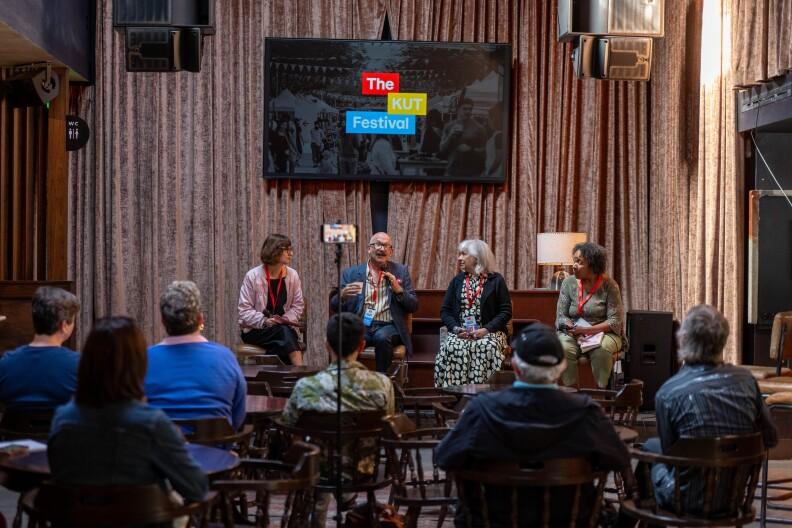
The KUT Festival, held over the weekend, served as a vibrant gathering for the Austin community, spotlighting music and stimulating discussions about the city’s cultural landscape. During the event, local arts leaders urged businesses and residents to bolster the creative scene, emphasizing its significance in putting Austin on the global stage.
In March, Austin distributed over $24 million in grants to 731 artists, a mere fraction of the more than 1,600 applicants who sought upwards of $67 million in funding. Gina Houston, chair of the Austin Arts Commission and an actor, articulated the challenges facing artists during the “State of the Arts” panel at the festival, noting that the high cost of living complicates the ability to create art.
According to Houston, many artists struggle to find the necessary time and resources for their creative endeavors. The pandemic and rising real estate prices led to the closure of numerous performance venues and rehearsal spaces, while the loss of federal funding last year exacerbated the situation. Jason Neulander, a theater artist and playwright, highlighted how art groups have been forced to operate underground due to a lack of visibility and support.
“It’s a doomed feedback loop,” Neulander remarked, emphasizing how reduced visibility leads to diminished support, creating a cycle of decline for the artistic community.
Houston expressed concern over the reliance of artists on city funding, describing it as “unhealthy.” Laura Esparza, executive director of the nonprofit arts agency A3 (Austin Art Alliance), echoed this sentiment, pointing out that governmental funding can often be inconsistent.
“There needs to be more than the city of Austin and H-E-B,” Esparza stated, advocating for an increase in grant-making entities. A3 is set to launch a new round of microgrants this week, funded through private fundraising efforts.
Despite these challenges, the panelists were united in their call for the business community to take a more active role in supporting the arts. Houston, a lifelong Austinite, noted that while hundreds of companies have relocated to Austin in recent years, they have not sufficiently engaged with the local artistic community.
Esparza proposed the creation of a business council for the arts, aimed at fostering partnerships between corporations and artists to benefit both sectors. She mentioned that A3 is in discussions with city leaders and the Austin Chamber of Commerce to bring this idea to fruition once adequate resources are secured.
However, the responsibility does not rest solely on businesses, according to Houston. She urged the arts-going community to reconnect with venues and experiences they may have overlooked.
Reflecting on the transformation of entertainment over the past decade, Houston remarked, “It used to be, you didn’t have anything to do, you went out and saw something. But now you always have something to do. There’s always a screen.”
She expressed concerns about the desensitization that arose during the pandemic, as people became accustomed to virtual interactions. The rise of technology has led to a disconnect from real-world communities, where meaningful human interactions occur.
Neulander emphasized the importance of in-person artistic experiences, stating, “This unstoppable tidal wave toward AI is making live, tactile, in-person experiences with other actual, real human beings maybe the single most important thing happening on the planet.”