






The Texas Stock Exchange (TXSE) is set to begin trading on Monday, marking a significant milestone for one of the most capitalized new exchanges to emerge in decades.
Based in Dallas, TXSE will implement a gradual launch throughout July. Initially, the exchange will allow its members, which include approved broker-dealers, banks, and trading firms, to engage in trading test stocks. As the month progresses, it plans to introduce trading for thousands of additional stocks and equities, thereby opening the door for public trading.
By the third quarter, exchange officials aim to have Exchange-Traded Products (ETPs) listed, with corporate listings expected by the fourth quarter of this year, as stated in an official announcement.
Both the Texas state government and exchange representatives are optimistic that the launch of TXSE will bolster Dallas’ aspirations to become a national financial center while enhancing the state’s economy by expanding the financial services sector and benefiting Texas-based companies and investors.
“With the commencement of full production trading, any lingering doubts about TXSE being merely theoretical will be dispelled,” a TXSE official remarked in a Thursday statement.
The initiation of trading on Monday is crucial for validating the exchange’s operations to potential companies interested in listing, demonstrating that it can serve as a viable alternative to established exchanges like the New York Stock Exchange and NASDAQ, according to Sriram Villupuram, an associate professor of finance at the University of Texas at Arlington.
“We hope basic technical aspects will function smoothly. This is the first real test, akin to a new car being rolled out,” Villupuram explained. “While I believe they will navigate this successfully, unforeseen issues can arise, especially given the high-tech nature of the exchange.”
Despite the current trend of electronic trading, the geographic location of a stock exchange remains significant. Ray Perryman, president of The Perryman Group, noted that investors are more inclined to invest in stocks from nearby companies. Texas possesses the necessary elements for a successful exchange, including a rapidly expanding investor base and numerous Fortune 500 companies headquartered in the state.
“A homegrown national exchange translates to more jobs, increased investment, and expanded growth prospects for businesses and communities throughout Texas,” stated Gabriela von zur Muehlen, senior vice president and chief policy officer at the Texas Association of Business.
Interest in TXSE has surged since its announcement in June 2024, when it unveiled plans to launch with $120 million in funding from major investment firms like BlackRock and Citadel Securities. Since then, excitement has continued to build as the exchange secured federal approval and attracted additional investments from prominent financial institutions, bringing the total to $275 million.
Simultaneously, the financial services sector in the Dallas area has been thriving. Major players such as JP Morgan Chase, Goldman Sachs, and Charles Schwab have established substantial workforces in the region, often humorously referred to as “Y’all Street.”
“The center of gravity for American capitalism is now located in the boom belt,” Governor Greg Abbott remarked at a TXSE event in April. “The Texas Stock Exchange is a natural progression of that capitalism.”
Abbott and other state officials have pointed to the robust Texas economy—ranked as the eighth largest globally if it were an independent nation—as a key factor for TXSE’s potential success, especially when compared to previous exchanges that have struggled. Texas is home to the second highest number of Fortune 500 companies in the U.S., trailing only California.
Historically, the American investment landscape has been dominated by the New York Stock Exchange and NASDAQ, both private entities based in New York City.
Perryman noted that decades of consolidation among regional exchanges have led to a duopoly, where companies seeking public trading primarily rely on the NYSE and NASDAQ.
In response to TXSE’s plans, both NYSE and NASDAQ have established branches in Texas—NYSE Texas and NASDAQ Texas—signifying their acknowledgment of TXSE’s ambitions and the growing strength of Dallas’ financial sector.
Villupuram suggested that while it may take years for TXSE to become a true competitor to the NYSE and NASDAQ, the establishment of these branches serves to validate Texas’ economic prowess and the expanding financial market in the Dallas region.
“There is genuine business potential here, along with a sense of urgency to not miss out,” Villupuram added.
Over the past two decades, New York has experienced a 16% increase in investment banking jobs, while Texas has seen an impressive 111% growth in the same field. Across the entire financial services sector, Texas now boasts more jobs—939,600—than both New York and California, according to Perryman.
“Texas has transformed from a mere back-office location to a significant hub for technology, operations, wealth management, trading support, and increasingly, front-office and investment banking functions,” Perryman explained.
Regardless of the challenges TXSE may face in penetrating the NYSE and NASDAQ duopoly, the competition among exchanges within Texas is expected to generate a positive feedback loop, resulting in increased investments in Texas companies and a greater number of jobs in the financial services sector, according to Perryman.
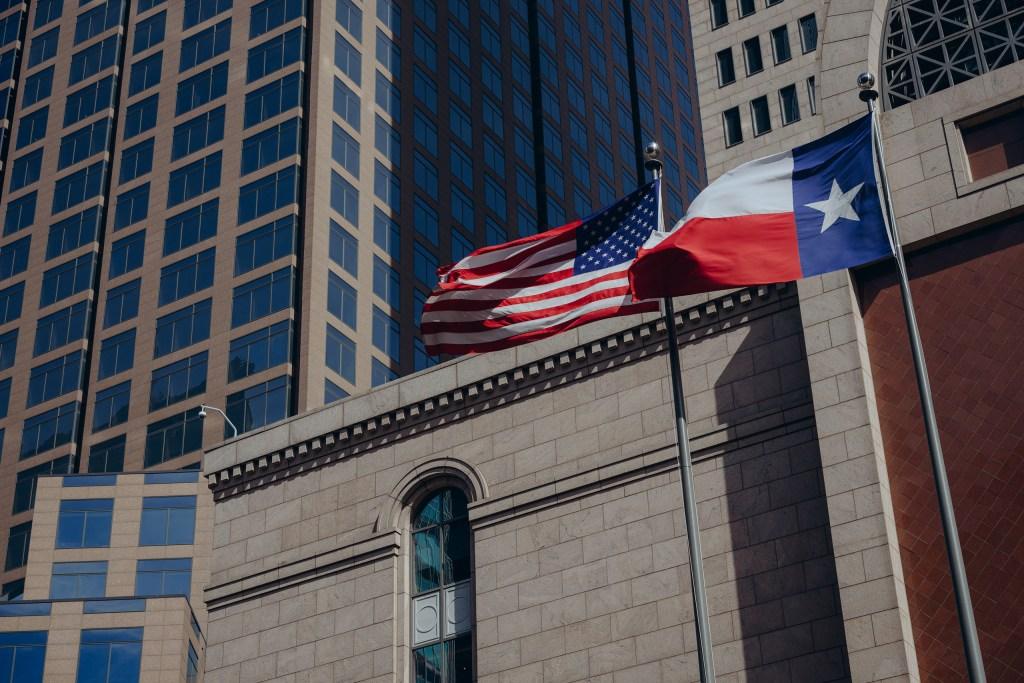
The exchange will operate entirely digitally but will maintain a physical presence in Dallas, having recently signed a lease at the Bank of America Tower in the city’s Uptown district, as reported by the Dallas Business Journal in May.
TXSE has already announced several Exchange-Traded Products (ETPs) that will be available for trading. Unlike individual stocks, ETPs allow investors to buy into entire markets, such as the S&P 500, oil, or gold.
While the exchange has yet to reveal corporate listings, officials indicated that these will be announced later this summer and into the fall as the launch approaches.
Attracting corporate listings will be essential for TXSE’s long-term viability, Villupuram emphasized, as stock exchanges generate revenue primarily through listing fees collected from participating companies.
Both the NYSE and NASDAQ impose strict requirements for companies seeking to list, which include benchmarks for financial stability, corporate transparency, and regulatory compliance. Although these standards indicate a company’s maturity, they can also restrict access for smaller firms wanting to connect with investors through the major exchanges.
The $275 million in initial funding represents a substantial investment for a new exchange, according to Villupuram, though he cautioned that establishing and operating an exchange is exceedingly costly. The NYSE and NASDAQ handle hundreds of billions of dollars in transactions on active trading days.
For context, the annual salary of the CEO of the New York Stock Exchange Group exceeds $6 million, while the NYSE operates as a subsidiary of Intercontinental Exchange, which compensates its CEO over $22 million per year.
“It will take several years of gradual growth and attracting listings,” Villupuram stated. “In comparison to the larger exchanges, this may seem modest, but for TXSE, given its starting point and investment, it’s significant.”
TXSE is adopting a measured approach, with aspirations for long-term sustainability.
All National Market System symbols, such as TSLA for Tesla Inc., should be available for trading on TXSE by the end of July as they are gradually introduced, according to a TXSE official. There are over 12,000 publicly traded stocks accessible to U.S. investors, as reported by the financial services firm Motley Fool.
While the ringing of a bell typically signifies the start of trading on a stock exchange, no such ceremony will take place in Dallas on Monday. However, if everything goes according to plan this month, officials anticipate organizing a celebration featuring the traditional bell ringing in the near future.