








Since its admission to the Union, Texas has sent only five Republican women to serve in the U.S. House of Representatives. However, the upcoming elections may see a significant shift, with the possibility of four Republican women holding seats simultaneously.
This potential increase marks a notable moment for the Lone Star State, which boasts the largest Republican representation in Congress but has predominantly elected male GOP representatives. In recent years, other states have seen a rise in the number of Republican women in Washington, making Texas’ situation stand out.
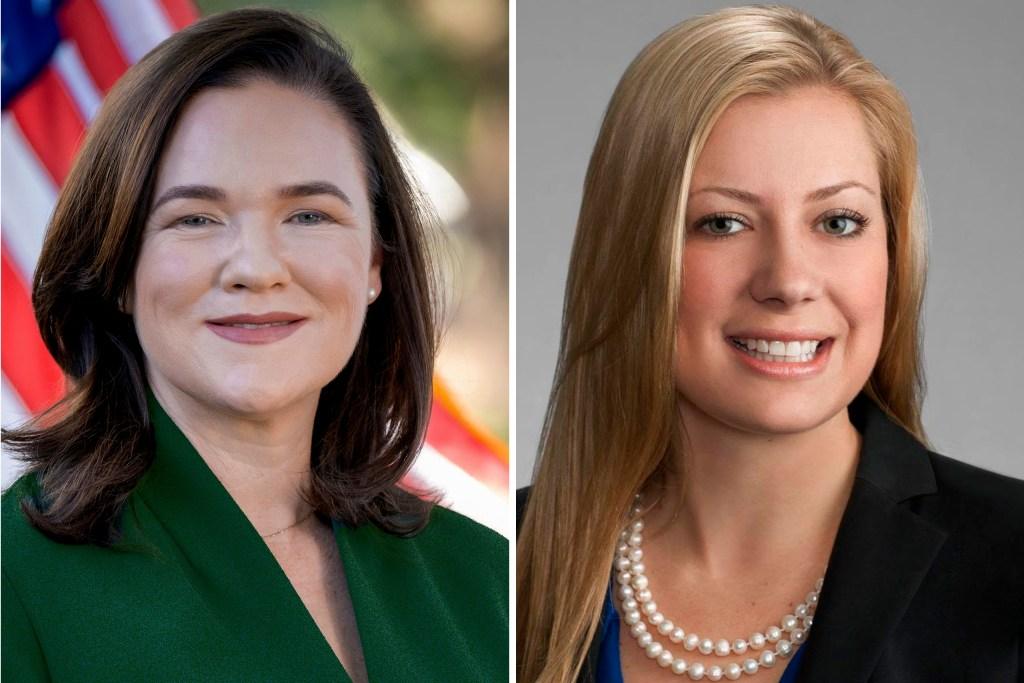
The upcoming November elections may usher in this change due to Texas’ newly redrawn congressional map and a wave of retirements, which have allowed for the emergence of two Republican nominees in the Houston region—Alex Mealer and Jessica Steinmann—who are expected to perform well in their Republican-leaning districts. They are part of a larger group of 31 Republican women who entered the race for the U.S. House in Texas, a stark contrast to the 124 male candidates in the GOP primaries.
Also vying for election are incumbent Representatives Monica De La Cruz from Edinburg and Beth Van Duyne from Irving. However, De La Cruz is facing a tough challenge in one of Texas’ most competitive congressional seats, while Mealer is contesting a newly established district that President Donald Trump won by a significant margin in the 2024 presidential race. Still, Democrats are optimistic about their chances in Mealer’s Hispanic-majority district if a blue wave occurs this fall.
Furthermore, two other GOP women, Martha Fierro and Lauren Pena, have secured nominations in districts that heavily favor Democrats, presenting challenges for Republican candidates.
The uphill battle for De La Cruz highlights the strategic focus of organizations like Winning for Women, which have prioritized backing candidates in safer districts, such as those of Mealer and Steinmann. Both candidates have garnered support from this group, which provides financial and mentorship resources to female Republican candidates.
Winning for Women, which operates as both a super PAC and a nonprofit, has invested over $300,000 in Steinmann’s campaign and more than $450,000 in Mealer’s, contributing to a total of $48 million raised since the 2020 election cycle. This initiative aims to recover from a previous downturn in the number of Republican women in the House, which fell to just 13, the lowest figure in twenty years. Since then, more than 30 Republican women have been elected to Congress with the group’s assistance.
Danielle Barrow, President of Winning for Women, explained that the organization deliberately shifted its focus away from battleground districts to enable female candidates to gain seniority and develop leadership roles without the constant pressure of re-election every two years.
This strategic pivot was influenced by the experience of Mayra Flores, a former Republican congresswoman who won a special election in South Texas in June 2022 but lost her seat five months later. Her brief tenure underscored the precarious nature of Republican women’s representation, which has seen only minimal growth since Kay Granger became the first Republican woman to represent Texas in Congress in 1997.
Mealer emphasized that the initiative for more GOP women in Congress is about ensuring that diverse voices are included in the party’s representation. She highlighted the importance of addressing issues that resonate with mothers, such as family needs and practical solutions.
Mealer attributed her candidacy to a generational shift within the Texas delegation, a change facilitated by last summer’s redistricting that led to retirements and realignments, including the dismantling of U.S. Rep. Al Green’s district to accommodate Mealer’s new seat.
Winning for Women is careful to ensure that its candidates maintain their individuality and unique perspectives, which contribute to the diversity of the Republican conference, according to Barrow.
Despite the efforts of Winning for Women, the number of GOP women in Texas has seen little change since the group’s inception. Of the approximately 21 open primaries since 2017, only Van Duyne has resulted in a female candidate winning. In contrast, Democrats have made more significant strides, electing their first female representatives in 1966, followed by eight more women in the House.
Research indicates that voters often perceive gender as a determinant of a candidate’s ideology, typically associating women with more liberal viewpoints. This dynamic can create challenges for Republican women in primary contests, where the preference tends to lean toward candidates viewed as more conservative.
Barrow expressed that the ongoing need to advocate for the value of electing women indicates that much work remains to be done. She countered criticisms that label her mission as “identity politics” by underscoring the qualifications and capabilities of candidates like Steinmann and Mealer.
Steinmann has positioned herself as a qualified candidate ready to produce results, citing her extensive experience in various roles, including as a regional director for Senator Ted Cruz and leading the Justice Department’s crime victims office under the Trump administration.
Mealer, an Army veteran and former energy finance professional, frames her parenting experience as an asset that enhances her efficiency and problem-solving skills, which she believes will serve her constituents well.
Winning for Women’s Executive Director Meredith Allen Dellinger noted that female members often face family obligations that can limit their ability to ascend in seniority compared to their male counterparts, who may have more freedom to travel and fundraise.
However, the challenge extends beyond merely electing women; it also involves appealing to them as voters. Exit polls in Texas consistently show a significant gender gap, with men favoring Republicans at much higher rates than women, who generally lean Democratic. This disparity has been particularly pronounced among suburban women, contributing to the GOP’s loss of its House majority in 2018.
While Winning for Women is not the only organization advocating for conservative women, it asserts its unique position as the leading force investing substantial resources in Republican primaries. Despite this, its financial contributions are dwarfed by those of Democratic organizations such as EMILY’s List, which has raised over $850 million since 1985 to support Democratic women who advocate for abortion access.
Mealer, who identifies as Hispanic, pointed out that the funding gap highlights the underrepresentation of her demographic within her party.
Looking ahead, Mealer aims to leverage her district’s industrial strengths to secure her position, vying for a seat on the Appropriations Committee, particularly its energy and water subcommittee, to facilitate projects benefiting her coastal district.
With both Mealer and Steinmann positioned for success, Winning for Women is already setting its sights on the next decade, anticipating the potential for additional congressional seats in Texas following the 2030 census. This presents an opportunity to cultivate a deeper bench of Republican women in the state.
“Jessica and Alex represent the potential for the next wave,” Dellinger stated. “Our focus remains on their election, but we are also considering future opportunities that could arise in Texas.”