








“Life, Larry, and the Pursuit of Unhappiness” offers a historical perspective that feels in need of a fresh narrative. Larry David brings his signature style to the small screen once again in this new HBO series that aims to reinterpret key moments of American history.
While “Curb Your Enthusiasm” stands as one of television’s longest-running and most beloved comedies, David’s latest venture, subtitled “An Almost History of America,” struggles to capture the same spark. The half-hour program features David portraying historical figures or ordinary observers, injecting his characteristic curmudgeonly humor into significant events.
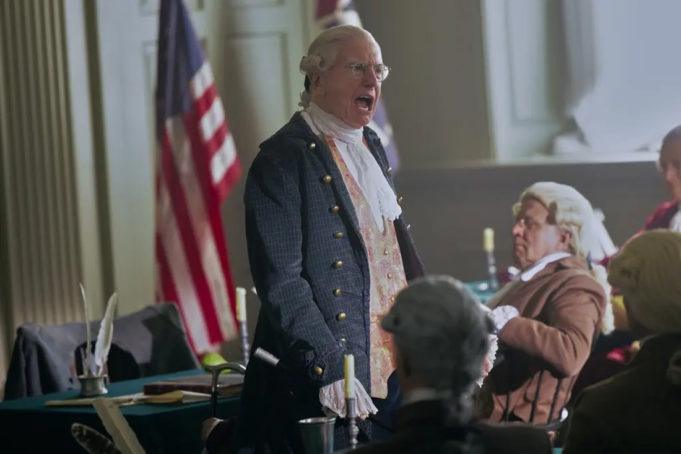
In a fashion reminiscent of an American Blackadder, David dons various historical costumes while embodying a relatable yet cynical witness to pivotal occurrences throughout American history. The inaugural episode showcases his comedic take on the drafting of the Declaration of Independence, Alexander Graham Bell’s initial telephone call, soldiers preparing for World War I, and Rosa Parks’ defiance against Jim Crow laws.
The series kicks off with an introduction by former President Barack Obama, who humorously reintroduces David as a key observer of these historical milestones. However, the joke feels tired and somewhat forced, as Obama presents David as a character familiar to audiences from shows like “Seinfeld” and “Curb Your Enthusiasm.”
Each segment is prefaced by voiceovers from Samuel L. Jackson, setting up the sketch’s premise. Unfortunately, this approach can dilute the punchlines for those familiar with David’s comedic style. The opening scene takes a humorous spin on the drafting of the Declaration, with David’s character extending beyond the original list of grievances to include absurd complaints about social etiquette.
In the World War I sketch, David’s character finds himself in a typical war-movie scenario, where he is asked to deliver a love letter, leading to predictable comedic objections. The overall structure of the sketches often follows a similar pattern, with David’s character violating social norms for personal benefit and then grappling with the fallout.
The portrayal of Rosa Parks presents a challenge, given the weight of the historical moment. David’s character, an irritating passenger named Murray, attempts to inject humor into a serious context, but the skit drags on longer than necessary, overshadowing its potential impact.
Conversely, the skit featuring Alexander Graham Bell stands out. David, as Bell, modernizes the invention demonstration by incorporating contemporary communication habits, resulting in some genuinely funny moments, particularly when Richard Kind appears as a character who prefers lengthy phone calls over simple texts.
While Larry David remains one of the most brilliant comedic minds alive, this series does not showcase him at his best. Instead, it feels like a rehashed version of the “Curb Your Enthusiasm” formula, lacking the freshness and originality that fans have come to expect. The execution may leave viewers wishing for a more innovative approach to history through David’s unique lens.