








A new documentary titled The Invisible Mammal highlights the efforts of scientists striving to protect bats from the lethal white-nose syndrome. Scheduled for screening at AFS Cinema, the event will include a Q&A session with the filmmaker and experts following the film.
Director Kristin Tièche traces the inspiration for her documentary back to 1999, during her time as a film student in upstate New York. Recalling her first encounter with bats, she described being mesmerized by a sky filled with them, a sight that has become increasingly rare due to the devastating impact of white-nose syndrome.
This condition, caused by an invasive fungus likely introduced to the U.S. via a visiting tourist, leads to the starvation of hibernating bats. “The disease forces bats to wake too frequently during winter, depleting their fat reserves and causing them to perish before spring arrives,” explained Winifred Frick, chief scientist at Bat Conservation International.
Since its initial detection in New York state in 2006, white-nose syndrome has spread rapidly across North America, wreaking havoc on bat populations in regions such as the Northeast, mid-Atlantic, and Midwest, with some areas experiencing losses exceeding 90%. While Texas has seen the disease, it has yet to cause significant harm.
In 2019, when the disease reached California, Tièche was reminded of that transformative evening when she first witnessed bats in flight. “I realized it was time to embark on this film project,” she stated.
The documentary captures the dramatic emergence of thousands of bats from Bracken Cave, near San Antonio, which hosts the largest known bat colony in the world. The film is a non-narrated exploration that follows the endeavors of researchers and conservationists nationwide as they address the challenges posed by white-nose syndrome.
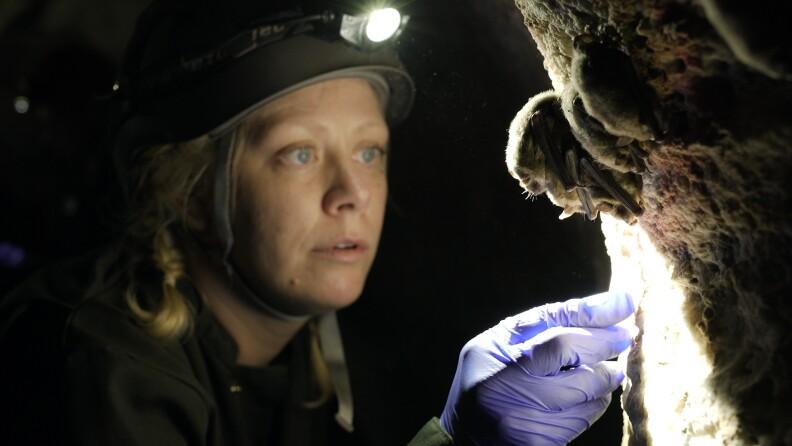
Central to the film is Frick and her team working on the Fat Bat Project, an initiative launched in Michigan’s Upper Peninsula aimed at ensuring that bats maintain healthy body weight during their winter hibernation. “The goal was to help bats gain fat in the fall and recover their condition in the spring,” Frick noted, adding that research indicates healthier bats tend to survive better through hibernation.
During her filming in Michigan, Tièche discovered that the Fat Bat Project’s research team was entirely composed of women. “I knew then that I wanted to include the narrative of women in science in the documentary,” she remarked.
Although white-nose syndrome exists in Texas, the Mexican free-tailed bat populations in the Hill Country face a lower risk due to their different hibernation habits and the availability of insects in Central Texas throughout the winter months. Nevertheless, Austin’s Congress Avenue bat bridge features prominently in the film, which opens and closes with captivating footage of bats emerging from the Bracken Cave Preserve, filmed by Austin wildlife cinematographer Skip Hobbie.
“I expressed to him [Hobbie] my hope that viewers would develop a love for bats through watching the film,” Tièche said. “You protect what you love.”
Despite the ongoing threat posed by white-nose syndrome, there is cautious optimism as some bat species that were once on the brink of extinction in the Northeast are showing signs of recovery, although the reasons remain unclear. Frick noted that the Fat Bat Project, now expanding into Texas and the Northeast, could serve as one of several strategies to prevent total population collapse in certain regions.
The Invisible Mammal will be screened at 6:30 p.m. on Tuesday, July 14, at AFS Cinema, followed by a Q&A session featuring filmmaker Kristin Tièche, producer Matthew Podolsky, cinematographer Skip Hobbie, and Winifred Frick from Bat Conservation International.