









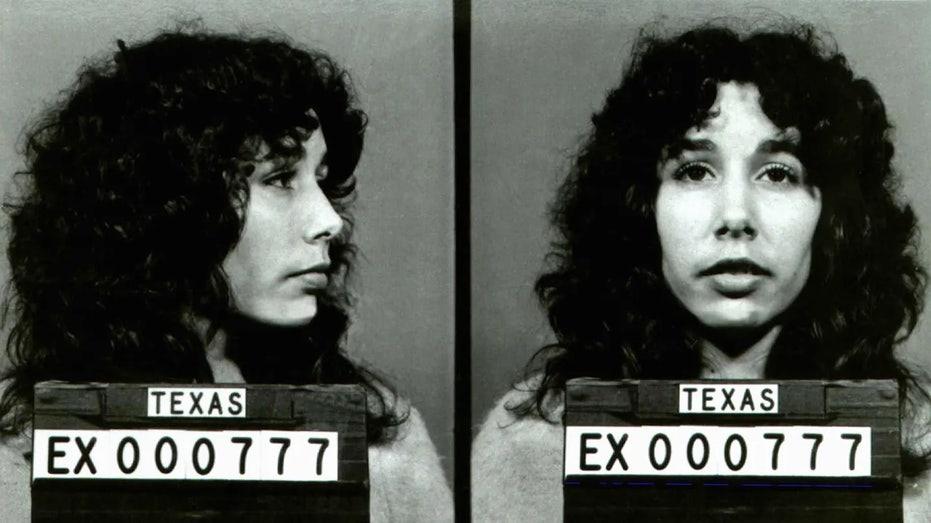
Karla Faye Tucker, a convicted murderer who gained notoriety for killing two individuals with a pickax, has left an indelible mark on the minds of many, particularly retired FBI agent Candice DeLong. DeLong, a criminal profiler and host of the podcast “Killer Psyche,” recently examined Tucker’s life and her controversial conversion to Christianity while incarcerated, a transformation that sparked national debate.
DeLong highlighted a particularly unsettling aspect of Tucker’s case: her admission that she experienced sexual arousal during the brutal murders. “Karla was doomed from the beginning, once people found out what she did,” DeLong remarked. “And the worst thing she did, and she did not help herself by telling people this, was that she had an orgasm when she was killing, while she was stabbing someone.” This admission raised serious questions about Tucker’s potential for future violence, leading DeLong to express that society often feels a strong desire to eliminate such threats.
Tucker, originally from Houston, Texas, was convicted for the 1983 murders of Jerry Lynn Dean and Deborah Thornton. During the incident, Tucker and her boyfriend intended to steal motorcycle parts from Dean’s apartment, which led to the tragic and violent deaths of both victims. Tucker later confessed to her involvement in the killings, a detail that would haunt her legacy.
DeLong noted that Tucker’s troubled childhood played a significant role in her later actions. “Karla Faye had a pretty sad and horrible childhood. Her family broke up, and her mother became a sex worker, leading to a life filled with drugs and neglect,” DeLong explained. “The effects of drugs on an undeveloped brain have been studied, and they can create a psychological situation where, in adulthood, individuals may exhibit violent behavior.” DeLong emphasized that the environment Tucker grew up in severely hindered her chances of leading a normal life.
Despite her horrific actions, Tucker’s supporters argued that her conversion to Christianity while on death row was genuine, with many advocating for her clemency. DeLong, however, remains skeptical. “Prison is exactly where she belonged for obvious reasons,” she stated during her podcast. “Karla needed to be contained and monitored, and finding God helped her reconstruct her identity.” Yet, DeLong questions the authenticity of such conversions when they occur under duress.
Throughout her time on death row, Tucker’s case garnered significant media attention and public interest, with some portraying her as a complex figure. However, DeLong argues that Tucker embodied society’s worst fears, describing her as a “hedonist who lived a life of drugs, sex, rock ‘n’ roll, and, above all, violence.” Tucker was ultimately executed in 1998, becoming the first woman to be executed in Texas since the Civil War, a case that continues to provoke discussions about capital punishment and the possibility of rehabilitation for violent offenders.