








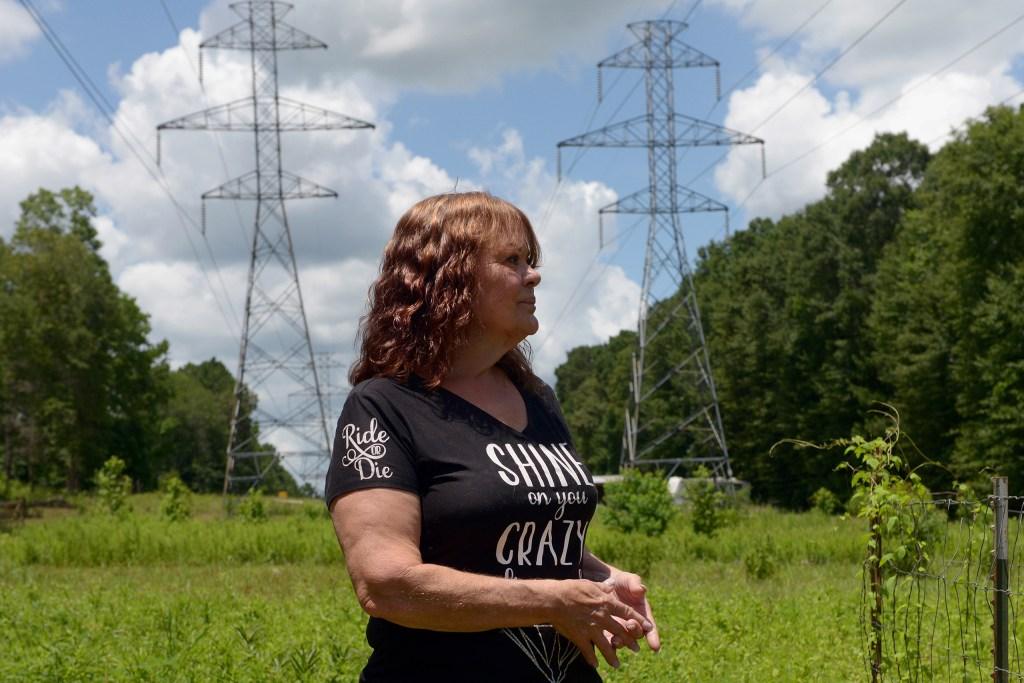
In Lufkin, Texas, Kaesha Avishai made her home five years ago, choosing a location that balanced proximity to town with the tranquility necessary for her cats and chickens. However, her idyllic life began to change when four-wheelers started crossing her land, pesticides were sprayed nearby, and helicopters and drones flew overhead. The disruption escalated when she learned that her land had been sold to AmpZ Champion Data Center Holdings, a Denver-based firm, in partnership with EPG Champion Development LLC, an Atlanta-based renewable energy company. Avishai’s anger grew as she realized the implications for her peaceful existence.
Avishai expressed her frustration, stating, “I can’t promise to keep the Second Commandment to love my neighbor if my neighbor is not human.” The rise of data centers—many supporting artificial intelligence—has sparked concern among residents and lawmakers across rural Texas. In Angelina County, two data centers, including the one near Avishai’s home, are in the works, drawing interest due to the region’s abundant land and water resources.
While economic growth is often seen as a benefit, many East Texans who sought solace in the area fear that these developments will disrupt their lives. Residents are calling for written guidelines from county officials to ensure that new data centers won’t negatively impact their communities.
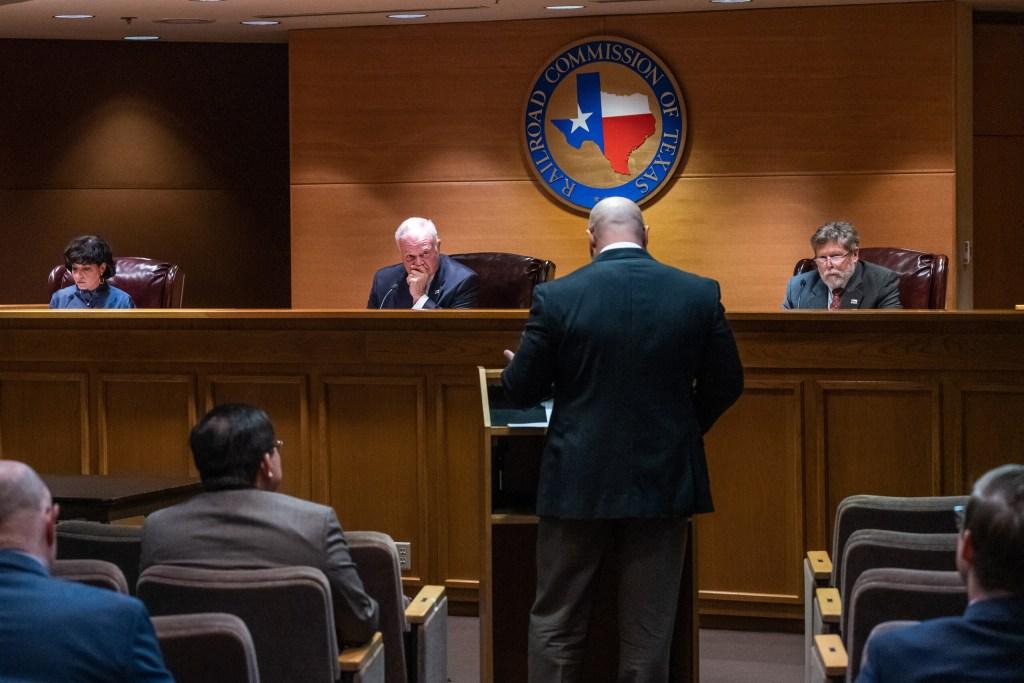
After enduring more than a year of disturbances, Avishai, a retired nurse, decided to take action. She utilized ChatGPT to craft a speech for the Angelina County Commissioners and attended a meeting in early June, joined by a group of concerned neighbors. The irony of her choice to use an AI tool was not lost on her: “You can use their weapons against them,” she remarked.
Data centers are touted as a means to stimulate economic development, providing opportunities for communities eager for growth. In Lufkin, there are numerous companies seeking tax incentives to establish operations, including the proposed data center.
Even Governor Greg Abbott, known for his pro-business approach, has acknowledged the community’s apprehensions, calling for regulations and even a ban on data centers in rural neighborhoods such as Avishai’s. Frustrated by county officials’ limited response, Avishai, who moved to Texas seeking a peaceful and faith-filled environment, views the expansion of data centers as a betrayal of those values. “I would have thought — or hoped or prayed — that our representatives would have had a little more of that Christian backbone to stand against something that is so obviously evil,” she lamented.
Conversely, Lufkin Mayor Mark Hicks has been an advocate for the project, believing it will generate jobs and tax revenue. He expressed optimism that the companies involved would prioritize safety and community welfare. “I’m not going to say that there was not a data center built somewhere where promises were made and broken, or things didn’t pan out the way that they should have,” Hicks explained, while emphasizing his confidence in the proposed facility.
At a June meeting in Angelina County, local residents voiced their concerns about the potential impacts of the data center. Research suggested that data centers consume significant amounts of local water, drive up electricity costs, and may contribute to health issues due to noise pollution. Christina Perez, a political activist from Houston, returned to her family farm, concerned about the implications of a major tech company encroaching on their rural lifestyle. “I really just want to make sure that we don’t see some big tech company from Denver — or any of these different places from out of state — come and take away our resources and turn our home into an industrial wasteland,” she stated.
In 2025, data centers in Texas used an estimated 25 billion gallons of water, accounting for less than 1% of the state’s total usage that year, a figure projected to rise to 2.7% by 2030. Meanwhile, the Electric Reliability Council of Texas reported that 519 companies have requested connections to the grid, which could escalate power demand significantly. A Time Magazine investigation linked noise from similar operations to health problems in communities like Granbury.
Avishai expressed her reluctance to live near a data center, stating, “I don’t want to hear the buzz, the hum.” Raine Cotton, managing partner at EPG Champion Development LLC, indicated a willingness to work with the community and address residents’ concerns. The proposed facility would implement a closed-loop cooling system to conserve water and would also include a sound buffer zone to mitigate noise pollution.
Cotton assured that the company would provide regular environmental updates to the county, highlighting the operational success of over 100 similar facilities in the Dallas area, which often go unnoticed by the communities around them. He described the planned facility as a state-of-the-art operation that would serve as the leading taxpayer in Angelina County.
The data center is slated for development on a 1,000-acre site along State Highway 103 East, previously occupied by a papermill, in close proximity to several small neighborhoods. The project is expected to inject $1 billion in private capital, create 30 full-time jobs, and provide 500 construction jobs, according to city officials.
Lufkin has a rich history of industrial growth, capitalizing on its strategic advantages to attract businesses. Between 2018 and 2023, the city successfully lured multiple companies to establish operations through various incentives. However, the sentiment surrounding the data center has shifted, with County Judge Keith Wright now advocating for a tax abatement agreement that includes conditions to protect local residents.
Moving forward, residents are demanding more transparency regarding the data center and the ability to halt the project if their concerns are not addressed. While Abbott has suggested regulations for the industry, they do not grant counties the authority to stop projects, leaving residents feeling powerless.
Cotton has committed to holding town hall meetings in Angelina County to engage with residents and address their inquiries. He acknowledged that there has been a perception of opacity regarding the project and assured the community that they are currently in the planning and regulatory stages.
As grassroots organizations mobilize against the data center, attention is likely to shift towards state-level discussions in Austin. Avishai is at a crossroads, contemplating whether to continue investing in her flower farm or leave her beloved homestead. She now views the data center as an unavoidable aspect of Texas’s evolving industrial landscape, yet she clings to her desire for peace and solitude.
“I would just like to stay here in my little cocoon by myself,” Avishai mused. “To take care of my animals and feed birds and la la around like Sleeping Beauty or something. But I’m afraid the giant has awakened, and the giant is coming.”