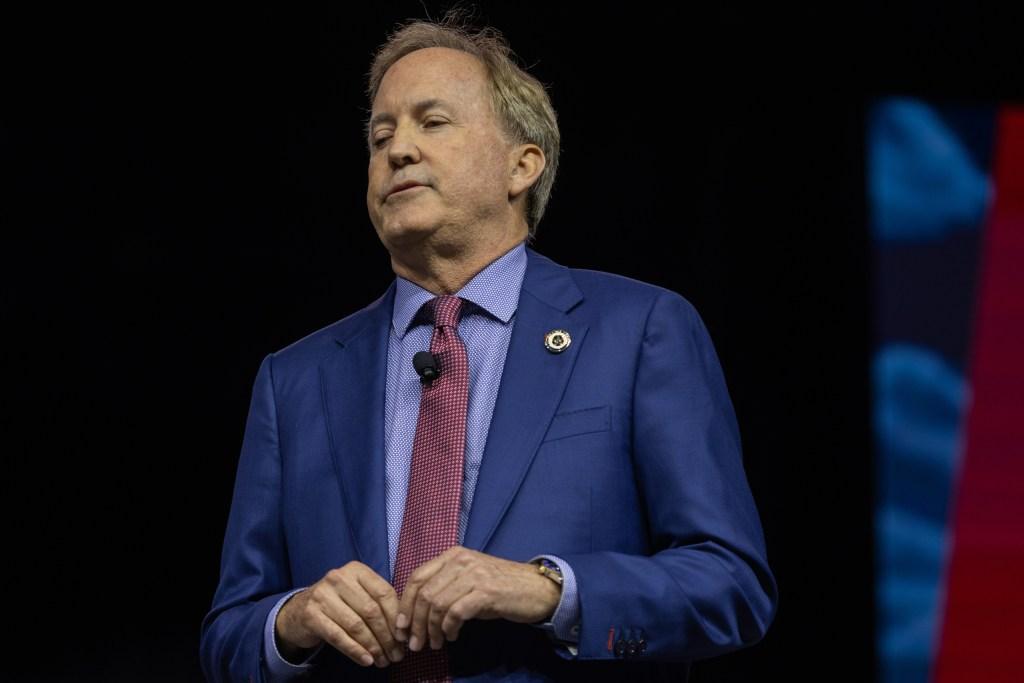









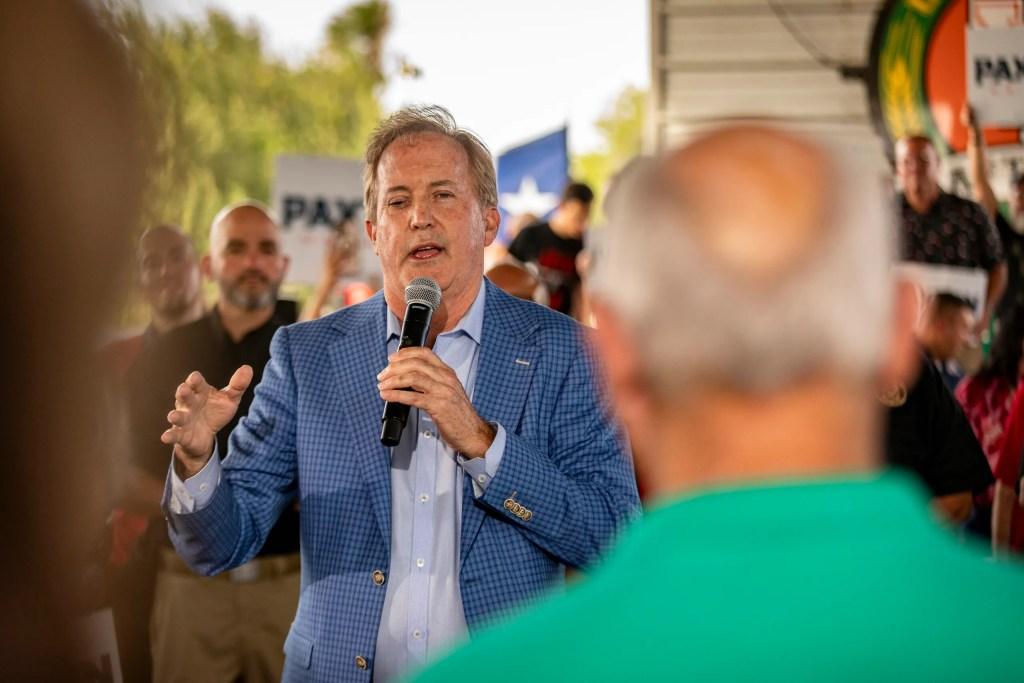
Attorney General Ken Paxton has unveiled a series of tax deductions that he claims will serve as the cornerstone of his economic strategy for his U.S. Senate campaign. This announcement comes as affordability and rising everyday expenses remain pressing issues in the current midterm elections.
Paxton, the Republican nominee, emphasized that his proposal is designed to “put thousands of dollars back into the pockets of hardworking Texans,” particularly focusing on deductions for housing and healthcare expenses. “Washington has made it harder than ever to get ahead, and the American Dream is slipping away as the cost of everything from housing to healthcare rises,” he stated in a message that also featured in a newly released digital advertisement. He stressed his belief that every Texan should have the opportunity to own a home, raise a family, and lead a healthy life without financial strain.
With affordability consistently ranking as a top concern among voters, the battle to define and address this issue is crucial in the Texas Senate race. Paxton is in a tight race against Democratic state Representative James Talarico, which is shaping up to be a key contest.
To promote his economic plan, Paxton will embark on a tour next week, coinciding with the release of his digital ad. The tour will include stops in major Texas cities, including Dallas-Fort Worth, Houston, McAllen, and San Antonio.
Last year, Republicans passed the One Big Beautiful Bill Act, a significant tax and spending legislation, largely along party lines. This act made permanent the tax cuts initiated during President Donald Trump’s first term while also introducing new temporary deductions for working-class Americans, such as allowing deductions for tips, overtime pay, and car loan interest.
Paxton’s proposal seeks to introduce new tax deductions specifically targeting healthcare, housing, and family-related costs. These benefits would be available in addition to existing deductions, such as the standard deduction, and are structured around four main pillars.
The first pillar includes a $25,000 deduction for any out-of-pocket medical expenses, including premiums, applicable to individuals and an additional $25,000 for each dependent. Furthermore, Paxton plans to implement a $5,000 tax deduction aimed at encouraging healthy lifestyle choices. This would allow taxpayers to deduct expenses related to gym memberships, nutrition plans, sports activities for dependents, and GLP-1 weight-loss medications.
On the housing front, the attorney general proposes a $50,000 deduction for first-time homebuyers as well as a $50,000 deduction for down payments when relocating to a new primary residence. This initiative has garnered bipartisan interest in recent years, as housing affordability has emerged as a rare unifying issue among lawmakers.
Additionally, Paxton aims to make permanent and expand two initiatives from the One Big Beautiful Bill Act. One of these is the “Trump accounts” program, championed by Senator Ted Cruz, which provides children under 18 with $1,000 in federal seed money for a tax-advantaged savings account. Beneficiaries can receive up to $5,000 annually in contributions from family and friends, with employers also able to contribute. Access to the funds is restricted until the child turns 18, at which point it functions similarly to an individual retirement account.
Currently, children born between January 1, 2025, and December 31, 2028, are eligible for this one-time federal investment, and Paxton is advocating for the program’s permanence.
Moreover, he intends to double the child tax credit, which is currently valued at up to $2,200 per child. Although Republicans had previously increased this credit by $200 in the Trump megabill, Paxton’s plan would raise the maximum credit to $4,400, aligning it more closely with proposals from Senate Democrats. In 2021, Democrats temporarily expanded the child tax credit to $3,600 for children under six and $3,000 for those aged 6 to 17, but this change has since expired, reverting the credit to $2,000.
Last year, Democratic senators proposed elevating the child tax credit to as much as $6,360 for newborns, $4,320 for children aged 1 to 6, and $3,600 for children aged 6 to 17.
Both candidates, who have not previously held federal office, have criticized the entrenched political system for contributing to voters’ economic hardships. Their respective plans highlight the pressing issues of healthcare and housing costs. In his new digital advertisement promoting his economic agenda, Paxton portrays himself as a political outsider, attributing the blame for current struggles to “Washington,” while running with the endorsement of the president and the backing of a Republican-controlled Congress.
House Democratic Leader Hakeem Jeffries recently underscored the urgency of the campaign’s final stretch, stating that the “American dream is fading,” echoing Paxton’s sentiment that it is “slipping away.”
However, the two parties offer contrasting solutions to these challenges, particularly in the Texas Senate race. While Paxton’s plan aims to allow households to retain more income through tax deductions, Talarico focuses on imposing stricter regulations on billionaires and corporate interests.
Talarico’s economic strategy also includes expanding the child tax credit, but he aims to raise taxes on billionaires and corporations while closing loopholes that benefit them. His proposals further advocate for an increase in the federal minimum wage, the repeal of Trump-era tariffs, the establishment of a federal public health insurance option, the expansion of low-income housing tax credits, and measures targeting corporate landlords who inflate housing prices.
Tax policy represents one of the few areas where the Senate can pass legislation on a partisan basis via budget reconciliation, allowing the majority to circumvent the 60-vote filibuster for bills focused solely on spending, revenue, and debt. The realization of Paxton’s proposals will depend on whether Republicans can maintain their unified control of Congress and pursue another significant tax bill that incorporates his priorities or achieve bipartisan support in a divided government.
Amidst the midterms, affordability and cost-of-living issues have emerged as paramount concerns. A recent poll conducted by Fox News regarding the Texas Senate race revealed that 37% of voters consider inflation and high prices their top concern, significantly surpassing immigration and border security, which ranked second at 18%. Among independent voters, who favor Talarico by a substantial 39-point margin, 43% identified prices as their foremost issue.
The Fox News poll indicates Talarico holds a narrow lead over Paxton, with 51% to 48%.