







This article is part of a four-part series surveying candidates in the Democratic and Republican primaries for U.S. Senate and attorney general. For further insights, readers can explore surveys featuring Democratic U.S. Senate candidates and access resources regarding voting in the Texas primaries.
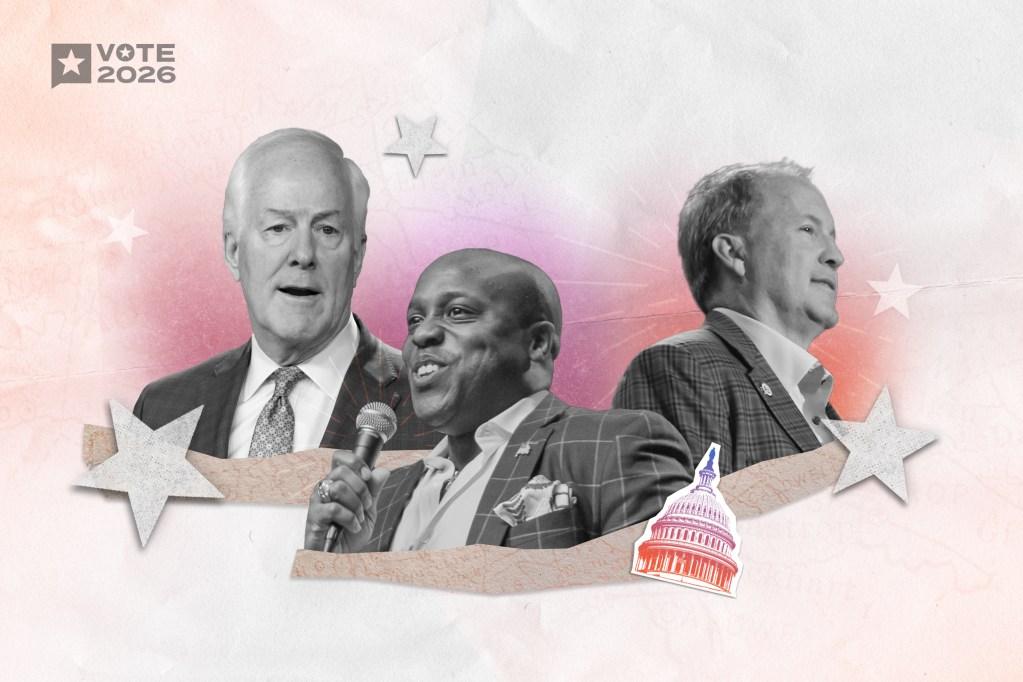
In an unusual and high-stakes contest within the Republican Party, U.S. Senator John Cornyn is striving to secure his position in the upcoming March 3 primary against Texas Attorney General Ken Paxton and U.S. Representative Wesley Hunt from Houston.
To provide clarity on the candidates’ policy perspectives, The Texas Tribune sought to engage Cornyn, Hunt, and Paxton through a questionnaire addressing issues such as immigration, energy, foreign policy, and artificial intelligence. However, none of the candidates responded, despite multiple outreach attempts. In light of their silence, the Tribune has supplemented their responses using information from past public statements and voting records.
Each candidate is positioning themselves as the choice for MAGA Republicans, highlighting their connections to former President Donald Trump, who has yet to endorse any of them. Additionally, the candidates have not engaged in debates and are not expected to do so before the election.
This race has prompted millions of dollars in external advertising, predominantly funded by allies of Cornyn within Senate GOP leadership and Texas. These supporters have expressed apprehension that Paxton, a staunch conservative embroiled in scandals during his tenure as attorney general, could face defeat in the general election against a Democratic challenger. Conversely, Paxton contends that Cornyn lacks sufficient conservatism and has become disconnected from the grassroots of the party. With Hunt entering the race in October, the contest is anticipated to lead to a runoff in May, as he markets himself as a younger alternative appealing to both traditional Republicans and MAGA activists.
Currently, the U.S. Senate comprises 53 Republicans and 47 Democrats, with Vice President JD Vance holding the power to cast tiebreaking votes. As Democrats aim to reclaim control of the chamber in 2026, maintaining Texas’ Senate seat is crucial for the GOP’s prospects. A shift to Democratic control would pave the way for the minority party to secure 51 seats, marking Texas Democrats’ first statewide victory since 1994.
Candidate Profiles
John Cornyn – U.S. Senator
Campaign finance:
Total raised this cycle: $17.9 million
Total spent this cycle: $6.6 million
Cash on hand as of Dec. 31: $15.6 million
Top outside spending:
Lone Star Freedom Project: $17.8 million
Texans for a Conservative Majority: $16.2 million
One Nation: $10.9 million
Experience:
Senator since 2003, making him the 11th-longest-serving member of the chamber.
Served as Senate Republican whip from 2013 to 2019, the second-highest-ranking position in the GOP conference.
Longtime member of the Senate Judiciary Committee, influencing federal judicial appointments.
Served one term as Texas attorney general, the first Republican in that role in over a century.
Former district judge in San Antonio and justice on the Texas Supreme Court.
Endorsements:
Senate Majority Leader John Thune, R-South Dakota
Former Texas Governor Rick Perry
National Border Patrol Council
Texas Alliance for Life
Texas Farm Bureau
Wesley Hunt – U.S. Representative, Houston
Campaign finance:
Total raised this cycle: $3.3 million
Total spent this cycle: $4.8 million
Cash on hand as of Dec. 31: $1.1 million
Top outside spending:
Standing for Texas: $5.9 million
Fighting for Texas: $221,000
Experience:
Currently in his second term representing Texas’ 38th Congressional District in Houston.
Republican nominee for Texas’ 7th Congressional District in 2020.
West Point graduate and eight-year Army veteran, having served as an Apache helicopter pilot.
Endorsements:
U.S. Rep. Eli Crane, R-Arizona
Ken Paxton – Texas Attorney General
Campaign finance:
Total raised since April 8: $5.3 million
Total spent from April 8 to Dec. 31: $1.7 million
Cash on hand as of Dec. 31: $3.7 million
Top outside spending:
Lone Star Liberty PAC: $374,000
Experience:
Has held the position of Texas attorney general since 2015.
Led conservative legal challenges against the Obama and Biden administrations regarding immigration, environmental regulations, health care, and LGBTQ+ rights.
Previously served in the Texas House for ten years and the Texas Senate for two years.
Endorsements:
U.S. Rep. Lance Gooden, R-Terrell
U.S. Rep. Troy Nehls, R-Richmond
Former Texas GOP Chair Matt Rinaldi
Gun Owners of America
Texas comptroller candidate and former state Sen. Don Huffines
Policy Questions
As the debate over regulating artificial intelligence (AI) heats up, some Republicans, including Senator Ted Cruz, advocate for a federal approach to prevent states from imposing their own regulations, arguing that a fragmented system could stifle innovation. What is the stance of the candidates on this issue?
Cornyn has not publicly declared a position on an AI moratorium, expressing skepticism that such a measure would survive procedural scrutiny. He voted to remove a proposed 10-year moratorium on state AI regulation from a major spending bill, which ultimately passed with overwhelming support.
The Tribune was unable to locate any public comments from Hunt or Paxton regarding federal preemption of AI regulations. Notably, Paxton has conducted investigations into AI chatbot platforms during his tenure as attorney general.
In light of recent changes to H-1B visa applications, which now require a fee of $100,000 for new applicants, how do the candidates view the future of these visas?
Cornyn’s stance on H-1B visas remains unclear, as no public comments have surfaced on the matter. Conversely, Hunt has expressed support for reforming the H-1B visa program and endorses Trump’s efforts to increase visa fees. Paxton, while not directly addressing the issue, has emphasized the importance of legal immigration and the role of Congress in determining immigration policies.
As the expiration of enhanced premium tax credits under the Affordable Care Act (ACA) looms, what are the candidates’ views on this development?
Cornyn has voiced concerns about extending the tax credits without addressing underlying issues such as fraud, suggesting a preference for redirecting subsidies to health savings accounts instead. Hunt has previously advocated for a full repeal of Obamacare and missed a vote on a clean extension of the tax credits.
Paxton’s position on the expiring ACA tax credits is not publicly documented, though he has challenged the ACA in court on multiple occasions.
Amid discussions about a potential peace plan for the ongoing conflict in Ukraine, which may entail territorial concessions from Kyiv to Moscow, how do the candidates respond?
Cornyn has consistently supported U.S. assistance to Ukraine and has advocated for security assurances in any peace process. Hunt, on the other hand, has opposed U.S. aid to Ukraine, questioning the prioritization of funding for foreign assistance over border security. Paxton has criticized Cornyn’s support for aid to Ukraine, though his specific views on the proposed peace plan remain undefined.
In light of bipartisan efforts to restrict stock trading by members of Congress, where do the candidates stand?
Cornyn has indicated his support for a focused proposal