









In the realm of political discourse, Texas Republicans vehemently criticize what they term “sharia law,” depicting it as a perilous set of extremist Islamic regulations that jeopardize democracy, religious freedom, and individual liberties. They assert that it stands in direct opposition to American values and must be eradicated.
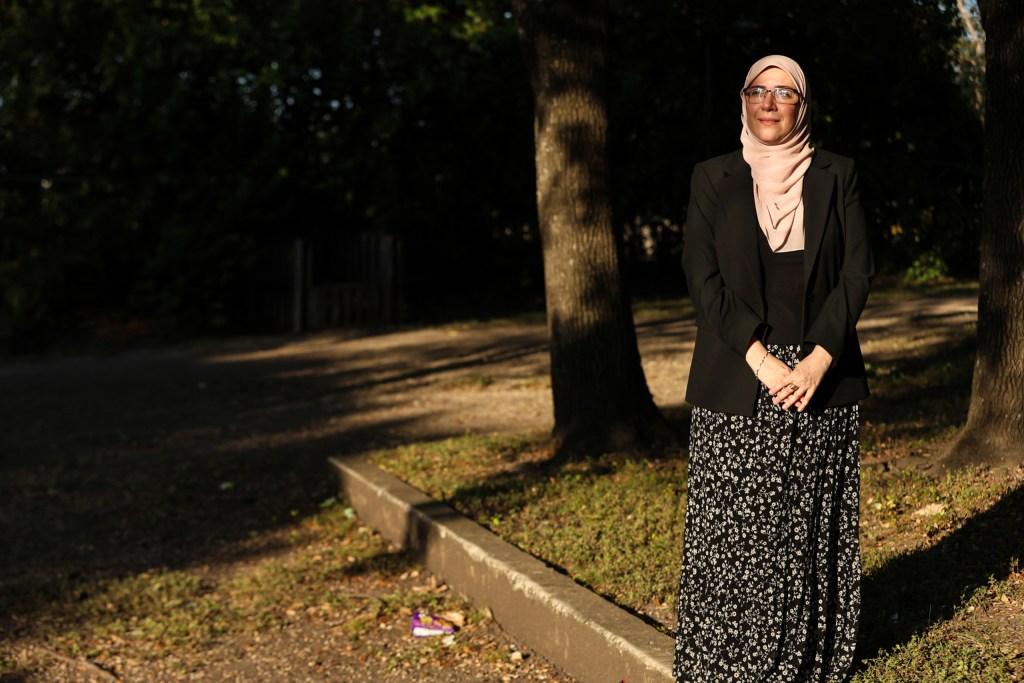
However, for Shaimaa Zayan, an Austin resident, the term “sharia” evokes a far different sentiment. Rather than viewing it as a contentious political issue or a legal framework that undermines the U.S. Constitution, she perceives it as a collection of daily practices that guide Muslims like herself towards spiritual fulfillment. Zayan explains that linguistically, sharia translates to “a path to water,” and religiously, it signifies “the path to success” or “how we should practice our faith.”
“It’s for Muslims. The idea that this is something Muslims are imposing on everyone else is a complete misunderstanding of sharia,” she asserts.
As Texas Republicans intensify their attacks on Islam, framing sharia as a threat, the Muslim community is responding firmly. They contend that the term has been misrepresented through ignorance, fear, and political exploitation, and they believe it is essential to clarify the religious significance of sharia.
State Rep. Salman Bhojani, the first Muslim elected to the Texas Legislature, describes sharia as an “ethical and moral framework that governs personal conduct,” emphasizing aspects such as charity, prayer, and honesty. He insists, “It is a personal moral code, and not something I can impose on anyone else.”
In stark contrast, Republican leaders denounce sharia law as an authoritarian legal system that contradicts both state and federal laws. State Rep. Brent Money articulates this viewpoint, stating, “Personal religious expression, belief, and worship are protected under the First Amendment. However, the imposition of a foreign legal system that conflicts with Texas law and the rights of others is not.”
In March, Money initiated the Sharia Free Texas Caucus in the state Legislature, following the establishment of the Sharia-Free America Caucus in Congress by two Texas representatives. This congressional group includes 68 Republicans from across 25 states, with Rep. Keith Self asserting that “Christian values form the foundation of our nation,” and that sharia fundamentally opposes these principles.
In mid-August, Texas Governor Greg Abbott threatened to cut funding to two major airports over washing stations utilized by Muslims prior to prayer, labeling them illegal for providing religious accommodations. Later, he declared the Council on American-Islamic Relations (CAIR) a terrorist organization, claiming it aimed to impose sharia law and establish Islamic dominance globally.
A proposal in the March GOP primary asking voters whether Texas should prohibit sharia law garnered overwhelming support, with 95% in favor. Additionally, a recent Republican Party platform resolution titled “Don’t Sharia My Texas” calls for legislative action to designate sharia law as subversive and to criminalize its advocacy.
Some Republican leaders are even advocating for restrictions on hijabs and Islamic dress, the closure of Islamic charter schools, and the denial of professional licenses to Muslims. Rep. Money asserts, “Sharia is Islamic law. It is threatening because it explicitly claims supremacy over all man-made law, including the U.S. Constitution.”
Scholars specializing in Islam challenge these portrayals as misguided and Islamophobic. Khaled Abou el Fadl, a law professor at UCLA, emphasizes that sharia literally means “the path” and connotes a source of goodness. He argues that failing to recognize its complexities leads to harmful generalizations about Muslims.
“You cannot generalize about Muslims,” Abou el Fadl cautions. “They are human beings, like everyone else.”
Muslims comprise roughly 2% of Texas’s population, with estimates varying between 300,000 and 500,000 in the state of 32 million. For individuals like Zayan, there exists a significant disconnect between their faith and its portrayal in the media and political arenas, which often fixate on sharia as the essence of Islam.
“I can attend the mosque daily for months without hearing the term sharia,” Zayan notes, explaining that sermons typically focus on community values, relationships, and individual character rather than any legalistic interpretations.
David Cook, a religion professor at Rice University, characterizes sharia as a multifaceted concept encompassing traditions from the Prophet Muhammad and ongoing interpretations of those traditions. He asserts that while some Muslim-majority countries may enforce oppressive laws under the guise of sharia, these practices do not reflect the beliefs of the majority of Muslims worldwide.
“You cannot equate sharia with a singular, oppressive code,” he explains. “There is a vast diversity of interpretations within Islam.”
Zayan acknowledges that a small minority of Muslims may misuse the concept of sharia for oppressive purposes, but she contends that such abuses are not unique to Islam. “Every faith has its extremists,” she states.
Concerns about mandatory Islamic dress often arise in Republican rhetoric surrounding sharia law. Zayan finds these fears unfounded, noting that among her colleagues at CAIR Texas, only half wear hijabs. “No one is being forced to wear it,” she emphasizes. “You guide and teach people; you cannot impose beliefs.”
A 2017 Pew Research survey revealed that 64% of Muslims in the U.S. believe there are multiple valid interpretations of Islam, similar to the views expressed by 60% of American Christians regarding their faith.
Texas Republicans frequently argue that sharia law conflicts with the U.S. Constitution by establishing a separate legal framework for Muslims. State Rep. Carrie Isaac, a founding member of the Sharia Free Texas Caucus, claims that sharia is a comprehensive system governing all aspects of life, not merely personal beliefs.
Rep. Bhojani counters that sharia has been mischaracterized as a legal system attempting to usurp the courts. “It is not trying to take over our legal framework,” he asserts.
Kambiz GhaneaBassiri, a professor specializing in Islamic studies, describes the portrayal of Islamic beliefs as an alternate authority to the Constitution as a fear-mongering tactic, reminiscent of historical prejudices against minority religions.
Abou el Fadl adds that practical implementation of a separate legal system is unfeasible in the U.S. legal context, where foreign laws contrary to public policy cannot be enforced.
For Shakeel Rashed, a Muslim leader in Austin, the aspirations of Muslims align closely with those of other Americans. “We seek to practice our faith in accordance with our rights, as long as it does not disrupt the Constitution,” he remarks. “What’s wrong with that?”