








Sign up for The Brief, a daily newsletter that keeps readers informed about the most important news in Texas.
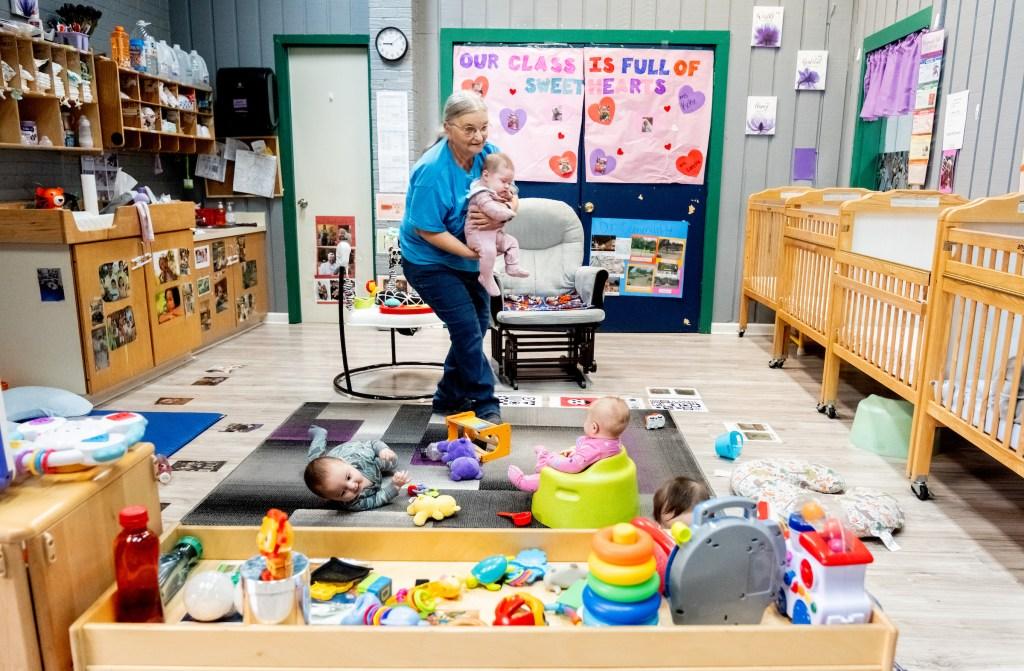
In Lufkin, Texas, a significant investment was made earlier this year in the state’s child care scholarship fund, amounting to $100 million. State lawmakers aimed for this funding to create an additional 10,000 scholarships for families in need, with the hope of reducing the number of children awaiting assistance.
However, that goal has not been realized. As the year comes to a close, the number of Texas families requesting state assistance for child care is increasing. Moreover, the funds intended for additional scholarships are being utilized to address rising tuition costs, as highlighted by an analysis of a Texas Workforce Commission report conducted by Texans Care for Children, an advocacy organization focused on child care.
The scholarship fund offers tuition support to families throughout Texas, with approximately 150,000 families benefiting from scholarships last year. Before the upcoming 2025 legislative session, the waiting list for assistance was just under 95,000, but it now exceeds 100,000. According to state law, the scholarship must cover a certain percentage of tuition, which must be at least 75% of what local providers charge based on a survey. Consequently, as tuition fees rise, so do the scholarship amounts.
David Feigen, the director of early learning policy at Texans Care for Children, expressed mixed emotions about the situation. “On one hand, we’re disappointed by that,” Feigen stated, “but on the other hand, we’re certainly relieved that the legislature provided the funding we needed to avoid cutting thousands of scholarships in the state.”
State Representative Armando Walle, a Democrat from Houston, collaborated closely with the Texas Workforce Commission, which oversees the scholarship funds. Walle voiced his frustration upon reviewing the findings from Texans Care for Children. “My intention in expending all this political capital was to help more families,” he remarked. “This has been a learning experience. We had never allocated this kind of funding to child care before.”
Without the $100 million investment, Texas would have faced the daunting task of reducing funding for thousands of scholarships over the next two years as children transitioned from child care programs to K-12 education, according to Feigen. This would have resulted in even more children being added to the waiting list.
“The bottom line is that the Legislature’s investment is allowing thousands of Texas parents to go to work and ensuring their children receive safe, high-quality child care,” Feigen added. “But this also serves as a stark reminder of the considerable work that lies ahead.”
To determine scholarship amounts, the Texas Workforce Commission surveys some of the 13,000 child care providers statewide regarding their operational costs. Approximately 1,000 providers responded to the latest survey, revealing a 9% increase in costs between 2023 and 2024. This rise in expenses is attributed to higher prices for food, supplies, and payroll, with payroll being the most significant cost.
Latoya Mayberry, who operates Toya’s Precious Jewels Academy in the Permian Basin, has had to significantly increase her employees’ wages to compete with the local oil and gas industry as well as nearby school districts. Initially paying her staff $9 an hour when she opened her child care business, her highest-paid employee now earns $18.
“And that’s just not enough,” she stated.
Mayberry’s center has earned the highest quality rating from the state’s Rising Star program, which evaluates child care centers to aid families in their selection process. Achieving this rating requires her teachers to hold at least an associate’s degree, warranting higher compensation, and mandates a greater staff-to-student ratio than the state’s minimum standards.
For most providers, profit margins in child care are nearly nonexistent, making it exceedingly difficult to establish and sustain a facility, even in a state with more than 7.5 million children, 1.9 million of whom were under the age of five in 2024.
Child care deserts—regions lacking sufficient child care providers—are prevalent across the state. Parents, particularly in rural areas, face challenges in finding quality child care options, and even when they do find providers, they often encounter issues with availability or affordability. Given the variability of child care access and costs across different regions, local workforce offices manage the scholarship program.
In Deep East Texas, Ty Cauthen, the executive director of the local workforce development board, expressed gratitude for the increase in state funding but noted the bittersweet aspect of learning that the projected number of children to be helped had decreased.
The conversation surrounding child care, he emphasized, “needs to be a priority, just like drinking water every day is a priority.”
Cauthen and his colleagues have been actively seeking additional grants and donations to help mitigate the impact of rising tuition. With a combination of factors, including the start of the school year and children transitioning to kindergarten, the Deep East Texas workforce development region has successfully reduced its waiting list from over 1,000 children to fewer than 450 since June.
Texans Care for Children has provided financial backing to support independent journalism efforts in Texas, underscoring the importance of transparency and accountability in news reporting.
Independent journalism in Texas relies on community support. The Texas Tribune is committed to delivering fact-based news for Texans, by Texans, and the contributions from readers are vital for sustaining this work. Consider supporting our nonprofit newsroom with a donation of any amount.