








Vanessa Melendez faced ongoing challenges with her family’s Medicaid and food assistance applications for several months when she discovered she was pregnant with her third child. In December, she submitted a new application for Medicaid for Pregnant Women, a program that ensures coverage during pregnancy and for twelve months post-delivery. Then she waited.
It wasn’t until she was more than four months into her pregnancy that she finally received an update, intensifying her anxiety about her baby’s health. Early prenatal care is critical, especially during the first trimester, as it is a time for confirming pregnancy, detecting a fetal heartbeat, and conducting essential early tests. It is also a period when many miscarriages occur.
“It was overwhelming, and I felt as though everything was going wrong. I was concerned I wouldn’t get the help I needed,” Melendez stated, who welcomed her son in July. “I was about to have this baby without any insurance.”
The Texas Health and Human Services Commission (HHSC) has long faced difficulties in processing Medicaid applications within the federally defined timeline of 30 to 45 days. A recent report from the Legislative Budget Board highlighted the state’s ongoing issues with timeliness. The Centers for Medicare and Medicaid Services has also scrutinized Texas’ performance, leading to a corrective action plan aimed at speeding up the processing of Medicaid and Supplemental Nutrition Assistance Program (SNAP) applications. Progress was noted through 2025, but that changed with the enactment of the One Big Beautiful Bill Act (OBBBA) in July 2025, which mandated that Medicaid recipients reapply every six months and verify employment status to combat fraud. Despite data indicating that fraud is not widespread, the state’s processing backlog has begun to grow again.
Recent figures reveal that only 65% of Medicaid applications were processed on time in July, a decline from 81% the previous year. The federal government expects at least 95% of applications to be processed promptly. As of August, approximately 211,000 applications were still pending.
Simultaneously, Medicaid enrollment has dropped significantly across the nation. Since the passage of OBBBA, Texas has seen a decline of 252,000 Medicaid enrollees—representing a 6% drop—while SNAP enrollment has decreased by 17%, affecting nearly 597,000 Texans. Children made up nearly two-thirds of this decline.
In June, over 3.7 million Texans were enrolled in Medicaid, with 1.3 million households relying on SNAP by July. The OBBBA also imposes financial penalties on the state for errors in SNAP and Medicaid payments, necessitating increased diligence in application processing. Texas HHSC officials indicated that starting in 2027, the state might face a $700 million annual fee for participating in SNAP if it does not reduce its error rate. Similar penalties for Medicaid will begin in 2029.
These new requirements add to the administrative burdens faced by HHSC, which has had to train its approximately 6,000 staff members who handle SNAP and Medicaid applications. Diane Forester, health policy director at Texans Care for Children, noted that these changes placed additional demands on an already strained technological system.
“These pressures are being placed on a system that is already struggling,” Forester remarked. “The backlog cannot be attributed to a single factor, but it is clear the system is continuing to fall behind.”
The state health agency did not provide details regarding the backlog or its resolution, yet asserted that the Texas Integrated Eligibility and Renewal System (TIERS) used for processing applications is functioning properly. “HHSC regularly updates the system to meet federal and state requirements and ensure data protection,” explained agency spokesperson Jennifer Ruffcorn, emphasizing that training has been implemented to maintain accuracy in light of the new eligibility requirements.
State Senator Lois Kolkhorst, chair of the Senate health committee, stated that the agency is taking necessary steps to prevent fraud. “As we implement new tools, we will inevitably enhance the efficiency of application processing and address backlogs, ensuring compliance with federal welfare program laws while supporting those truly in need,” she said.
The impact of the delays is felt acutely by many. Jessica Ballek applied for Medicaid and SNAP after losing her job in December, receiving approval for benefits within two days. However, when she reapplied for SNAP in April, her benefits were delayed, and she struggled to make ends meet after moving to a small town in East Texas for a new job as a private home nurse. Without SNAP, she faced challenges and had to rely on food banks, which were often unable to meet her needs.
After several months of uncertainty, she discovered her family had lost SNAP benefits due to her new employment, which was deemed disqualifying. The processing rate for SNAP redeterminations plummeted from 83% in January to just 28% in July, marking the lowest rate in four years.
As Ballek navigates the reapplication process for her children’s Medicaid coverage, she is anxious that those benefits may also be cut without warning. “My kids have been with the same pediatrician since birth, and I don’t want to change that, but self-paying for care will be a significant burden,” she expressed.
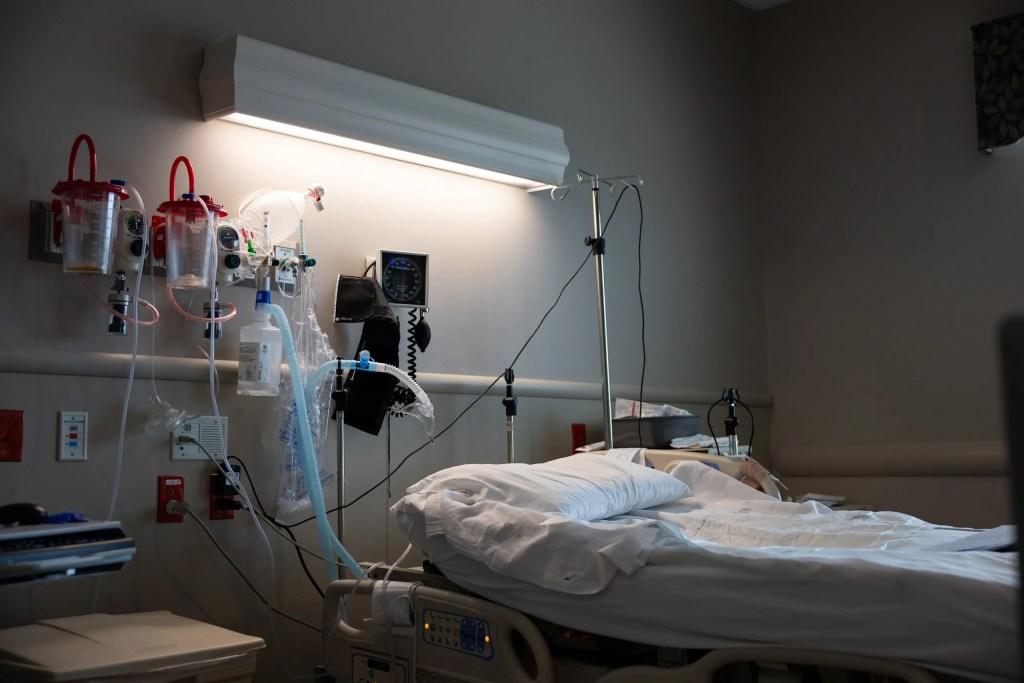
Delays in Medicaid processing have led to increased visits to hospitals and federally qualified health centers as individuals seek care without insurance. The Texas Hospital Association reports a rising number of patients visiting emergency rooms, with many lacking any form of coverage. In 2024, Texas nonprofit hospitals provided $14.9 billion in medical care to uninsured individuals—more than any other state, according to the latest census data.
“This situation is costly and detrimental to everyone involved,” stated Carrie Williams, chief communications officer for the Texas Hospital Association.
Rural healthcare facilities, which rely heavily on Medicaid funding, are particularly vulnerable to closure, a risk that is heightened by recent Medicaid changes. Keith Kirbow, a nurse practitioner in East Texas, expressed concern about the impact on rural health access as more individuals lose Medicaid coverage. “I oversaw the closure of a critical access hospital due to insufficient funding,” Kirbow recounted, noting the widespread consequences for healthcare access.
Concerns about individuals receiving undeserved benefits from entitlement programs like SNAP, CHIP, and Medicaid have persisted. During a recent Senate health committee hearing, Kolkhorst pointed out that some individuals had received Medicaid benefits for over 90 days without proper eligibility verification. She noted that this included over 1,800 ineligible recipients, although this is a small fraction of the overall Medicaid population.
“These lost funds represent real dollars that should support those who truly need assistance,” Kolkhorst remarked, emphasizing the importance of careful processing and screening of applications.
Texas has actively pursued fraud detection, with the Office of Inspector General reporting that the state recovered over $37.5 million in improper payments from March to May. Of the more than 3,800 cases opened for investigation, 30 were referred for prosecution, and 300 for program disqualification. In 2025, 9% of Texas’ SNAP payments were found to have errors, better than the national average of 11%. However, most errors stemmed from mistakes rather than intentional fraud.
The heightened scrutiny surrounding fraudulent activity has intensified, particularly following scandals in other states, prompting Texas to increase its internal investigations. Forester stated that Texas has one of the leanest Medicaid programs in the nation, making it difficult to believe there is widespread fraud within the system.
“Most Medicaid recipients are families living in poverty, children, pregnant women, and some elderly individuals,” she emphasized. Yet, the backlog remains a pressing issue.
Every Medicaid and SNAP recipient must submit applications for review every six months, inundating Texas’ review staff with millions of applications. Forester explained that they are processing these using TIERS, which has been operational since 2012, and the new requirements are akin to trying to operate modern technology in an outdated framework.
“It’s not going to function efficiently because the system was never designed for such demands,” she stated.
While Texas lawmakers agreed in 2025 to invest in technology upgrades to address these issues, the full implementation of these upgrades will take years. For instance, the HHSC has requested to replace its payment system, which currently requires manual tracking of over $3.5 billion. This new system is slated for completion by the end of 2027.
Looking ahead, Forester expressed concern that Texas lawmakers missed opportunities to expedite technology upgrades and address the backlog during the interim legislative session. With the end of 2026 approaching and a contentious midterm election looming, she doubts that significant action will be taken. “We would like to see lawmakers prioritize reducing these delays, but there has been a lack of urgency, which is perplexing. While investing in a new eligibility system is crucial, families cannot wait years for it to be operational,” she said.
Although no new federal legislation is anticipated to impact Medicaid in the immediate future, aspects of the One Big Beautiful Bill Act remain to be fully implemented. Starting in October, eligibility for non-U.S. citizens will become more stringent, excluding humanitarian immigrants such as asylum seekers and survivors of human trafficking. Overall funding for these programs is expected to slow over the next decade.
Major changes are also on the horizon for other social safety net programs, including Head Start, which may face significant overhauls that could alter eligibility requirements and quality