








The rapid growth of artificial intelligence data centers, which demand substantial water and energy resources, has prompted lawmakers nationwide to seek solutions to safeguard local supplies. Austin is now joining this effort as the city grapples with the implications of this burgeoning industry.
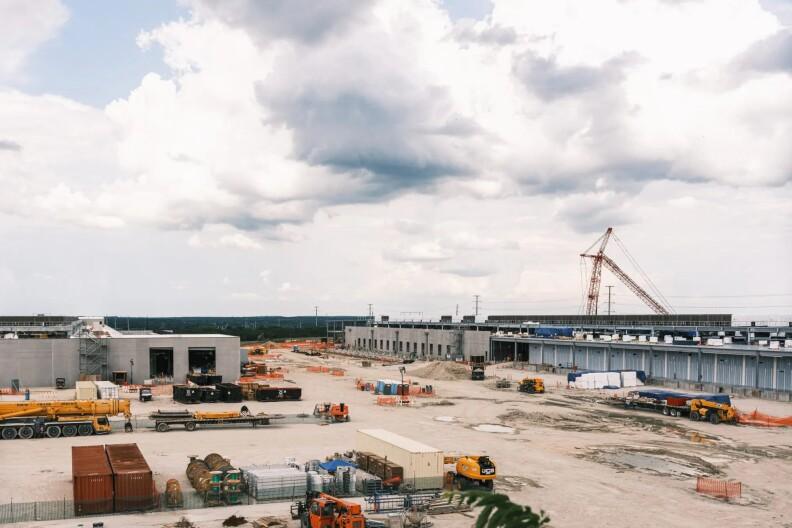
As the adoption of AI technology has surged, so too has the need for expansive data centers, some of which cover over 1,000 acres. These facilities are notoriously resource-intensive, consuming hundreds of millions of gallons of water annually and requiring upwards of 100 megawatts of power—equivalent to the energy needs of approximately 250 homes.
Many communities across the United States are struggling to establish regulations that can keep pace with the rapid development of data centers. Austin faces a similar challenge, lacking a specific land use classification for both traditional and AI data centers. This regulatory gap leaves city officials with limited authority to govern the construction of such facilities. In response, several members of the Austin City Council are working diligently to implement new policies before a large-scale data center is proposed within city limits, which could further strain the city’s already limited water and energy resources.
“I don’t want any data center to come here without receiving approval and without showing that they’re not going to be sucking us dry from a water perspective, using our electricity when others need it,” stated Council Member Ryan Alter, one of five council members advocating for new regulations governing large-load data centers. “It’s my hope that we’ll then have a zoning tool where anybody who wants to come here with a data center would have to receive permission to do so.”
New Regulations on Power Usage
While Austin currently does not host any large-scale AI data centers, the City Council is set to deliberate and vote on a resolution aimed at establishing new regulations in anticipation of future developments.
Presently, the state categorizes large-load users, including data centers, as those requiring 75 megawatts or more. Austin Energy currently serves 10 data centers, which consume between 1 and 20 megawatts each. The city’s planning staff has proposed defining high-impact data centers more clearly and creating a review process that may require developers to obtain additional city approvals. They also recommend implementing new standards for water usage, noise, heat, and lighting while emphasizing that Austin’s economic development policy will not incentivize the construction of data centers.
“These hyperscalers are at a scale that we have not seen before,” Alter remarked. “It would be a very high bar for me to approve a local data center that wants to be here … I want these rules to be in place so that we have that authority to say ‘no.’”
Alter highlighted the difficulty of obtaining complete information from companies regarding their resource consumption. He referenced a recent survey conducted by the state that asked operators to disclose their water usage, sources, electricity needs, and cooling systems, noting that only a small percentage of Texas data center operators responded.
If the resolution is approved, Alter hopes it will provide a clearer understanding of the local impact of data centers. “We can’t rely on the state to put the rules in place for data centers; we need to do it ourselves,” he asserted.
Until new regulations are established, Council Member Vanessa Fuentes has expressed her support for a moratorium on data center construction, stating, “It’s clear that data centers present real risks to our people, environment, and local resources.”
The Balance Between Regulation and Progress
Navid Saleh, an environmental engineering professor at the University of Texas at Austin, acknowledged the transparency challenges surrounding AI data centers, which complicate efforts to assess their resource demands. He emphasized the need for clearer information to develop sustainable solutions, a goal he and other researchers are actively pursuing.
While Saleh recognizes the potential negative impact of data centers on communities, he also cautioned against halting their development entirely. He believes there are opportunities for policymakers and scientists to collaborate on creating more sustainable practices for these facilities. Researchers are currently exploring new technologies that could enhance cooling methods and reduce water consumption.
“I think our objective should be not to choose between AI or water or AI or resources,” he stated. “I believe we can make this work.”
Community Concerns Over Development
Despite the potential for future advancements, the demand for water and electricity is just one of many concerns fueling opposition to hyperscale data centers in various communities. Residents like Abigail Lindsay, who has lived in a rural area of Hays County since the 1990s, are expressing their discontent with the proposed construction of a data center near their home.
“We first heard about it in February of 2025,” Lindsay recalled, noting that she has been actively opposing the proposal ever since. “I’ve gone to a lot of planning and zoning meetings, city council meetings, county commissioners’ meetings, town hall meetings. I’ve talked to every neighbor within a 10-mile radius.”
Beyond concerns about resource consumption, Lindsay fears the facility will disrupt the area’s tranquility with artificial lighting, noise, heat, and potential air pollution. “Property values will plummet, so we will be stuck,” she lamented. “There’s no way anyone’s going to buy our properties.”
Since learning about the initial proposal, Lindsay has uncovered plans for several other data centers in the vicinity. This has led to significant community pushback, culminating in a recent ban on hyperscale data centers in all zoning districts in San Marcos. While some developers have withdrawn their plans, others continue to pursue their projects.
“There should have been federal regulations, state regulations, and local regulations,” she argued. “The system that was set up to protect individuals and residents — it’s failed us. It is the Wild West out here.”