








Approximately a dozen school districts in Texas are set to experience an improvement in their accountability ratings on Tuesday, following a manual rescoring of thousands of STAAR tests that yielded better results for some students.
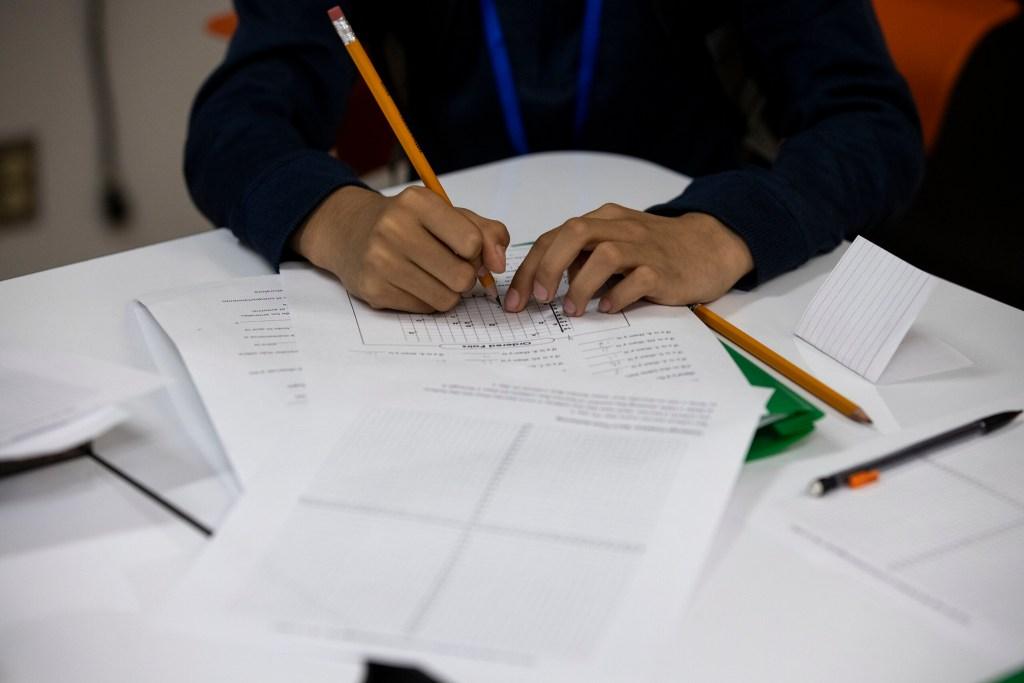
Officials from the Texas Education Agency (TEA) announced that around 27,200 students received additional credit for their responses to certain questions on the reading section of the State of Texas Assessments of Academic Readiness (STAAR). This adjustment primarily benefited students in grades six through eight, as well as those who took the English I end-of-course exam.
The districts affected by this change include Chester, Crandall, Daingerfield-Lone Star, Floydada Collegiate, Forney, Fredericksburg, Galveston, Jim Hogg County, Odem-Edroy, Southwest, and Walnut Bend ISDs, according to TEA spokesperson Jake Kobersky.
As a result of the rescoring, nine campuses and five districts are expected to see an increase in their A-F ratings.
In December 2023, the TEA implemented a computer-aided grading process for open-ended questions on the STAAR tests, including those for reading and English. A human review was conducted on at least 25% of the exam scores. However, Kobersky clarified that none of the re-evaluated responses were assessed by the automated scoring system.
This adjustment is part of the annual review of test scores, where content experts reassess “text entry” responses, which require students to type short answers such as numbers, words, or phrases. The automated model is designed to evaluate both short and extended constructed-response questions, which ask for more elaborate answers.
Although roughly 1.7% of the over 1.6 million exams reviewed saw score improvements, TEA officials noted that not all of these increases directly resulted in enhanced A-F ratings for the schools.
For instance, in Galveston ISD, Central Middle School, which had initially scored a D, will see its rating rise by six points to a 75 following the rescoring, as indicated by TEA records provided by the district. A spokesperson for the district, which serves 6,671 students, declined to comment on the rating increase.
In another case, Southwest ISD spokesperson Jennifer Collier stated that the district’s overall accountability rating would rise from 79 to 80, thereby upgrading it to a B. Acting Superintendent Brandon Crisp commented that the new ratings accurately reflect the progress achieved by students and staff.
The academic ratings set by the state heavily depend on student performance in STAAR tests.
TEA officials routinely conduct reviews of STAAR results each year to ensure that scores are accurate and fair. This process includes automated rescoring checks, feedback from educators, and a review of open-ended responses.
“During this process, student responses are evaluated by content experts to ensure that students receive credit for answers that may not conform to the original grading criteria,” Kobersky explained. “For example, if the correct answer was ‘first,’ experts may grant credit for a student who wrote ‘ferst.’
No student’s score will be diminished as a result of this review.
Texas is home to approximately 1,200 school districts and charter systems, encompassing more than 9,100 public school campuses.
The preliminary accountability ratings were released on August 14. Districts with campuses that have experienced five consecutive years of failing grades may face sanctions, including the possibility of a state takeover.
The ratings for schools and districts are primarily based on three factors: student performance on STAAR tests and meeting college and career readiness benchmarks, the improvement of state test results over time, and the effectiveness of schools in educating underserved populations.
TEA officials will automatically adjust the ratings for the schools and districts affected, eliminating the need for an appeal. Districts can challenge their preliminary ratings until September 11.