







Texas Attorney General Ken Paxton has launched a lawsuit against a nurse practitioner from Delaware, alleging that she unlawfully prescribed abortion-inducing medications to residents of Texas. This marks the state’s second legal action against an out-of-state provider regarding such drugs.
In a statement released on Tuesday, Paxton declared, “The day of reckoning for this radical out-of-state abortion drug trafficker is here. No one, regardless of where they live, will be freely allowed to aid in the murder of unborn children in Texas.”
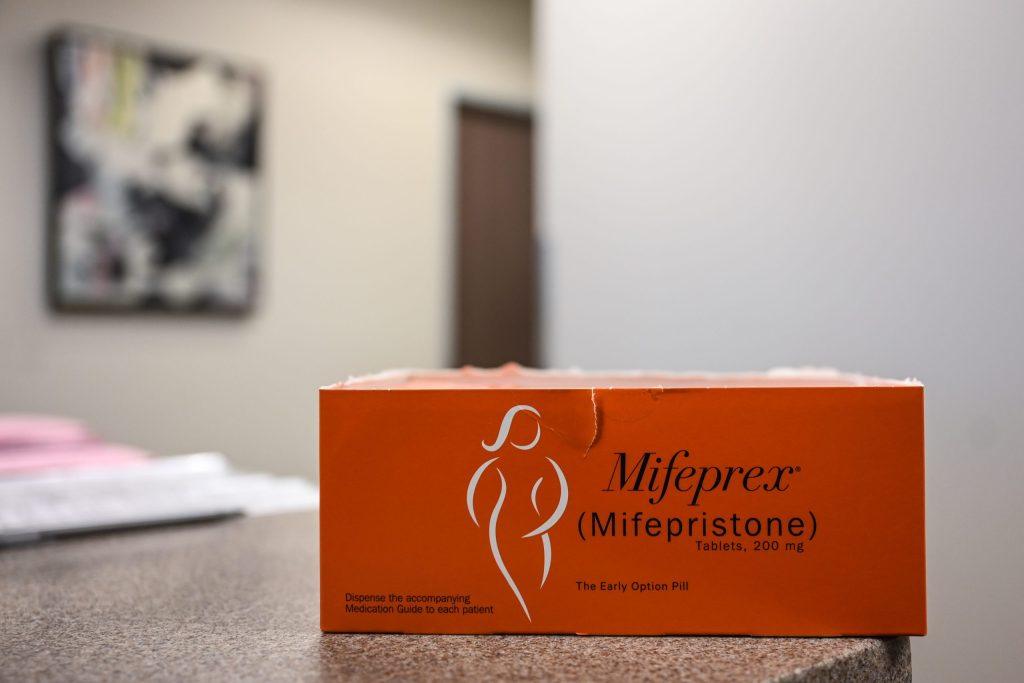
The primary defendant, Debra Lynch, runs a service called Her Safe Harbor, also known as Delaware Community Care. This online clinic provides medication packages that include mifepristone and misoprostol—drugs used to induce abortion—along with anti-nausea medication and ibuprofen. According to its website, the organization claims to assist women in all 50 states in obtaining abortion medication.
The lawsuit alleges that Her Safe Harbor has sent packages containing abortion drugs to women in various Texas cities, including Beaumont, Fulshear, Tomball, Houston, and El Paso.
Texas has filed two counts against Lynch. The first is based on a violation of the Human Life Protection Act (HLPA), which prohibits abortions unless performed by a licensed physician and deemed medically necessary for the mother’s life. The second count accuses Lynch of practicing medicine without a license, stating that she is not a licensed physician and lacks authorization to practice in Texas.
Requests for comments from both Her Safe Harbor and Paxton’s office have gone unanswered.
The state is seeking two injunctions against Lynch: one to prevent her or any associates from “performing, inducing, or attempting abortions,” and another to stop them from “practicing medicine without a physician’s license.”
This lawsuit is Texas’ second against an abortion-by-mail provider, following a December 2024 case against a provider based in New York. That earlier lawsuit aimed to challenge New York’s “shield laws,” which protect medical providers from investigations and prosecutions from out-of-state entities. In that instance, the New York doctor did not respond, leading to a court imposing $100,000 in civil penalties, which were later dismissed by a judge.
Lynch’s case will serve as a test for Delaware’s “shield laws,” which have been reinforced since 2025 through House Bill 205. This legislation expanded protections for healthcare providers against out-of-state prosecutions for services that are legal in their home state.
While the “shield laws” in Delaware and New York share similar objectives, their wording varies. New York’s laws provide immunity to providers regardless of their patients’ locations, while Delaware’s laws do not extend this protection. The impact of this difference on the outcome of Lynch’s case will depend on the Delaware courts, according to Rachel Rebouche, a law professor at the University of Texas at Austin.
The lawsuit relies on three pieces of evidence, all sourced from news articles featuring Lynch’s comments. These include an article from the Austin American-Statesman dated January 16, alongside articles from Medscape and the New York Times from September and June 2025, respectively. The Austin American-Statesman article highlighted that Lynch facilitated as many as 162 abortions each week.
The case will be heard in Jefferson County in Southeast Texas, based on claims that “a substantial part of the events or omissions giving rise to this claim occurred” there.
Lynch is not obligated to attend court since her business is not registered in Texas, which may result in a default judgment against Her Safe Harbor. Following this, Texas is expected to request Delaware to enforce that judgment, a scenario that mirrors the proceedings in the New York case.
Data from the #WeCount project, which tracks abortion statistics, indicates that over 4,160 women received abortion medication by mail in June 2025 from states where abortion remains legal.
In recent years, Texas has increasingly turned to legal action to limit the distribution of abortion pills within its borders. Last year, the Legislature enacted House Bill 7, allowing private citizens to sue anyone involved in the manufacturing, distribution, or mailing of abortion medications to or from Texas. Successful plaintiffs can claim at least $100,000 if they are related to the fetus, or $10,000 if they are not, with the latter requiring the excess to be donated to charity.
In addition, two men have been prosecuted in Texas for administering abortion-inducing pills to their partners. In 2024, Mason Herring, a 39-year-old from Houston, pleaded guilty to charges related to giving his wife misoprostol. In June, Justin Anthony Banta, a 39-year-old from North Texas, faced capital murder charges for allegedly mixing mifepristone into food and drink given to his pregnant girlfriend, resulting in a miscarriage.
Regardless of the outcome in Delaware, Rebouche does not believe that abortion rates in Texas will decline, noting that the numbers have increased following the state’s lawsuit against the New York provider. “It suggests to me that a lot of what’s happening in the courts with these lawsuits is not affecting what’s happening on the ground and how people are practically accessing medication abortions,” she stated.