








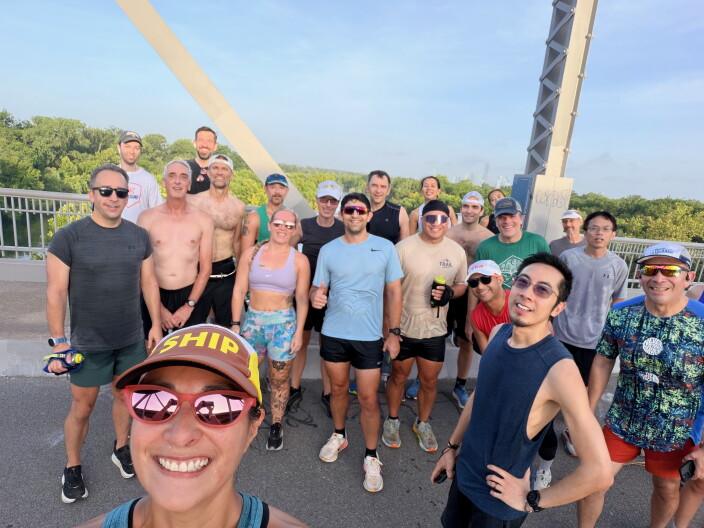
Austin’s sweltering summer heat presents a unique challenge for marathon runners, as they embark on their training journeys. Members of the Ship of Fools run club, including KUT’s own Luz Moreno-Lozano, gather early on Saturday mornings, defying the heat in pursuit of their marathon goals.
These dedicated athletes rise before dawn, setting their alarms for 4:45 a.m. while the rest of the city remains asleep. Prior to their runs, they fuel up with bananas and protein bars, knowing that proper nutrition and hydration are crucial for success in the demanding conditions of summer training.
To those unfamiliar with the world of running, this commitment may seem excessive, especially as Austin officials advise residents to stay indoors and stay hydrated to combat the oppressive heat. However, for those training for a fall marathon, this is simply part of their routine.
Mike Nicholson, returning from an injury, describes the camaraderie among runners as they find their rhythm, even in the sweltering weather. “It’s like we’re a herd of gazelles,” he notes, highlighting the sense of community that comes with shared challenges.
On a July Saturday morning, the temperature registers a balmy 76 degrees at 7 a.m., but with humidity at 97%, it feels significantly warmer. The group is on a recovery week, opting for a 10-mile loop along the Ann and Roy Butler Hike-and-Bike Trail, a distance that will eventually grow to 22 miles in later weeks.
As a pacer for the 10-minute mile group, Moreno-Lozano’s role involves maintaining pace and guiding runners on shorter routes. The strategy shifts to managing hydration and energy levels, emphasizing the importance of slowing down in the heat. Fellow runner Abi Huntoon acknowledges the difficulty of pacing oneself, especially when striving for specific marathon times.
“I have to practice being patient with myself,” she explains, recognizing that long runs often require a slower pace than anticipated. Runners learn to listen to their bodies, adjusting their efforts based on daily conditions and personal limits.
For many, the primary goal is to avoid “bonking,” a term that refers to the debilitating fatigue and nausea that can occur during prolonged exertion. Veteran runner John Ragland recalls a particularly challenging run, emphasizing the unpredictability of long-distance training.
About three miles into their route, the group reaches a water stop, where volunteers provide cold water and Gatorade. These breaks are not only vital for hydration but also serve as social moments to connect with fellow runners and motivate one another.
Keir Semmens adds that training in the heat ultimately helps improve performance on race day. “Running in the heat is free speed,” he asserts, likening it to altitude training that prepares the body for optimal performance.
As the run progresses, the miles begin to diminish, but the rising temperature adds to the challenge. With only a few miles left, runners often reflect on their motivations, questioning their commitment but finding clarity in their reasons for running.
Whether it’s the satisfaction of overcoming physical challenges, pushing personal boundaries, or simply escaping the demands of daily life, each runner has their unique motivation. For many, these early morning runs offer a cherished respite, allowing them to recharge and reconnect with themselves.