





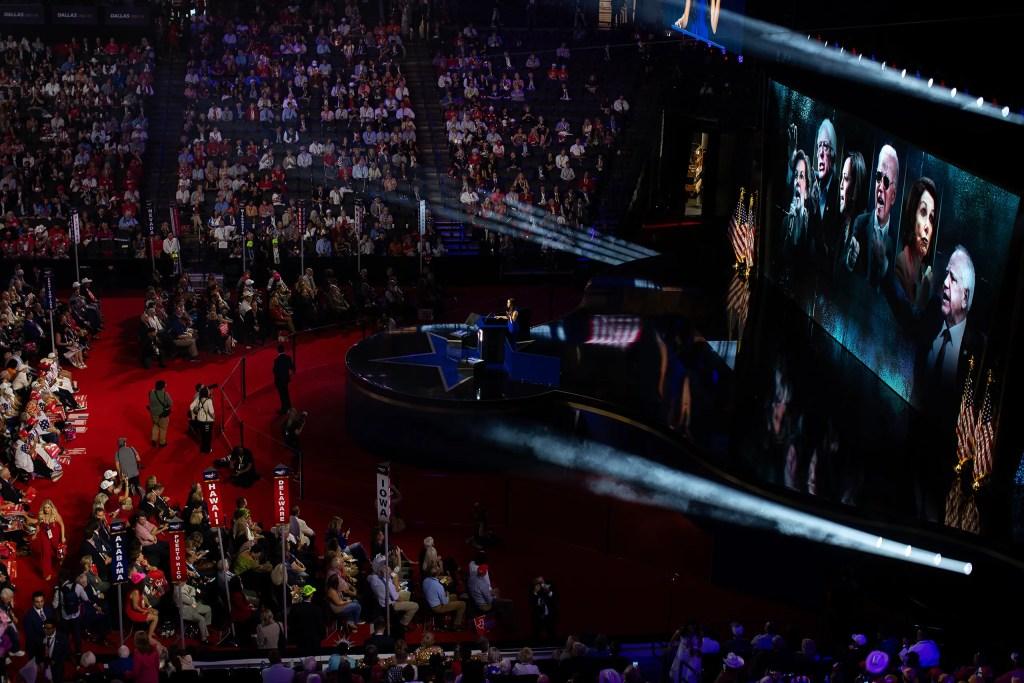
DALLAS — At the GOP midterm convention, Texas Republicans presented a dual narrative regarding the economy, juxtaposing their achievements with the challenges faced by voters. They highlighted popular initiatives such as tax breaks for workers in the tip and overtime sectors as evidence of the party’s commitment to supporting working families, while attributing the ongoing rise in grocery and gas prices to the policies of the Biden administration.
The success of Republicans in the upcoming midterm elections, particularly in competitive areas like Texas, will largely depend on their ability to persuade voters to adopt a similarly divided perspective on economic issues. Throughout this election cycle, affordability and cost-of-living concerns have consistently emerged as the foremost priorities for voters.
Convention speakers lauded tax-free tips, investment accounts for children, and the extension of tax cuts originally enacted under Trump’s administration. However, they conspicuously avoided discussing the tariffs imposed by Trump on international trade, which have contributed to increased gas prices linked to his military strategies in the Middle East.
Trump himself addressed the issue from the stage, recounting frequent encounters with individuals who lamented rising gas prices due to his foreign policies. “Let me ask you this, smart people … Can Iran have a nuclear weapon? Absolutely not. Well, then I’m right,” he asserted.
Republicans facing tough races may be cautious about discussing Iran or trade wars, as polls indicate widespread voter disapproval of both issues and their perceived role in inflation. Yet, within the context of an event branded as Trump-centric, candidates may find it difficult to dissociate from his economic policies, regardless of their popularity.
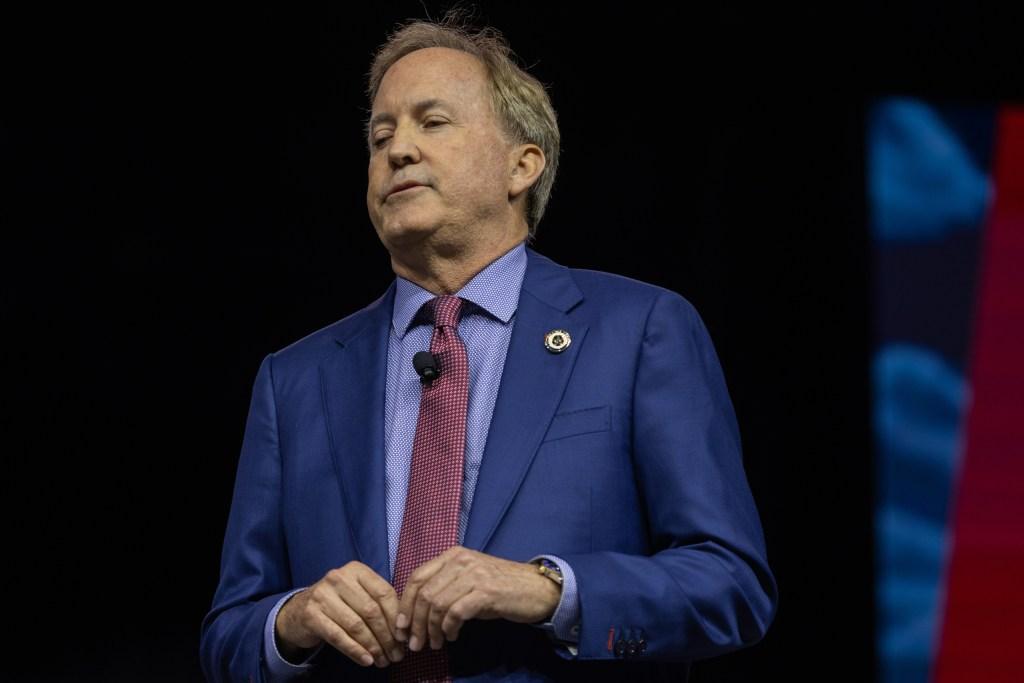
Texas Attorney General and U.S. Senate candidate Ken Paxton took to the stage to unveil his economic strategy, which includes proposed tax breaks aimed at healthcare and housing expenses. Acknowledging the struggles of Texans who feel overworked yet underappreciated, Paxton criticized his opponent, James Talarico, on various culture war topics as well as Talarico’s stance on taxes.
Paxton claimed, “He wants to tax your tips. He wants to tax your overtime. And he even wants to tax your Social Security,” referencing Trump’s earlier promise to eliminate taxes on Social Security benefits, which instead resulted in a temporary tax deduction for certain senior citizens.
Conversely, Talarico has openly embraced discussions about the economy, using advertisements and public appearances to spotlight the rising costs of living. He argues that Republicans have favored the wealthy while promoting the fallacy of trickle-down economics. In response, Talarico’s economic plan includes raising taxes on corporations and billionaires, closing tax loopholes for the affluent, and increasing the minimum wage.
Throughout the convention, speakers accused Democrats of seeking to impose heavy taxes on the middle class and introduce socialist policies. This rhetoric clashed with Trump’s proposal to issue $5,000 dividends to every American adult, a plan Paxton indicated he would endorse in subsequent interviews.
In their convention addresses, GOP candidates for crucial U.S. House seats in Texas aimed to navigate the economic discourse carefully. Siblings Carlos and Monica De La Cruz, both vying for Congressional seats in South Texas, reminisced about their modest upbringings and praised the GOP for its tax relief measures, while blaming Democrats for the escalation of prices.
“I know what a stack of bills looks like on a kitchen table,” said Monica De La Cruz, who is running for reelection. “And for four years, Joe Biden and his party made that stack taller.” She emphasized that Republicans have enacted legislation leading to significant tax reductions.
Democratic candidates have adopted a different strategy, framing elements of the GOP economic agenda as weaknesses and linking candidates like Monica De La Cruz to issues they perceive as detrimental to voters.
“Texas voters understand the impact of De La Cruz’s tariffs, cuts to Medicaid, and the war in Iran on their finances — regardless of her attempts to mislead them,” stated Madison Andrus, a spokesperson for the Democratic Congressional Campaign Committee.
Some Texas candidates chose to sidestep economic discussions entirely during their speeches, focusing instead on other pressing issues. Republicans Eric Flores and Tano Tijerina, both aiming to capture Democratic House seats in South Texas, delivered remarks centered on immigration policy. Meanwhile, Senator Ted Cruz took a hardline stance against sharia law, delivering a speech that resonated with the conservative base while accusing Democrats of veering towards communism.
Governor Greg Abbott and Lieutenant Governor Dan Patrick, both seeking reelection, presented Texas as a stronghold of conservative values, suggesting that Democrats pose a threat to freedom, capitalism, and Christian principles. Patrick, framing the election in stark moral terms, credited conservative values for Texas’s robust economy while neglecting to address the rising costs affecting both red and blue states alike.
“Our pro-business, pro-tax policies in Texas are attracting billions of dollars in investment. Low taxes and no income tax will always do that,” Patrick asserted, contrasting the Republican approach with what he characterized as the Democrats’ desire to transform Texas into a model akin to California or China.
Abbott described the election as a “choice between common sense and crazy,” focusing his critique on statewide Democratic candidates and the “chaos” he claims they represent. He cited their votes against legislation to raise the threshold for implementing a state income tax and reaffirming that only U.S. citizens can vote.
Both Abbott and Patrick’s challengers, state representatives Gina Hinojosa and Vikki Goodwin, criticized the incumbents for failing to enhance the lives of Texans during their extended time in office, suggesting they have prioritized cultural issues and catering to wealthy donors.
In a strategic counterpoint throughout the convention, Democrats consistently positioned Republicans as the architects of rising costs, attributing this to what they viewed as collusion between GOP politicians and corporations at the expense of everyday Texans.
The Democratic National Committee recently released a digital advertisement on conservative YouTube channels, featuring Trump’s controversial remarks about his lack of concern for Americans’ financial situations and his flippant comment, “I love the inflation.”
DNC Chair Ken Martin emphasized, “Donald Trump and Republicans tanked the economy and drove up costs, and voters don’t need to look further than Trump’s own words to know where his priorities lie.”
At a news conference, Texas Democratic Party Chair Kendall Scudder echoed these sentiments, contending that “Trump’s trickle-up economics is taking money out of your pocket and giving it to the richest people in this country.”
“Not a single day has Donald Trump or Republican leadership or the clowns like Ken Paxton gotten out of bed and thought about how to make your life better,” Scudder concluded.