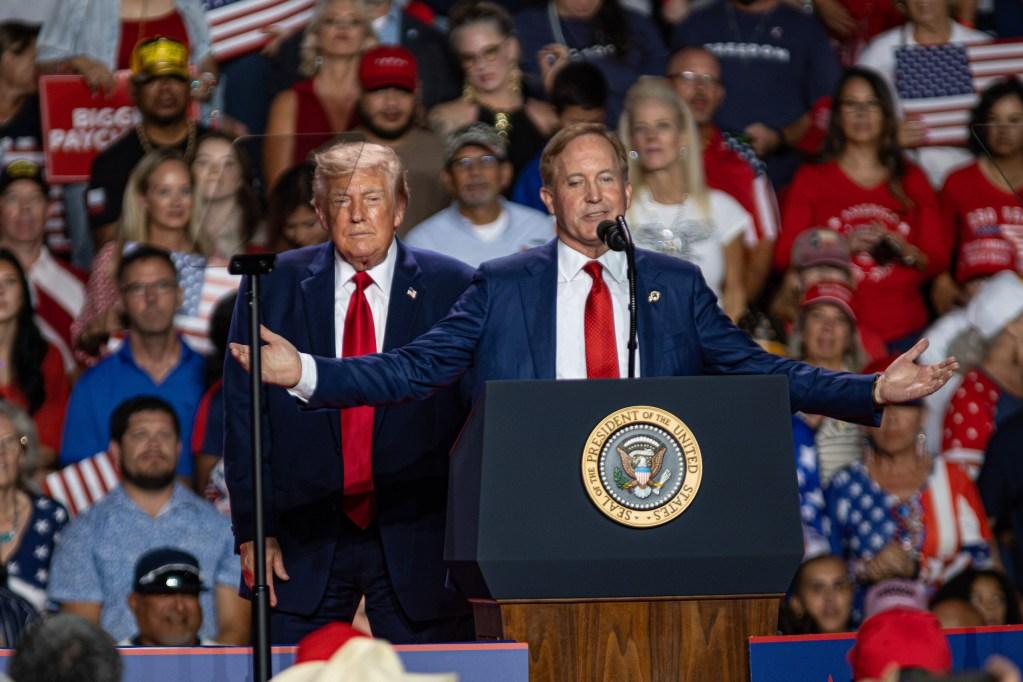







In July, when asked if Texas Attorney General Ken Paxton planned to debate his U.S. Senate challenger James Talarico, a spokesperson for Paxton confidently replied, “of course we’re going to debate.” However, as early voting approaches in just two weeks, the Republican nominee has not accepted any debate invitations. This could mark the first time in 25 years that a Senate race in Texas occurs without a debate.
Talarico has been proactive, accepting at least four debate invitations from CNN and local television stations. Last month, he extended a challenge to Paxton for a forum moderated by Brett Baier on Fox News, which the network has agreed to host.
Despite repeated inquiries, Paxton’s campaign has yet to address whether he intends to engage in a debate. The lack of response is not isolated; many Republican nominees for statewide positions in Texas are similarly avoiding debates against their Democratic opponents. Notably, Governor Greg Abbott has not publicly agreed to debate his challenger, Gina Hinojosa, despite her persistent requests for a public forum. Abbott previously debated his Democratic rivals in all three of his gubernatorial campaigns.
The only confirmed debate across the statewide races is for the position of railroad commissioner, which oversees oil and gas regulation. Democrat Jon Rosenthal announced a debate with Republican Bo French set for October 22, although French has not officially confirmed his participation.
Democratic candidates for lieutenant governor and attorney general, Vikki Goodwin and Nathan Johnson respectively, have also called for debates, yet campaign representatives for Lt. Gov. Dan Patrick and state Sen. Mayes Middleton have not provided comments on the matter.
Political experts point out that it is common for candidates challenging incumbents to seek out debates, viewing them as valuable opportunities to enhance their visibility and create memorable moments that can sway voters. John Alford, a political science professor at Rice University, noted, “There’s an old axiom in political campaigning that the underdog always wants to debate because they don’t have very much to lose.”
This cycle, the Republican reluctance to debate coincides with challenging political dynamics in Texas, exacerbated by President Donald Trump’s declining approval ratings and highly competitive races at the top of the ballot.
The Senate race represents Paxton’s most significant and competitive challenge to date, with polling consistently showing Talarico with a slight advantage.
Talarico has emphasized that a debate would allow voters to make informed decisions and compel both candidates to confront pressing questions. He criticized Paxton’s evasiveness, stating, “Ken Paxton’s handlers claim he’s willing to debate, but every time a reporter asks a question, he literally runs away.” Talarico further remarked, “He hasn’t set foot on a debate stage in over a decade and refuses to answer the public’s questions because he’s not a public servant — he’s a puppet.”
During the Texas Tribune Festival last month, Talarico reiterated his challenge for the Fox News debate, asserting, “I’ll go into the lion’s den because I know what I believe. I am proud of my record. And I’m not afraid of hard questions. And Ken Paxton is running from a fight.”
Throughout his political career, Paxton has consistently avoided debates, including during his three campaigns for attorney general. Matthew Wilson, a political science professor at Southern Methodist University, pointed out that although Paxton trails Talarico in the polls, participating in a debate would provide Talarico the chance to confront him about his various legal and ethical issues, which Paxton would likely prefer to avoid discussing.
Hinojosa has also made numerous attempts to engage Abbott in a debate, accepting four invitations from local TV networks. Recently, she stated on NBC News, “He’s refusing to debate, trying to hide from his record. But listen, if he’s not man enough to debate me, he shouldn’t be governor of Texas.”
Historically, Abbott has faced Democratic opponents in debates during his gubernatorial campaigns, but this election cycle marks a shift, as several polls indicate he is trailing for the first time. Wilson noted that in previous races, Abbott held a substantial lead, making debates less critical; however, the current competitive landscape necessitates a more cautious approach to debating.
While Hinojosa’s recognition among voters has grown recently, Abbott still maintains a stronger public presence. Agreeing to a debate could provide Hinojosa with a valuable platform to reach voters statewide.
Debates are becoming increasingly rare in political campaigns across the nation, a trend attributed to heightened polarization and the proliferation of information sources that diminish the impact of these forums, according to Alford. Wilson added that debates tend to matter most when a candidate makes a significant error, as normal performances typically do not sway voter opinions. “The people who do watch, for the most part, are not undecided voters, but it’s voters who are watching to cheer for their guy,” he explained.