








Austin is embracing its role as a global city through its sister city program, which now includes 14 international partners. The program, which has been in existence for nearly six decades, aims to foster relationships that promote understanding and cooperation among diverse cultures.
Kristie Bryant, chair of Austin City Sister Cities International, recently participated in a Zoom call from a hotel room while attending a conference focused on sister city initiatives. During the call, she celebrated the addition of Greater Manchester in the U.K. as Austin’s latest sister city. “As of one hour ago, we now have 14 sister cities,” she announced, highlighting the significance of this new partnership.
A Rich History of Connection
The roots of Austin’s sister city relationships can be traced back to 1956, when President Dwight D. Eisenhower introduced the People-to-People program, aimed at fostering international peace through understanding. “If we are going to have — take advantage of the assumption — that all people want peace then the problem is for people to get together,” Eisenhower stated, emphasizing the need for personal connections that transcend political boundaries.
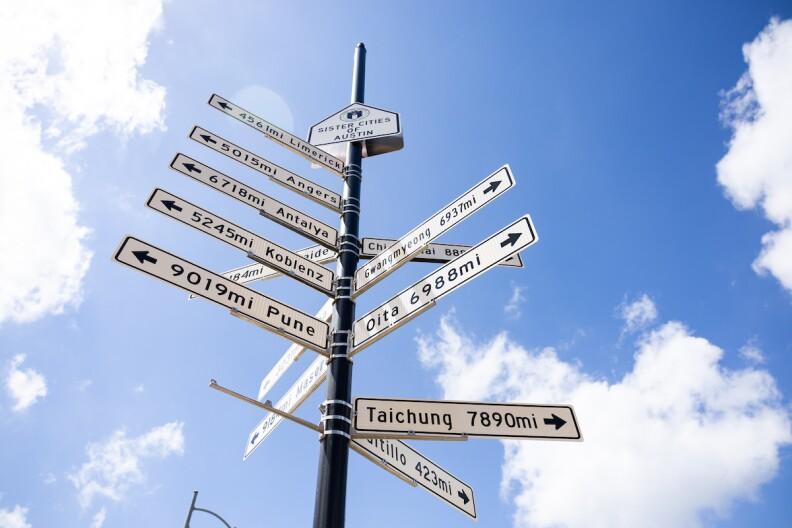
Today, the Sister Cities Program has expanded to link over 2,000 U.S. cities with more than 1,800 international cities across 120 countries. Austin City Hall features a directional sign indicating the locations of its sister cities, a project that Bryant and other citizens had envisioned for years.
Unique Relationships and Collaborations
Each of Austin’s sister city relationships is distinct, characterized by regular communication, planned visits, and community support. Bryant emphasizes the passion and dedication of the volunteers who drive these connections. The first sister city partnership established was with Saltillo, Mexico, in 1968, stemming from a shared historical significance as capitals of Texas.
This relationship has grown to include business development, cultural exchanges, and even collaborative training programs between firefighters in Austin and Saltillo. Billy Webb, a founding member of Austin Sister Cities International, recalls his involvement in training Mexican firefighters, a venture that has fostered deep personal and professional ties.
Intentional Growth and Cultural Exchange
As the sister city program has evolved, Austin has been deliberate in selecting its partners. Aditi Joshi, vice chair of Austin Sister Cities International, explains that relationships are cultivated based on shared interests in areas such as arts, technology, and education. This method ensures that partnerships are mutually beneficial and meaningful.
A current friendship city agreement with Florence, Italy, serves as a trial period for potential sister city relationships. Joshi highlights that this intentional approach is crucial for maintaining long-lasting connections, as seen in the partnership with Limerick, Ireland, which focuses on shared challenges and opportunities for growth.
Personal Connections Bridge Cultures
The personal narratives behind the sister city relationships are equally compelling. Fernando Nieri, who leads the committee for the relationship with Lima, Peru, emphasizes the importance of cultural exchange and understanding. His dual love for both cities drives events and discussions that celebrate their similarities and differences.
Pramod Patil, who has helped foster ties with Pune, India, echoes this sentiment, noting the vibrant music culture shared by both cities. Such connections have led to initiatives like the diversity band formed after Austin’s partnership with Pune was established.
Lasting Impact of Sister City Relationships
The bond between Austin and its sister cities, such as Koblenz, Germany, has flourished through student exchange programs that create lifelong friendships. Christian Schmitz, who participated in a student exchange in 1994, reflects on the transformative nature of these experiences, which can extend family ties across continents.
As Austin celebrates its sister cities, the flags representing each city in the City Hall lobby serve as a reminder of the connections that unite people worldwide. Bryant asserts that while not everyone can travel abroad, the programming and cultural exchanges foster a greater understanding of the world, revealing our shared humanity.
Nearly seven decades after Eisenhower’s vision, the sister city program continues to exemplify the belief that understanding different cultures can pave the way for a more peaceful and connected world.