





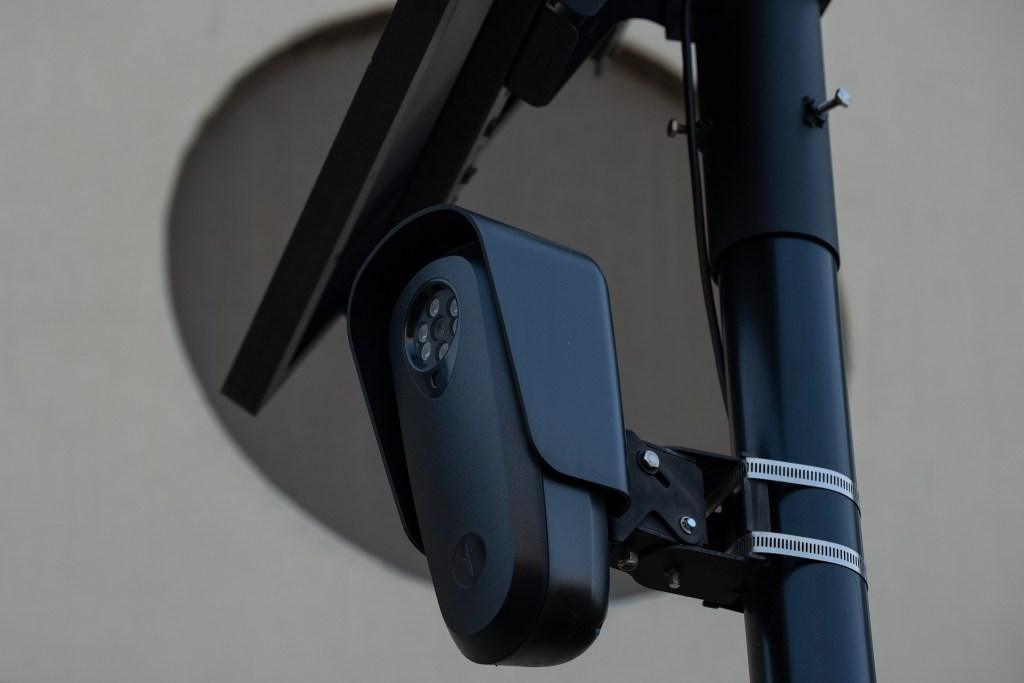
Governor Greg Abbott has prohibited state agencies from allocating funds for Flock cameras, yet the Texas Department of Public Safety (DPS) seems poised to continue utilizing its existing network of roadside surveillance cameras.
As law enforcement agencies grapple with the abrupt loss of millions in state grants designated for Flock cameras, DPS operates a comprehensive network of hundreds of AI-driven cameras that gather identifying data on tens of thousands of vehicles daily.
Surveillance Network Insights
Neither DPS nor Flock Safety has disclosed the exact number of cameras managed by the state agency. However, an email shared by a lawmaker on social media indicates that at least 940 DPS cameras were operational as of Wednesday. The surveillance capabilities of these cameras extend beyond DPS, as the data collected is accessible to thousands of Flock users across Texas and beyond.
On average, law enforcement agencies nationwide access the DPS surveillance network every four seconds to search for specific license plates or to investigate vehicles based on their make, model, color, or other characteristics, according to an analysis by the Texas Tribune of a month’s worth of searches.
This examination of approximately 615,000 searches conducted using the DPS network in June revealed that:
- Nearly 48% of queries originated outside Texas, including significant numbers from law enforcement agencies in Florida and Georgia conducting nationwide searches.
- A total of 3,075 agencies conducted searches, with 396 based in Texas and 2,679 from other states.
- Houston Police accounted for the highest percentage of searches at 13%, while DPS officers conducted just under 9%.
- Over 58,000 searches were categorized as related to “traffic infractions,” including violations like running stop signs or tailgating. Other categories included auto theft, missing persons, and drug offenses. Notably, 111 searches were linked to immigration-related queries involving agencies like Homeland Security Investigations and Customs and Border Protection.
In July, DPS informed the Tribune that only law enforcement agencies with signed agreements could access its Flock data, with 206 Texas law enforcement departments currently having such agreements in place.
Access Limitations and Future Funding
Following inquiries about the more than 2,800 agencies that accessed its network without agreements, DPS announced plans to restrict data access from its automated license plate readers (ALPRs) to only those agencies that possess the necessary agreements.
The agency stated, “Previously, law enforcement agencies without signed agreements could only look up specific license plates captured by DPS Flock cameras. Moving forward, only those with signed agreements will be able to conduct any searches to access data and images.”
When asked how Abbott’s directive impacted the state police force’s camera network, a DPS spokesperson confirmed that while the installation of new cameras would be paused, the agency would continue to utilize existing cameras for various “legitimate public safety efforts.”
Flock camera contracts represent an ongoing expense, and DPS did not respond to inquiries regarding its long-term funding strategy in the absence of state financial support.
In recent years, DPS has developed an extensive network of car-scanning devices positioned along routes leading into neighboring states, major highways, and state-controlled streets.
Proposed Camera Installations
A map presented by the Texas Department of Public Safety in January 2025 to the Motor Vehicle Crime Prevention Authority outlined proposed Flock camera locations, indicating plans for 1,183 cameras while requesting funding through a $15.9 million contract.
Abbott’s directive to block state agencies from investing in Flock cameras came on August 27, amid investigations into a smaller state agency that had drawn at least $30 million from a fund intended for catalytic converter theft to finance over 3,200 Flock cameras for law enforcement statewide. Notably, six of the seven board members of the Motor Vehicle Crime Prevention Authority are appointed by Abbott.
Earlier in 2025, the authority signed a $15.9 million contract with DPS to fund nearly 1,200 cameras, and in August—before Abbott’s directive—agreed to allocate an additional $3 million to cover 583 more Flock cameras across seven Texas toll roads.
Estimates suggest that Texas has at least 13,000 Flock cameras, alongside another 1,000 similar devices, according to DeFlock, an anti-surveillance watchdog that uses crowdsourced information to map the locations of license plate readers.
Abbott’s funding freeze occurred just days before Florida Governor Ron DeSantis implemented a ban on all Flock cameras on state highways. In contrast, Abbott has adopted a more flexible stance, stating that it is up to local authorities to decide the fate of cameras purchased with state funds.
“Most of the money for Flock cameras actually comes from the federal government and is used at the city level, so it will be up to the city officials to determine whether to disconnect the Flock cameras,” Abbott remarked. “However, evidence suggests that cities throughout the state are already disconnecting from Flock cameras.”
Political Pressures and Future Actions
Lawmakers from across the political spectrum are urging Abbott to impose a complete ban on the cameras. His Democratic challenger for the upcoming November 3 election, state Representative Gina Hinojosa, has criticized Abbott for facilitating “warrantless surveillance” throughout Texas.
In an interview, Hinojosa expressed her belief that DPS and law enforcement should dismantle the cameras, citing the potential for abuse and the lack of legislative authorization for their use. However, she acknowledges the potential role of surveillance technology in border security.
“If DPS intends to utilize them for border security, that’s a different matter, but that’s not my understanding of their current application,” Hinojosa stated.
Access Agreements and Local Impacts
Agreements granting access to DPS Flock data delineate the responsibilities for local departments and DPS regarding secure handling of the information. The state agency clarified that before the new access limitations, departments without signed agreements could only look up specific license plates captured by DPS Flock cameras.
Agencies could also automatically opt in to share access when joining regional or national databases through Flock. Jacob Herbert, a corporal with the Coweta County Sheriff’s Office in Georgia, noted that searches conducted on the DPS network were often of a national scope rather than focused solely on Texas.
Coweta County’s 6,700 searches in June positioned it as the top out-of-state department accessing Texas cameras.
“Our investigators utilize nationwide searches when they have a legitimate investigative need to locate a subject or vehicle without sufficient geographical information to narrow the search,” Herbert explained.
The Texas Motor Vehicle Crime Prevention Authority supported and funded the DPS network to enhance availability for police departments across the state. “This project is under the Texas Department of Public Safety, but it was designed for local agencies,” stated Sharon Jones, a DPS major and former board member of the vehicle authority.
Uncertainty for Local Funding
Grants from the vehicle authority have assisted in maintaining at least 2,000 cameras beyond the DPS network. However, Abbott’s funding directive has left numerous city and county law enforcement agencies evaluating the ramifications for their camera systems. A review of accepted grants revealed that over $10.9 million allocated for local agencies in 2027 was designated for Flock cameras and associated software.
El Paso announced that it will cease operations of its 150 Flock cameras, all of which were funded through vehicle authority grants, due to the state funding freeze. Similarly, Dallas police confirmed plans to deactivate 321 state-funded Flock cameras that were supported by vehicle authority grants as well as an anti-gang initiative.
Killeen police indicated they are still “awaiting any formal guidance” regarding the future of 76 cameras installed with vehicle authority support. Police Chief Pedro Lopez stated, “Until the state provides additional guidance, it would be premature to speculate about whether any cameras will need to be discontinued or if alternative funding will be necessary.”
The vehicle authority has yet to issue public guidance on how its grants or contracts have been impacted by Abbott’s order, with its next meeting scheduled for October 13.