








Every day, new data centers are emerging across Texas, including a significant expansion at the Texas Advanced Computing Center (TACC) in Austin. Tommy Minyard, the director of advanced computing systems at TACC, reflects on a pivotal moment from 2005 when his team requested additional space and power, only to be met with skepticism from University of Texas officials. They initially offered him just 5,000 square feet and one megawatt of electricity—sufficient to power about 500 homes—but within a year, the facility had already maxed out that capacity.
Fast forward over two decades, TACC is once again expanding, this time with a new data center in Round Rock, which Minyard likens to transforming from a block of houses into a small city. Data centers, which host large-scale computing systems for data storage and artificial intelligence applications, are proliferating throughout the state. An analysis indicates that Texas could soon outpace Virginia as the U.S. leader in the number of data centers, with nearly 250 facilities planned statewide, according to a report from real estate firm JLL.
The rise in data center proposals, particularly those related to AI, has sparked significant public outcry, with protests at city council meetings and a recent poll revealing that 42% of Texans are strongly opposed to these developments. In light of these concerns, KUT News sought to demystify data centers and explore the reasons behind their rapid growth in Texas.
Data centers, while becoming larger and more powerful, have a history that dates back to 1946, when the first facility was established by the U.S. Army for military purposes. The late 1990s and early 2000s saw their proliferation as cloud computing gained traction, shifting reliance from physical storage devices to remote servers. While data centers have traditionally been tasked with information storage—encompassing everything from financial transactions to social media content—the current wave of investment is heavily influenced by the demands of artificial intelligence, which requires extensive land, power, and water resources.
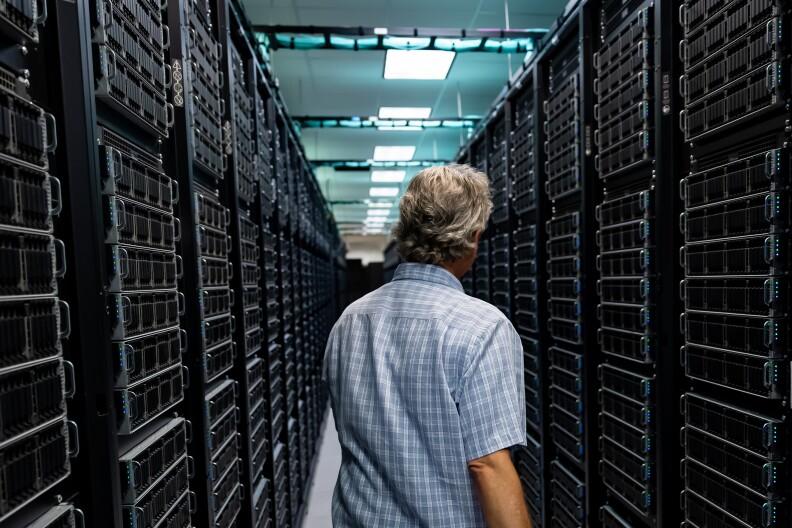
Upon entering the TACC, one might be surprised by the contrast between its unassuming exterior and the futuristic atmosphere within. The interior resembles a scene from a science fiction film, with rows of densely packed computer servers that operate continuously. The cacophony of over 500 cooling fans is a constant reminder of the heat generated by these machines, which must be managed to ensure optimal performance.
Minyard explains that cooling is a significant challenge for data centers. Traditional air cooling is both noisy and energy-intensive, while evaporative cooling, though more efficient, is water-heavy. TACC has experimented with solar panels, but found they could only power a fraction of their servers. An innovative immersion cooling method, which submerges servers in mineral oil, has proven effective but remains costly and difficult to implement on a large scale. “We would welcome better cooling technologies,” Minyard notes, “but currently, we lack effective solutions here in Texas.”
The TACC, funded by the National Science Foundation, primarily supports scientific research, processing large volumes of data for projects ranging from climate studies to space exploration. For example, TACC was instrumental in analyzing images from the James Webb Telescope, and researchers like Tom Yankeelov are leveraging its capabilities to develop predictive models for cancer treatment outcomes.
As Yankeelov explains, the aim is to create mathematical techniques that could help tailor therapies to individual patients, potentially improving survival rates. While these models have yet to undergo clinical trials, initial findings are promising.
In contrast to TACC’s research-driven focus, many newer data centers are being designed specifically for artificial intelligence applications. Danielle Ellsworth, a computer science professor, elaborates on the computational demands of AI: unlike search engines that provide curated lists of resources, AI systems attempt to synthesize information across vast datasets, which requires significantly more computational power.
This demand for increased processing capacity is one reason developers are flocking to Texas, despite concerns over the state’s drought conditions and power grid reliability. Mike Kamerlander, president and CEO of the Hays Caldwell Economic Development Partnership, cites two key advantages: affordable land and a favorable regulatory environment. These factors enable rapid development and larger facilities, allowing for faster training of AI models.
Kamerlander acknowledges the concerns surrounding water usage and the sustainability of long-term job creation but emphasizes Texas’s appeal as a destination for data center development. “We’re not actively recruiting these companies; they’re choosing to come here,” he states.