








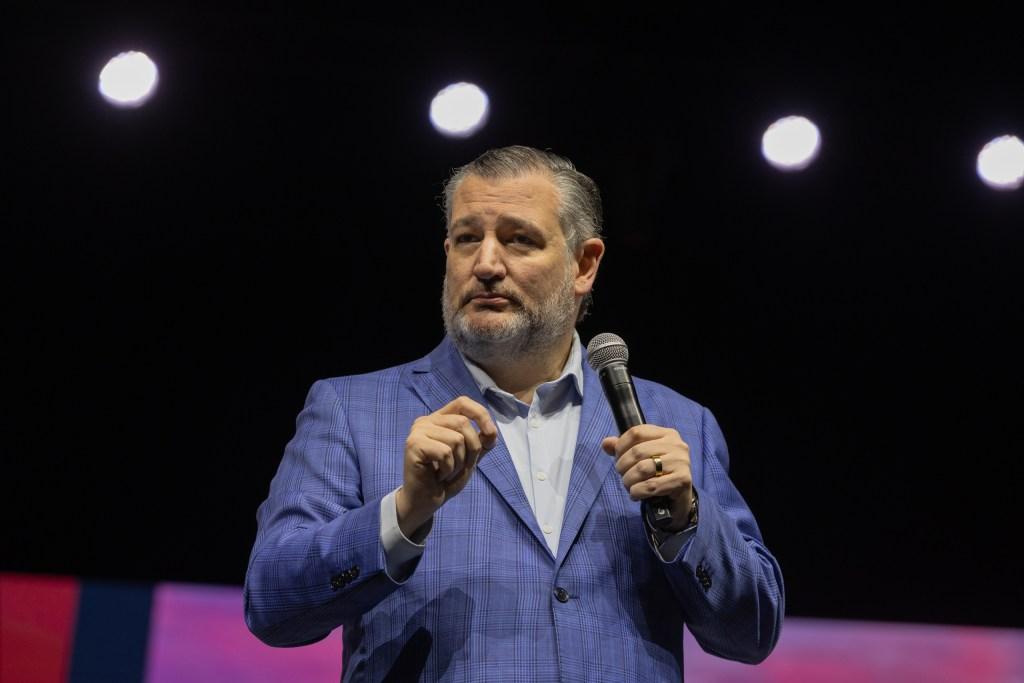
WASHINGTON — The proposed legislation by U.S. Senator Ted Cruz aimed at introducing extensive regulations on college sports did not make it to the Senate floor this week before the chamber adjourned for recess, jeopardizing its prospects of becoming law this year as midterm elections draw near.
Dubbed the Protect College Sports Act, the bill had recently gained traction with backing from the Southeastern Conference and Big Ten after being stalled for several weeks. It had successfully passed through the Senate Commerce Committee, which Cruz chairs. Prior to the Senate’s adjournment on Friday, former President Donald Trump urged senators to remain in session to address a backlog of legislative priorities, including the college sports bill.
However, the bill was not brought up for a vote before the Senate adjourned at 3:56 a.m.
There remains a possibility for senators to pass the bill when they return to Capitol Hill after Labor Day.
Last week, Cruz collaborated with other lawmakers and White House officials to negotiate a package of concessions with leaders from the Big Ten and SEC, who had previously withheld their support for the bill.
“Without this Bill, millions of young Athletes will be hurt, programs will be canceled, Women’s and Olympic Sports will go away, the fans will be robbed, and Universities will go broke,” Trump stated on social media on Friday, encouraging the Senate to avoid “grandstanding” and pass the legislation before adjournment.
The renewed backing from these influential conferences revived interest in the bill, prompting a frantic effort to secure a Senate vote before lawmakers departed. Despite the possibility of a vote as early as Saturday, some senators expressed concerns about the rushed timeline and proposed amendments to the legislation. This last-minute activity threatened to extend discussions into the weekend or push the vote to September, when senators will return to a full agenda.
Cruz’s bill seeks to implement numerous regulations on the current system that has emerged since the NCAA permitted college athletes to profit from their name, image, and likeness in 2021, followed by a settlement that mandated revenue sharing between the NCAA and athletic conferences. A key issue for the conferences had been the bill’s revenue-sharing framework, prompting revisions that garnered their support last week.
A critical provision of the bill aims to close a loophole that allows “associated entities,” such as booster-funded “collectives,” to pay players through endorsement deals that exceed a school’s official salary cap. These arrangements have already directed over $355 million to athletes, with many funds funneled through booster collectives, according to a July report from the College Sports Commission.
The conferences demanded the elimination of this loophole, insisting that endorsement money count toward the $21.3 million pay cap that schools use for direct player payments. As part of the negotiations, a new $27.5 million pool was established — comprising a $22.5 million retention fund to discourage student-athlete transfers and an additional $5 million if schools match that spending on women’s and Olympic sports — providing nearly $50 million in potential funding for schools.
In a joint statement, the chancellors and presidents of the Big Ten and SEC described the negotiations as “detailed and productive.”
“We listened to our colleagues, addressed their concerns, and improved an already strong bill,” Cruz remarked. The senator, a passionate fan of Texas sports, has prioritized creating a national framework to stabilize college sports and enhance NCAA enforcement capabilities.
Since its introduction, the bill has ignited a nationwide discussion on the future of college sports and the need for new regulations. In June, the chairs of the regent boards for the University of Texas and Texas A&M — the only two Texas programs Cruz has claimed would “certainly survive” without system changes — sent a letter to Cruz and fellow U.S. Senator John Cornyn opposing the bill in its previous form. With the Big Ten and SEC now supporting his initiative, Cruz faces potential conflict with Texas’s wealthiest athletic programs, whose players collectively earn millions through NIL agreements.
Cody Campbell, a Texas Tech regent and former lineman who founded the nonprofit Saving College Sports and has been a key advisor to the White House on this matter, praised the Big Ten and SEC’s change of heart on social media, calling it a step toward a “better future for college athletes in all sports.”
The negotiations also introduced revisions to mitigate super-conference realignment, clarified the parameters around legitimate endorsement deals, and specified when conferences may share media-rights revenue.
Media-rights pooling stands as the primary revenue source for the Power Four conferences, with the Big Ten and SEC being particularly concerned about the original bill’s potential to pressure them into sharing their revenue. Under the current media contract, the Big 12, which includes Baylor University, the University of Houston, Texas Christian University, and Texas Tech, is projected to distribute approximately $39.5 million per school in the 2024-25 fiscal year, about half of what the SEC allocates to most of its members. Analysts predict this revenue gap will significantly expand in the SEC’s favor over the next decade, accelerated by the SEC’s new media deal and the expansion of the College Football Playoff — profits that Texas and Oklahoma will now access as SEC members. Negotiators added language to the bill to ensure participation in media-rights pooling is voluntary.
The legislation also aims to effectively freeze conference realignment, a measure designed to safeguard smaller conferences following the significant shifts in leagues caused by Texas and other football powerhouses in 2024, which disrupted the Pac-12 and Big 12 conferences.
The momentum behind the bill, bolstered by support from various conferences, universities, and professional leagues, positions it as the most significant reform of college sports since the introduction of NIL rights. This transformation was initiated by the NCAA’s 2021 policy change that allowed student-athletes to profit from sponsorships, coinciding with a Supreme Court decision that ruled against the NCAA’s restrictions on education-related benefits for athletes. A legal settlement in 2025 then formalized the revenue-sharing model approved by the NCAA the previous year.
However, a broad coalition, including labor unions, athlete associations, and civil rights organizations such as the NAACP, has urged the Senate to delay the bill until it more effectively addresses the concerns of college athletes, although they did not provide specific details.
In a statement released Thursday, the Congressional Black Caucus asserted that “the legislative process has failed to meaningfully incorporate the perspectives of Black athletes, Black coaches, Black agents, HBCUs, or the Congressional Black Caucus, despite the disproportionate impact this legislation will have on those communities.” They called on Senate Democrats to block the bill until these issues are adequately addressed.
The Protect College Sports Act requires at least 60 votes to pass the Senate and move to the House, where any changes would need to be reconciled before being sent to the president’s desk. The president has consistently expressed support for the legislation.