








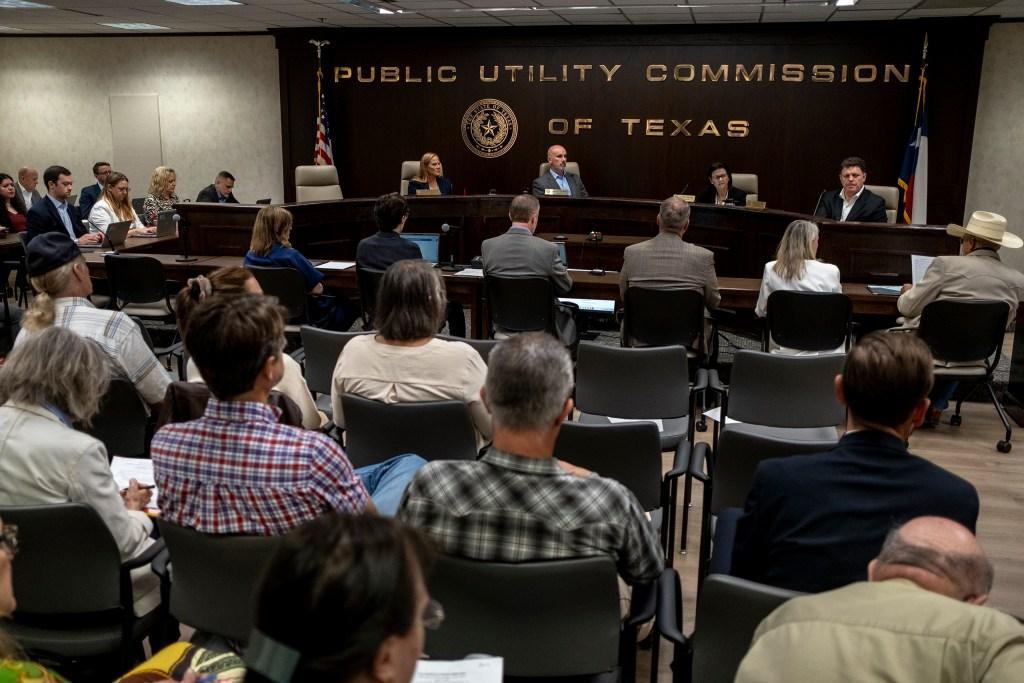
The Public Utility Commission of Texas (PUC) has filed a lawsuit requesting that a Travis County judge prevent the release of information regarding the locations of data centers and virtual currency mining operations, arguing that such details could be leveraged by terrorists.
This legal action, initiated on Monday, places the PUC, the agency overseeing utility regulation, in opposition to the office of Attorney General Ken Paxton. The case revolves around the interpretation of Texas’ public-records law and the protections afforded to critical infrastructure within the state.
The core of the contention lies in two seemingly innocuous geographic details: the county where a facility is situated and the regional water planning area it belongs to.
The PUC contends that these details should be classified as “privileged information” and argue that their sensitivity increases when combined with supplementary data gathered through the agency’s industry survey. This additional information includes metrics such as electricity demand, actual consumption, projected peak demand, water usage, sources, cooling technology, and the utilities and infrastructure servicing the facility.
Rather than seeking to classify the entire survey as confidential, the PUC is specifically requesting a court ruling that these two geographic identifiers are exempt from disclosure under the Texas Homeland Security Act. This act aims to “protect against homeland security threats and hazards…and prevent significant criminal and terrorist attacks.”
This lawsuit does not provide a conclusive determination on whether the information must ultimately be released. However, it comes at a time when Texas officials are increasingly scrutinizing the state’s data center sector.
Governor Greg Abbott has mandated that state agencies conduct thorough evaluations of data centers wishing to connect to the state’s electrical grid. These assessments will include reviews of electricity and water usage, cooling systems, and other crucial information. Additionally, he has instructed the Texas Water Development Board to enforce compliance among data centers that do not adhere to necessary water usage reporting requirements.
Details from the PUC Survey
In 2025, Texas lawmakers tasked the PUC with gathering data regarding water and energy consumption in data centers and virtual currency mining facilities. This initiative aims to enhance understanding of the industry’s expansion and its resource implications.
The growing apprehension among state officials and Texans about the resources consumed by large computing facilities is a driving force behind this effort. Data centers demand significant electricity due to the numerous servers they house, and depending on their cooling systems, they may also require substantial water to maintain optimal temperatures.
The PUC formulated its survey in collaboration with the Texas Water Development Board, the agency responsible for managing the state’s water planning. The information collected was intended to provide insights into the connection between electricity demand and water consumption, thereby guiding future planning efforts. The Legislature also required the PUC to share findings with other state agencies and compile a comprehensive report.
The survey was distributed to 377 facilities, collecting data on various aspects, including location, county, regional water-planning area, electricity consumption, projected peak demand, cooling technology, and water usage and sources.
However, the response rate was disappointingly low, prompting one state representative to describe it as “pathetic” during a legislative hearing in June. At that time, PUC officials reported that only 28 companies representing 92 facilities had responded, raising concerns among lawmakers about the sufficiency of the data for making long-term policy decisions.
Following this, the PUC extended the voluntary survey by an additional 10 days in July. As of August, 13 virtual currency mining facilities and 77 data centers had submitted their responses, as indicated by a PUC spokesperson’s email.
The Legal Dispute
The conflict between the PUC and the attorney general’s office arose after a McLennan County resident and four journalists, including a reporter, submitted open records requests for the survey responses.
The PUC rejected these requests, asserting that the information should be wholly protected from disclosure. Those who made the requests may choose to participate in the ongoing open records dispute.
In accordance with Texas law, if a governmental agency believes that requested records should not be made public, it can seek a ruling from the Attorney General’s Open Records Division, which is the action taken by the PUC.
The commission argued that portions of the survey data fall under the protective umbrella of the Texas Homeland Security Act, which safeguards certain information related to vulnerabilities in critical infrastructure.
However, the PUC, as the governmental entity aiming to withhold records, must demonstrate that the statutory exception is applicable, which is a central point of contention in this case.
The Attorney General’s office has issued two rulings indicating that the PUC did not adequately prove that the disputed information identifies the type of technical vulnerabilities protected by the Homeland Security Act.
The PUC is now contesting those rulings, seeking a judicial determination to arrive at a different conclusion. The agency argues that the individual data points in the survey cannot be viewed in isolation.
For instance, the name of a county by itself may not significantly reveal much about a facility’s security. However, the PUC contends that when combined with information regarding electricity consumption, water use, and the infrastructure supplying those resources, the county and planning area identifiers can expose vulnerabilities that may be targeted in physical or cyberattacks, potentially compromising the integrity of the state’s power grid and water systems.
The lawsuit emphasizes that this combined disclosure could provide individuals with malicious intentions insights that isolated data points would not reveal.
Additionally, the geographic details are crucial for Texas’ water planning framework. The state depends on regional water-planning groups to forecast future water demand and devise strategies for meeting those needs, with regional plans integrating into the state’s overall water management process. Thus, understanding the locations of major industrial water consumers is essential for planners to assess future demand and necessary infrastructure.
The significance of this information has intensified as Texas undergoes rapid development in its data center sector. A separate mandatory water-use survey conducted by the Water Board has also seen low response rates from data centers.
It remains uncertain whether other information, such as facility names or detailed water usage, will be disclosed or if the PUC will relent in its efforts to protect that information. A PUC spokesperson has refrained from commenting on ongoing legal matters.
This PUC survey differs from the annual survey conducted by the Texas Water Development Board, as the PUC’s initiative was voluntary and specifically aimed at understanding the interplay between water use and electricity demand in large computing operations.
This is not the first instance of conflict between the PUC and the Attorney General’s office regarding information disclosure. Similar disputes have occurred over records related to a power plant loan program and cryptocurrency mining operations registered in Texas.
Last year, the agency expended over $56,000 in taxpayer funds to hire external legal counsel to assist in withholding information, a practice it defended as common, according to invoices obtained through public records requests.