





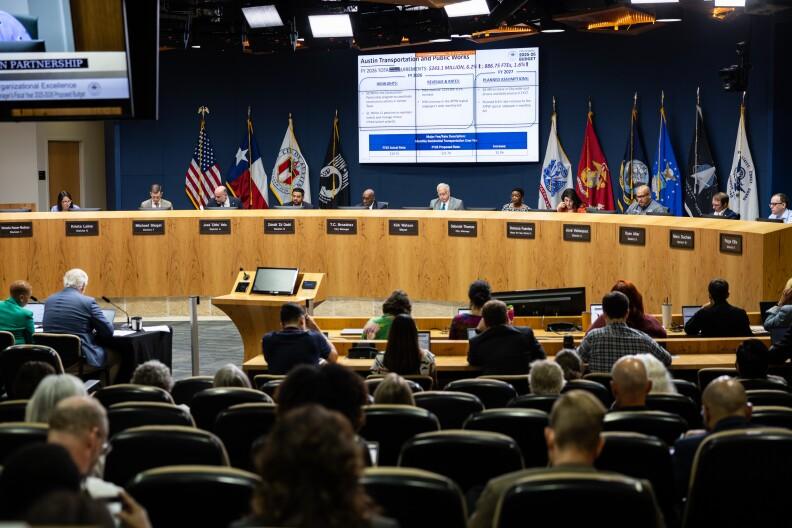
Austin’s proposed budget for the upcoming fiscal year, totaling $6.6 billion, is set to implement service cuts and raise taxes following the recent defeat of Proposition Q. City Manager T.C. Broadnax outlined the budget plan, emphasizing a focus on core services and quality of life enhancements while striving to meet community needs. This proposal follows a challenging year where Austin voters rejected a property tax increase, prompting city leaders to make tough financial decisions.
The budget plan includes reductions to social service contracts, parks, and public health programs. It also calls for the elimination of vacant positions across various departments while maintaining funding for other critical priorities. Broadnax stated, “Like the community members we serve, we must live within our means,” highlighting the need for fiscal responsibility even as the budget proposes higher property taxes for average homeowners.
This proposal now moves to the City Council, where it will undergo scrutiny and debate regarding which services to maintain, where to implement further cuts, and how to balance fiscal prudence with the growing demands of residents and nonprofits already impacted by previous budget reductions.
Broadnax acknowledged that while the budget will reflect reductions, it also aims to expand essential services. “You will see reductions in this budget, but you will also see investments in critically needed service expansions,” he remarked, indicating a strategic approach to reshaping departmental operations to safeguard vital community services.
Financial Challenges Facing Austin
Austin has been grappling with financial pressures in recent years, attributed to property tax caps, declining sales tax revenue, and the cessation of federal funding that had supported the city during the COVID-19 pandemic. Following the rejection of Proposition Q, the City Council had already slashed $95 million from the budget, affecting funding for parks, homelessness services, and emergency rental assistance, with many social service providers facing a 10% funding cut.
As budget preparations commenced, city officials projected the need to reduce an additional $16.8 million from Austin’s approximately $75 million social services budget. The City Council has implemented a framework to prioritize essential services while evaluating potential overlaps in funding, opportunities for program consolidation, and considerations of equity.
The proposed budget reflects a less severe reduction than initially feared, suggesting a $5.1 million cut to social service contracts as per the City Council’s framework. Additionally, Travis County’s Sobering Center may face a loss of around $3 million in funding, raising concerns among nonprofits already facing challenges due to diminished federal support and increased competition for private donations.
In response to community concerns, city financial leaders engaged with residents and nonprofit representatives, ultimately deciding to stagger the planned reductions over two budget cycles to mitigate immediate impacts. An internal memo indicated which nonprofits might experience the smallest and largest cuts, with behavioral health, homelessness, and clinical services expecting reductions of 10% or less, while those providing family, legal, workforce development, and transportation services could see cuts of about one-third.
Budget Highlights
Despite the necessary cuts, the proposed budget allocates funding for several priorities, including:
- $3 million to keep the Marshalling Yard emergency shelter operational
- $6 million for permanent supportive housing services
- $6 million in overtime funding for the Austin Fire Department to ensure adequate staffing
- $504,000 to enhance Austin Police recruitment efforts
- $500,000 increase for EMS overtime to maintain full staffing levels
- An extra $1.2 million for city pools and park maintenance
- $449,000 for five new positions at the Austin History Center Campus
Conversely, various programs face significant funding reductions, including:
- $5.1 million in grants to social service providers
- $2.9 million reduction for Travis County’s Sobering Center
- $652,000 decrease for the Summer Youth Employment Program
- $500,000 cut to the Rally Austin contract
- $400,000 from a healthy food program managed by the Public Health Department
- About $170,000 from Parks and Recreation programs for seniors and children
While the budget cuts some vacant positions, it also proposes adding funding for critical staffing in high-priority departments, potentially leading to a net increase of 225 positions across the city.
Impending Decisions
The City Council will soon convene to deliberate on which programs to protect and where to impose further cuts, alongside discussions on raising taxes. Council Member Ryan Alter emphasized the need for efficiency across city departments, particularly in public safety, before contemplating deeper reductions elsewhere. “There are no easy answers when you get to this point,” he acknowledged, stressing the importance of careful decision-making.
Council Member Marc Duchen pointed out that the residents’ ability to cope with higher costs will influence his approach to the budget. He noted that many constituents are advocating for more efficient spending rather than increased expenditures. “Affordability continues to be my top priority, and I want to make sure the budget that we produce reflects that,” Duchen stated, referencing feedback from a recent survey that captured residents’ concerns about living costs in Austin.
Looking Ahead
If approved, homeowners with an average property value of $487,907 can expect an increase of $173 in their tax bills next year. Additionally, fee hikes for services such as trash collection, water, and electricity are under consideration. Overall, homeowners may face nearly $350 in increased property taxes and fees in the upcoming fiscal year.
The City Council is set to publicly discuss the budget over the coming weeks, granting residents the opportunity to provide input throughout the month-long process, commencing on July 22 at 10 a.m. A public hearing regarding the tax rate is scheduled for July 30 at 3 p.m., with further public commentary on August 6 as the council deliberates on a potential bond issue for November. The budget is expected to be finalized and adopted in August.