








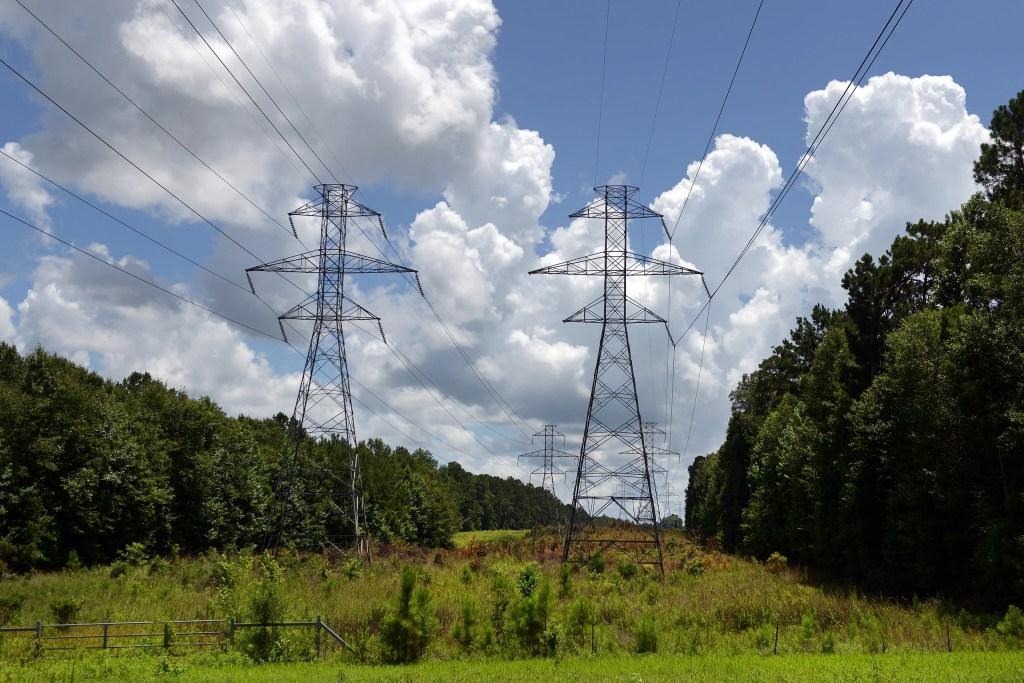
ODESSA — The Public Utility Commission of Texas has recently authorized a contentious 370-mile transmission line project, contingent upon two transmission companies collaborating with landowners to implement adjustments. This initiative, known as the Howard Solstice transmission line, aims to facilitate the transportation of electricity through South Texas, primarily benefiting the oil and gas sector in the Permian Basin. The commission indicated that the requested changes should help mitigate construction impacts on grassland areas.
The transmission line will traverse 14 counties, including Uvalde, Kerr, Bexar, and Medina. Following concerns raised by residents regarding potential damage to their properties, the five-member commission instructed the transmission companies to engage with landowners for further modifications to the proposed route.
This decision marks the second significant approval by the commission within a week, part of a broader initiative to bolster oil production in West Texas, a mandate set forth by state legislation. Just days prior, the commission greenlit two unprecedented transmission lines in North Texas after a lengthy session filled with passionate testimonies from both landowners and representatives from the oil and gas industry.
“We’ve discussed the process extensively, and this instance highlights the process functioning effectively,” Commissioner Kathleen Jackson remarked prior to the vote.
However, two additional proposals discussed on Friday were referred back to the agency’s administrative courts for further examination of concerns raised by the commissioners.
In a letter circulated among the commissioners, Public Utility Commission Chair Gleeson expressed his belief that it was premature to address the recommendations outlined in the proposals, citing that the State Office of Administrative Hearings had provided an incomplete assessment for decision-making. He also noted the absence of clarity on whether the proposals complied with federal reliability standards.
“The lack of a recommendation on this issue is puzzling,” Gleeson stated.
The administrative court’s ruling also failed to clarify potential savings for consumers should the commission approve the transmission lines.
Collectively, the five transmission line proposals represent the state’s most extensive and ambitious electricity infrastructure project, conceived by power grid managers at the Electric Reliability Council of Texas.
Margaret Byfield, executive director of American Stewards of Liberty—a national organization advocating for land rights—voiced concerns over the commission’s haste. “Fundamental questions remain unanswered about whether these lines are necessary to meet reliability standards and whether they provide the claimed economic benefits,” she asserted. “These are not trivial details; they fundamentally question the necessity of a project that could impose billions of dollars in costs and permanently affect private property.”
The proposals have ignited tension between the industrial sector and landowners, drawing the attention of lawmakers. Many legislators, who previously endorsed a bill mandating a plan to address the state’s energy demands, now express surprise that the transmission line proposals stemmed from that directive.
Numerous landowners across Texas have raised alarms about the potential irreversible damage to their properties resulting from the construction. Hundreds have submitted letters and formal objections, urging the Utility Commission to reject the proposals. Some landowners claimed they did not receive the legally mandated advance notice regarding the proposals, a contention disputed by the transmission companies. Additionally, there are concerns that the commission’s 180-day timeline for processing applications is insufficient for such a substantial matter. Ultimately, the commissioners ruled in favor of the transmission companies, stating that the applicants adhered to commission regulations.
“I believe the landowners have not been afforded adequate time or the proper procedures to address an issue of this magnitude,” stated Jada Jo, president of the Hill Country Preservation Coalition, a group opposing the transmission lines.
A representative from one of the transmission companies affirmed their commitment to collaborate with landowners as directed by the commission. “We understand our responsibilities and will fulfill that expectation. We care deeply about our landowners and appreciate the inclusion of that provision,” said Stephanie Houle, vice president of regulatory affairs at AEP.
Trade associations representing the industrial and oil and gas sectors have argued that the transmission lines are essential to accommodate the state’s rapid growth, asserting that the existing infrastructure has lagged for over a decade. They contend that the current transmission capacity is inadequate to support oil and gas production as well as the industrial manufacturing sector. Power generators converting natural gas into electricity also maintain that the new transmission lines will incentivize the construction of additional power plants, bolstering the state’s energy grid—an area Texas has historically struggled to develop.
The ongoing debate has attracted scrutiny in Austin, where the Texas Legislature has conducted extensive hearings on the matter. Legislative committees in both the House and Senate have gathered input from landowners, various industries, and the transmission companies over the summer months.
Following a marathon 15-hour hearing in July, state Sen. Charles Schwertner, chair of the Senate Business and Commerce Committee, urged the Utility Commission to reject all proposals, advocating for legislative reform of the application process. Lt. Gov. Dan Patrick echoed these sentiments, emphasizing the need to balance infrastructure development with private property rights.
“Everyone agrees Texas needs the transmission to meet the growing needs of the state,” Patrick remarked. “However, support for the ERCOT’s 765kV transmission plan should not come at the expense of private property rights.”
State Rep. Ken King, R-Canadian, also called for the Utility Commission to dismiss the plan following an eight-hour hearing in the House State Affairs Committee.