





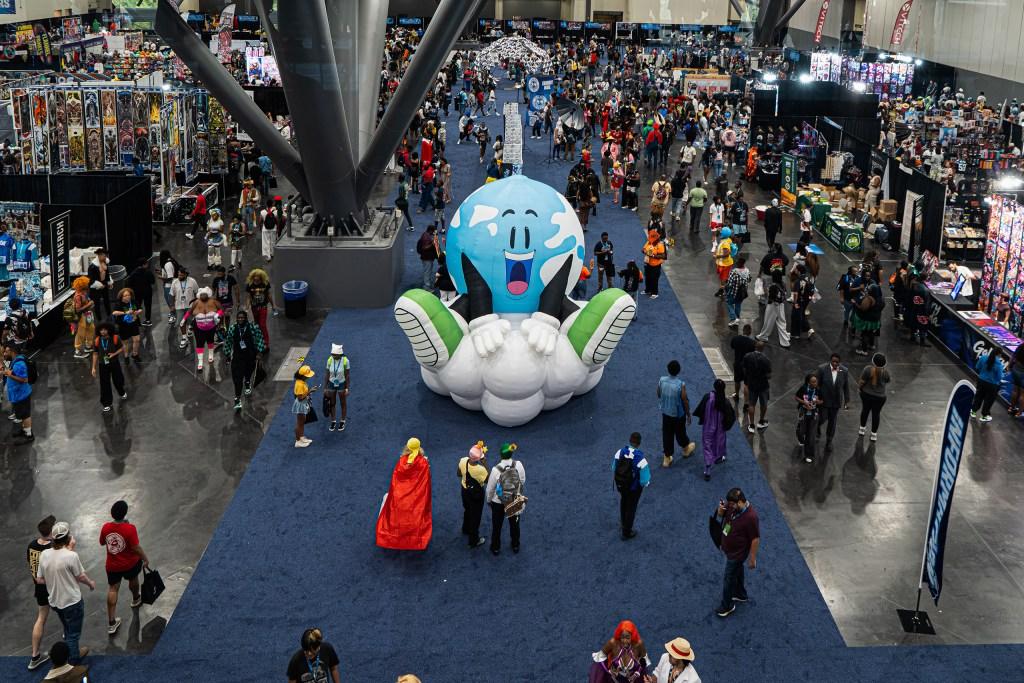
Maya Hampton, a dedicated attendee of Dream Con, has been making the nearly 200-mile trek from Killeen to Houston for the past two summers to partake in one of the largest Black-owned gaming, anime, and pop culture conventions in the United States. For her and countless others, this annual summer gathering serves as a cherished reunion for Black nerds—affectionately dubbed “Blerds”—where old friendships are rekindled and new connections flourish.
“I am a little shocked at how many people travel to Texas every year for this,” remarked Hampton, who was dressed as Froppy, a character from the popular anime My Hero Academia.
Launched in 2018 by a collective of YouTubers, Dream Con originally took place in Waco but quickly outgrew its venue, ultimately relocating to Houston last year. This year’s event set new records, attracting 45,000 attendees and positioning itself alongside Comicpalooza as a major pop culture event in the South. The convention generated over $19 million for Houston in 2022, a significant increase from the $15 million it brought to Austin the previous year.
Despite its growing success, Dream Con faces the threat of relocation to other major cities like Atlanta or Los Angeles, which could provide more substantial financial and marketing incentives.
This year’s Dream Con was held in July at the George R. Brown Convention Center in Houston, featuring prominent panelists, including actress and producer Issa Rae, and a variety of vendors eager to engage with a lucrative audience.
Houston First Corporation, which oversees the convention center, highlighted the significant economic impact Dream Con has on the city’s hospitality sector, emphasizing its role in attracting thousands of out-of-town visitors during a typically slow summer period. They expressed enthusiasm for continuing to host the event in Houston.
“Dream Con has experienced tremendous growth in Texas since its inception in 2018,” stated Houston First. “The conference draws a substantial out-of-town audience, which greatly benefits local hospitality businesses. We are excited about Dream Con’s potential to keep growing in Houston.”
Vendors at Dream Con noted that it is one of the rare events that showcases Black creators, and losing it would diminish the representation of creative diversity within the Black community.
Kendale King, the chief financial officer and director of partnerships for Dream Con, acknowledged the uncertainty of the event’s future in Texas but expressed optimism about fostering collaborations with state and city officials.
“It’s not like we are trying to stay a secret. We just haven’t been tapping the right levers until this year,” King stated. “We are navigating the process and having conversations with various stakeholders. Now that we’re as big as we are, I’m proactively seeking funding to ensure we remain in the city and state.”
Dream Con was established and is operated by RDC World, a Texas-based collective of online content creators founded by Mark Phillips and Affiong Harris, along with their team members. Initially, their goal was to build a YouTube channel large enough to launch their own manga and anime. Since its inception in 2012, the channel has amassed over 1.85 billion views and 7.33 million subscribers through its comedic sketches focused on anime, gaming, and pop culture.
Despite their success, RDC World faced challenges when attempting to engage with fans at anime and comic conventions. They often encountered rejection and were told they wouldn’t “fit in,” likely due to their race.
This issue of feeling out of place extends to Black nerds and other marginalized groups, as there are limited visual representations of them in science fiction, anime, and comics. Interpretation of beloved characters as different races or genders often meets resistance from some segments of fandom.
<p"At conventions, some attendees don’t hesitate to inform you that 'that character isn’t Black' or similar comments," King explained. "Many Black fans feel marginalized at traditional pop culture events."
In response, the RDC World team envisioned a convention that would celebrate Black culture and creativity, leading to the birth of Dream Con. “It’s for us, by us,” they say.
Choosing Texas as the location for their convention felt natural to the team. “Being from Texas, we always had a pull to make our biggest moment happen here,” shared Jay Sutton, event director for Dream Con.
Dream Con began in Waco with around 800 attendees, and its popularity surged each year as it moved to Arlington and then Austin, ultimately finding a permanent home in Houston. Attendance has skyrocketed, increasing 70-fold since its inception.
“It’s not just about the numbers; it’s about what they represent. It signifies that underrepresented fans finally have a space to celebrate their passions openly,” reflected Benjamin Skinner, a member of RDC World.
At its core, Dream Con serves as a vibrant hub for enthusiasts of anime, video games, pop culture, and sports, offering a plethora of activities, including artist showcases, cosplay contests, gaming tournaments, and concerts.
Cameron Browning, a North Carolina native attending his third Dream Con, expressed the significance of the event, saying it provides a rare opportunity for Black nerds to gather, reconnect, and uplift one another.
“Nobody second-guesses their welcome here. It’s unique, and I cherish it,” Browning stated, attending with his girlfriend, who he introduced to anime.
Jahlil Rojas, the founder of Nerd Square, a Black-owned clothing brand, has made the journey from Atlanta for three consecutive years to sell his merchandise. He emphasized the importance of the community fostered at Dream Con.
“This event allows people to express themselves and provides a space to deviate from societal norms. The personality on display here is something I truly value,” he noted.
Dream Con’s success can be attributed to King’s efforts to secure sponsorships from major companies like YouTube, Twitch, and Red Bull, alongside local business partnerships that enhance the experience for attendees.
King is also prepared to advocate for content creators to lawmakers and local officials in pursuit of additional funding, recognizing the need to deepen connections with the city.
“We have been so focused on executing the event that engaging with local leaders wasn’t a priority until now,” he admitted.
Yasmine Duhe, a representative from OhSoYas Media LLC, expressed that attending Dream Con over four years has shifted perceptions of Houston as a creative hub.
“Spaces like this are infrequent in Houston. It’s not typically recognized as a media city,” she remarked. “Dream Con highlights the city’s vibrant Black creative scene on a grand scale.”
This year, Chris Hollins, Houston City Controller, honored Dream Con’s creators for establishing Houston as a key convention destination.
The founders of Dream Con see Houston as a promising base for future endeavors, contemplating a touring model or potential international expansion.
“We’re still figuring out what’s next. Houston has provided us with so much this year, and there’s a strong chance we remain here. We’ll have dates for 2027 soon,” stated Johnathan Newton, co-founder of Dream Con.
While the team is not yet ready to commit to a long-term future in Texas, they are deeply appreciative of the support they’ve received from its residents.
“We want Texans to know this started with us, and it’s still ours,” Phillips emphasized. “Every year, we grow, thanks to the support from Texas.”